


Sustainability for SMEs – not a complex cost, but the path to business resilience
The goal is for firms to be more agile so they can ride out crises such as the Iran war, say industry observers

[SINGAPORE] The ongoing US-Iraeli war on Iran is forcing businesses – especially small and medium-sized enterprises (SMEs) – to rethink how they operate, said Tan Ching Hwee, chair of the Association of Small & Medium Enterprises’ (Asme) sustainability action group.
The biggest challenge that SMEs face is uncertainty, he added. “It is not just about higher costs. It is the difficulty of planning in an environment where things are changing faster than before.”
Since the conflict began on Feb 28, oil prices have been hovering at about US$100 a barrel. The prices of goods have also gone up, piling pressure on companies – especially SMEs.
Two in three businesses in Singapore have been moderately to severely affected by the war in the Middle East, a survey by the Singapore Business Federation found. Released on Apr 22, the findings were based on the responses from 254 companies, the majority of which were SMEs.
Sustainability is a game changer
Asme president Ang Yuit said that the way for smaller businesses to ride out the upheaval is by adopting sustainability – not because it is “good” to embrace, but because it could be a game changer.
The United Nations defines sustainability as the practice of meeting current needs without compromising the ability of future generations to meet theirs. For companies, this could mean generating less waste, conserving resources or prioritising positive impact on communities.
'%3e%3cpath%20d='M12.1475%2025.5262C13.7713%2025.4295%2014.94%2023.913%2014.94%2021.8832C14.94%2019.5359%2013.474%2018.093%2011.5917%2018.093C11.3745%2018.093%2010.9582%2018.093%2010.8393%2018.1413V25.2086L11.8891%2025.5745C11.8891%2025.5745%2012.207%2025.5262%2012.1475%2025.5262ZM11.4934%2017.6281C13.2567%2017.6281%2014.3843%2016.4292%2014.3843%2014.4501C14.3843%2012.372%2013.275%2011.2973%2011.4339%2011.2973H10.8393V17.6305H11.4934V17.6281ZM6.66078%2025.6482L7.39265%2025.5492C8.02617%2025.4502%208.26403%2025.3053%208.26403%2025.1097V11.6149C8.26403%2011.4193%208.1451%2011.3709%207.23484%2011.249L6.68137%2011.173L6.6219%2010.7588H11.9508C15.7153%2010.7588%2017.0624%2012.0797%2017.0624%2014.1578C17.0624%2015.9666%2015.7748%2017.1909%2013.4969%2017.6305V17.7041C16.111%2017.948%2017.6571%2019.5382%2017.6571%2021.7636C17.6571%2024.3318%2015.8937%2026.0417%2012.1109%2026.0417H6.60132L6.66078%2025.6482Z'%20fill='%232B2B2B'/%3e%3cpath%20d='M20.6287%2025.6505L21.5596%2025.5515C22.1725%2025.4779%2022.4104%2025.3076%2022.4104%2025.112V11.249H21.9346C20.073%2011.3479%2018.982%2013.0095%2018.408%2014.6227L18.1907%2015.5018H17.6555L18.1701%2010.7588H29.3837L29.6421%2015.4787H29.1664L28.9491%2014.6227C28.3728%2012.8645%2027.3047%2011.2743%2025.5002%2011.249H24.9856V25.1856C24.9856%2025.3812%2025.1251%2025.4548%2025.9965%2025.5515L26.7695%2025.6505L26.829%2026.0417H20.5693L20.6287%2025.6505Z'%20fill='%232B2B2B'/%3e%3c/g%3e%3cdefs%3e%3cclipPath%20id='clip0_5242_21648'%3e%3crect%20width='24'%20height='16.8'%20fill='white'%20transform='translate(6%2010)'/%3e%3c/clipPath%3e%3c/defs%3e%3c/svg%3e)
Tan noted that sustainability is increasingly becoming a non-negotiable, being spoken about in the same breath as resilience. “Energy use, resource efficiency and waste reduction are no longer just environmental issues. They affect costs, operations and long-term survival.”
SME owners who have cottoned on to this echo the sentiment.
Gracelyn Lin, who founded agritech and sustainability company Kava International, said that sustainability is no longer just about output; it is about how that output is produced, and whether the system can sustain itself over time.



“This shift is critical, especially in regions where land degradation is already affecting long-term agricultural viability.”
Lynn Kee, the founder of leather and luxury bag restoration company Dr Bags, said: “One of the biggest challenges is that sustainability is still not built into core business economics. In many cases, it is treated as an add-on rather than part of how the business creates value.”
“There is also a clear gap between intention and behaviour,” she added. “Consumers may care (about sustainability), but (their) decisions are still driven by convenience, price and speed. If sustainable options cannot compete on those terms, adoption will remain slow.”
However, she noted that the task at hand is not raising awareness but executing the approach – making sustainable choices practical enough for people to act on consistently.
“Rarely the easiest path”
“Sustainability is rarely the easiest path,” admitted Toni Chan, founder and creative director of swimwear brand August Society.
“It often comes with higher costs, longer lead times and more complex sourcing decisions – especially when you are trying to do it responsibly… but (it) has shifted from being a differentiator to becoming an expectation.
“Customers now expect brands to take responsibility – but they are also more informed and more critical, especially in response to greenwashing.”
However, the question is that in the current climate, how can SMEs balance the need to survive with the quest to be sustainable?
Asme’s Ang said: “Sustainability would likely lose out if it is a ‘good-to-have’. But if it is a market-access strategy or leads to new markets, businesses would double down on that.”
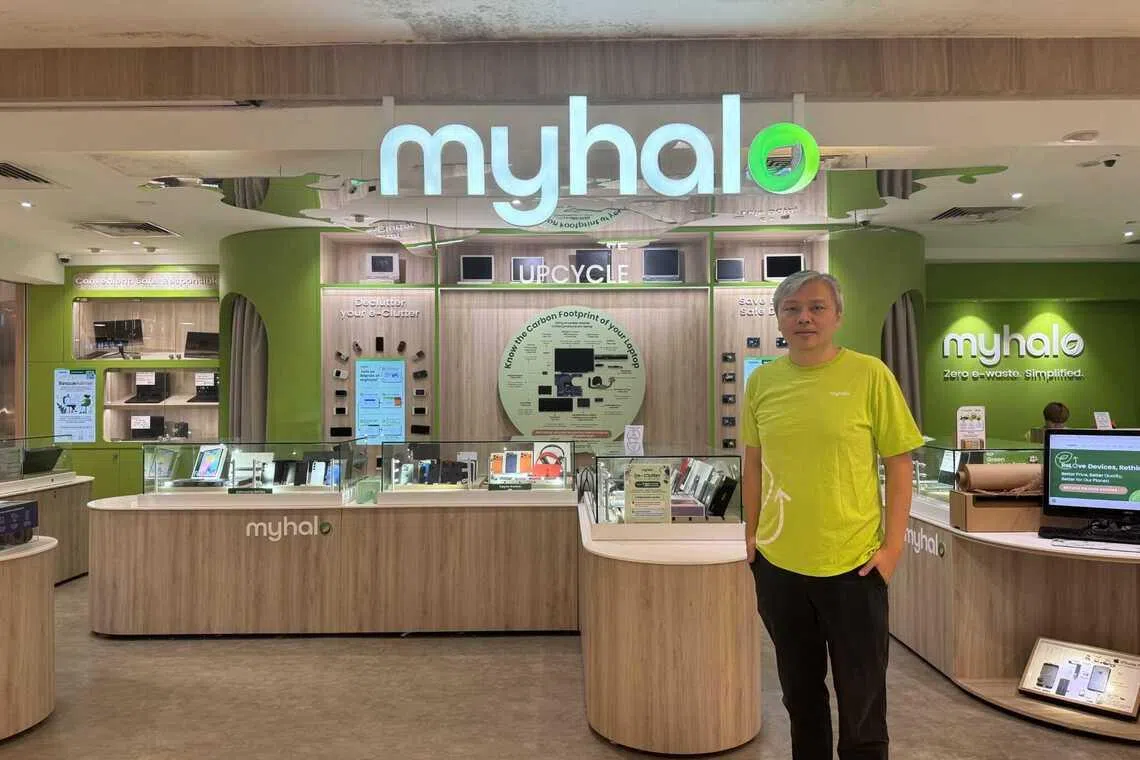
Agreeing, Tan added: “In tougher times, the question is no longer just ‘can we afford sustainability?’ It is ‘can we afford inefficiency?’”
For SMEs, practical sustainability would encompass reducing electricity use, cutting waste, improving processes, better use of resources and strengthening governance. These actions lower expenses and make businesses more resilient, he said.
Sustainability also goes beyond the environmental aspect. “The social and governance parts are just as important,” he added.
“Companies that improve their internal processes, employee engagement, compliance, accountability and decision-making tend to become more resilient. They are operationally tighter and better prepared to handle uncertainty.”
One example is myhalo, which Tan founded. The sustainability tech platform advocates a zero-waste lifestyle by helping consumers contribute to the circular economy.
The company generates revenue through device trade-ins, refurbishment and repair, and obsolete devices are recycled, Tan said.
The business has recorded a 16 per cent revenue growth since its launch in 2022, and is “driven by rising demand for refurbished electronics, greater awareness of e-waste and growing SME interest in more resource-efficient procurement”, he added.
Making sustainability visible and actionable
“For many companies today, sustainability still sits under CSR (corporate social responsibility), reporting or compliance,” he noted. “But in the future, the strongest businesses will be the ones that build sustainability directly into how they operate, create value and make decisions.”
Tan projects that another big shift will be in the use of artificial intelligence and data to make sustainability more visible and actionable.
“Most SMEs already have operational data, but it is often scattered and underused. The opportunity is to turn that data into operational intelligence – understanding things like electricity consumption versus company output, resource efficiency, waste reduction and asset utilisation.”
In the end, he said, the goal is not to complicate sustainability, but to help businesses make better and faster decisions, especially amid crises such as the Iran war.
”The real shift is this: Sustainability is no longer just about doing less harm. It is also about building smarter, leaner and more resilient businesses for the future, (and using this opportunity to do so).”
Decoding Asia newsletter: your guide to navigating Asia in a new global order. Sign up here to get Decoding Asia newsletter. Delivered to your inbox. Free.
Copyright SPH Media. All rights reserved.
TRENDING NOW
LTA proposes combining car COE categories, adding rebate-surcharge system
StarHub to acquire MyRepublic’s mobile business amid ongoing telco consolidation

DBS, OCBC, UOB rout lops billions off STI as inflation, rate concerns spook investors

Grab CEO’s wife Chloe Tong on life with Anthony Tan and finding her purpose

