


From tank to tap: How People People is turning local beer production into an experience-led business
The Sentosa brewery is betting that freshness, hospitality and customer education can help it stand out
Meera Pathmanathan
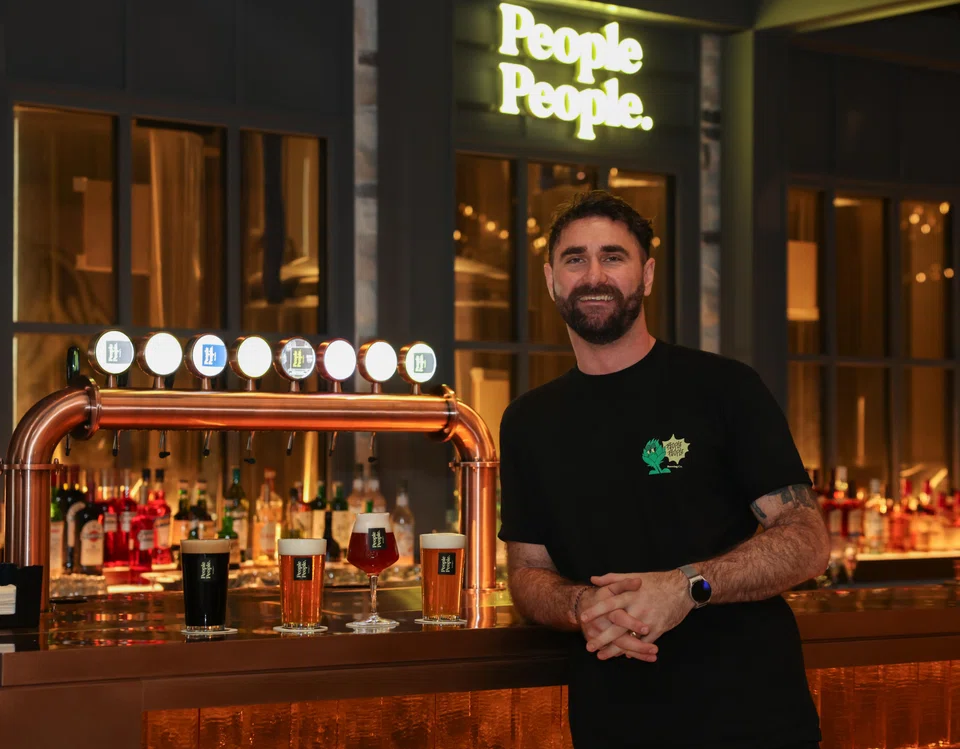
[SINGAPORE] Even as Singapore’s F&B scene contends with rising competition and costs, People People Brewing Co is betting that local beer production can still work.
Its strategy is not to chase volume alone, but to make brewing a crucial part of the customer experience.
Opened by Burnt Ends Hospitality Group, People People’s venue – located at Weave at Resorts World Sentosa (RWS) – is both a working brewery and a social space.
Behind the taps is a production facility with an annual capacity of up to 300,000 litres, housed within a 9,000 square foot venue that combines beer, food, events and customer experiences.
For Nick Calder-Scholes, who leads the brewing programme at People People, the challenge was clear from the start: In Singapore, making beer locally cannot be justified by production alone; it has to form part of a broader hospitality business.
“We are creating a space where an experience is around good beer, good food and good people,” he said.
Calder-Scholes, who has worked in Europe, the UK and the Asia-Pacific, was named Australian Brewer of the Year by Beer & Brewer in 2024.
Since its opening on Apr 15, People People has welcomed more than 10,000 guests, with about 80 per cent being based in Singapore.
International visitors have mainly come from markets such as Australia, the US, the UK and China.
SEE ALSO





The early response has given the team confidence that there is demand for a local brewery positioned not only around beer, but also around freshness, storytelling and service.
Brewing in a high-cost market
As a production facility, People People has to manage brewing equipment, cold storage requirements, licensing obligations and structural considerations.
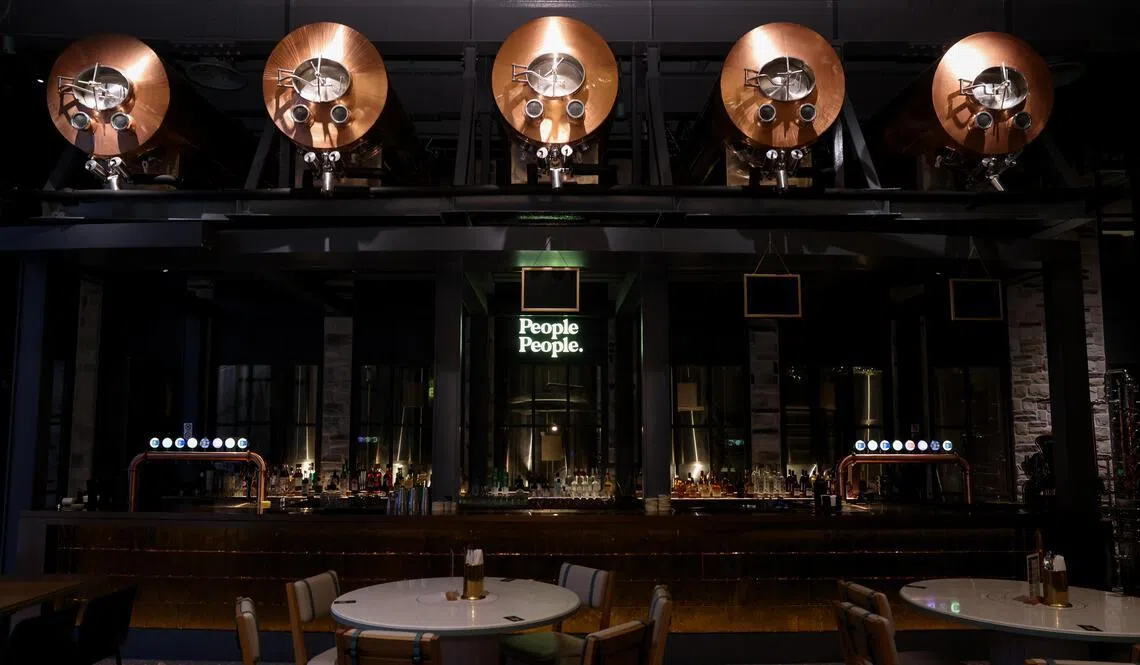
The venue’s tank-to-tap system includes five 1,500 litre serving tanks, which allow beer to move directly from tank to tap. This supports freshness and consistency, but also adds cost and complexity.
The set-up was especially challenging because the brewery is located in the basement of Weave at RWS. As heavy tanks and brewing equipment had to be installed within such environments, careful structural planning was required.
In addition, beer production, especially for lagers, requires precise temperature control. This made it costly to maintain cold brewing and serving conditions in Singapore.
Calder-Scholes shared that this was one reason why lager is among the most demanding styles to brew well in Singapore. Unlike heavily hopped or barrel-aged styles, lager leaves little room to hide flaws, he added.
“I always say, if you go to a brewery, always try the lager first, and if you enjoy it, nine times out of 10, you’re gonna enjoy the rest of the beers.”
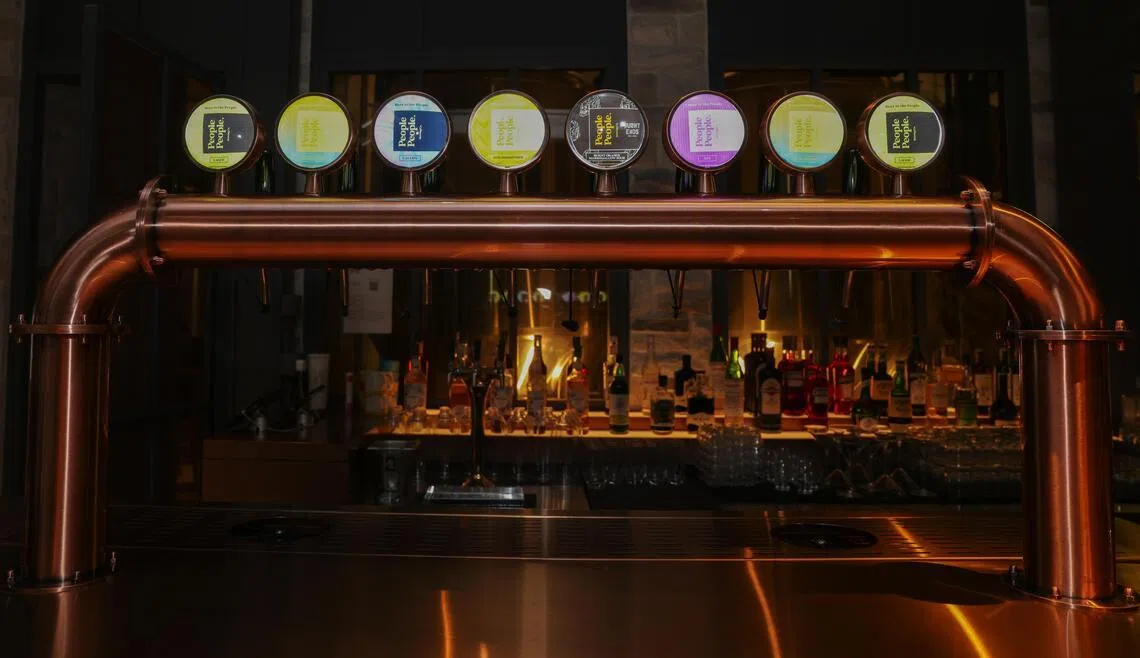
People People’s beer programme spans several collections, including core, seasonal, workshop series and founder’s reserve releases.
The core range includes staples such as its house lager, XPA and IPA. The seasonal and workshop series gives the team room to experiment with smaller batches, techniques and flavour profiles, while founder’s reserve releases are developed exclusively for its 100 founding members.
Experience as a business strategy
For beer producers in Singapore, manufacturing locally can be difficult to scale because costs are high and margins can be tight. People People’s response is to avoid competing on volume alone.
Instead, the business is built around an integrated model spanning brewery, bar, food, events, membership, retail and future distribution.
The venue includes a games room, television screens and wood-fired food, giving customers reasons to stay, return and bring others. Its open layout makes the brewing equipment visible, highlighting the idea that the bar is not just a place to drink beer, but also a working brewery where production is part of the atmosphere.
This visibility is key to the company’s positioning. The beer-brewing process, which is usually hidden from customers, becomes part of the product.
The approach is also one way in which People People is taking a leaf out of Burnt Ends’ book. “We are bringing that aspect of high-quality ingredients and provenance to how we make our product and then we want to serve it properly and fresh,” Calder-Scholes said.
He added that this is where the collaboration between the hospitality group and the brewery comes together, with both sides learning from each other.
Selling the story behind the beer
People People’s business model is built on the idea that beer can be more than something ordered with food.
Calder-Scholes said that in many settings, beer is treated as a familiar, everyday product; customers buy it from a shop, order it at a hawker centre or drink it with a meal, often without thinking much about how it is made.
The brewery is trying to change that by building education and interaction into the venue.
Customers can taste beers, ask questions, attend events and take part in guided brewery tours led by the head brewer. The tours cover ingredients, fermentation and brewing processes, followed by tastings.
The goal is to help customers understand why certain styles are brewed the way they are and why freshness matters.
Calder-Scholes said this was particularly important for beers that may require some explanation.
He cited the case of Poolside Pils, a lower-alcohol but full-flavoured pilsner. Earlier on, he had received feedback that the beer could face a “value issue”, as lower-alcohol beers may be harder to sell.
He decided to put it on the menu anyway.
The decision paid off. Poolside Pils sold out five times faster than expected and became one of the brewery’s most requested beers. It has become the brewery’s second-best-selling beer, behind its house lager.
For Calder-Scholes, the beer’s success highlighted the role of experience in shaping customer perception.
On a supermarket shelf, a lower-alcohol beer has to compete on its own. At People People, staff can pour samples, explain the product and help customers understand the intention behind it.
“Being able to show people why we make that beer and what it tastes like, it’s gained broad appeal both among the staff and the customers,” he added.
The same approach applies to styles that may be less familiar to casual beer drinkers. The Passionfruit and Yuzu Sour, for example, has helped introduce some customers, including wine drinkers, to a different side of beer.
“That’s an inclusive product,” Calder-Scholes said. “It changes their mind. They go, ‘Wow, I didn’t even know this was beer.’”
As its name suggests, the beer is made with passionfruit and yuzu, along with pale and wheat malts. It has intense tropical fruit notes, a citrus lift and a light yoghurt-like tang, with low bitterness.
Building B2C and B2B channels
People People’s team is now focused on establishing it as a local brewery in Singapore and Sentosa, while learning more about local consumer preferences.
Its near-term growth strategy includes both direct-to-consumer and business-to-business channels.
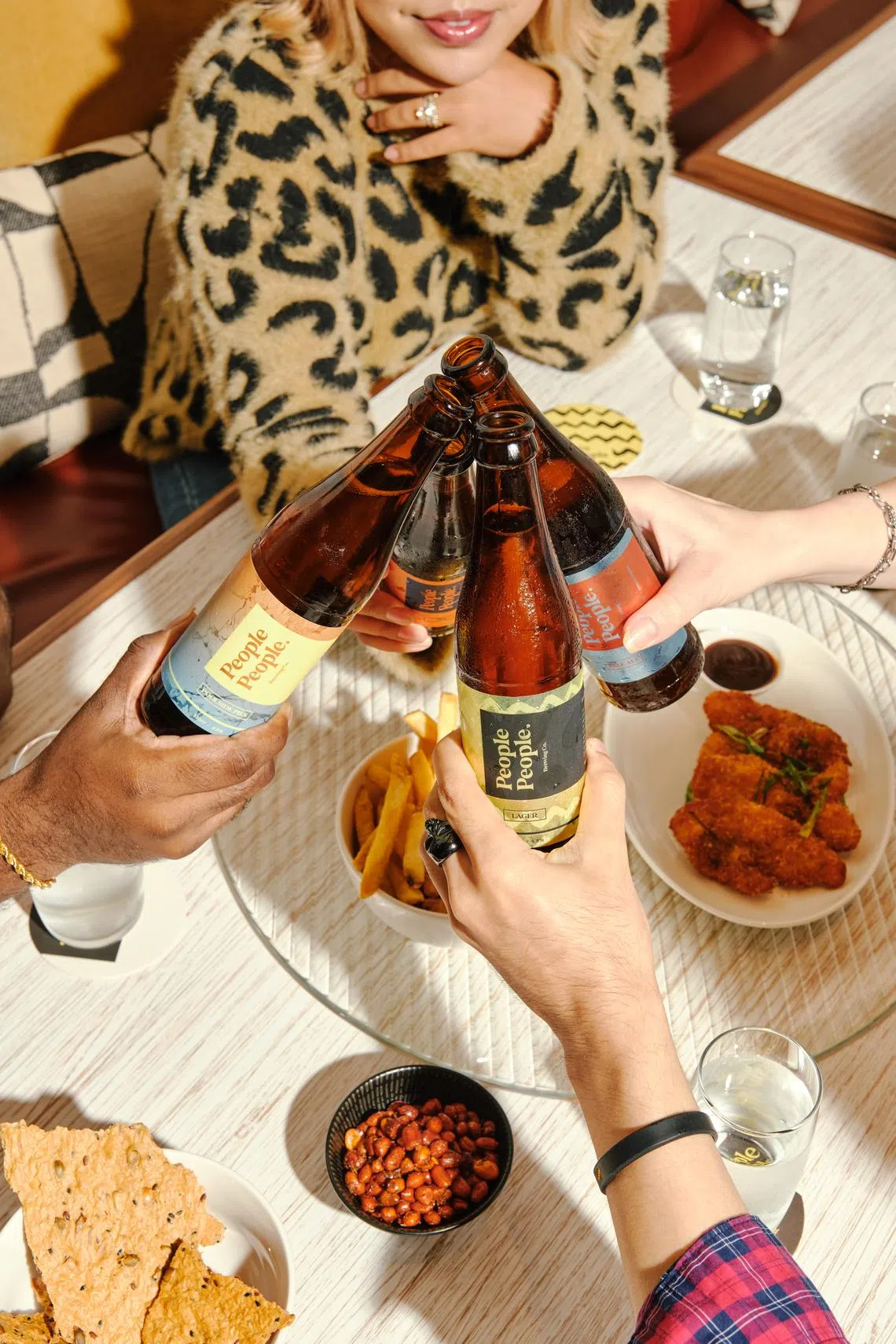
On the consumer front, the brewery aims to make its beers available across the Burnt Ends portfolio, as well as through its own online channels, delivery platform Grab and retailers.
For the business-to-business front, People People already produces kegged beer for external partners, including restaurants, supermarkets, bars and other F&B operators.
The brewery sees potential to export to markets around South-east Asia, although regional expansion remains a longer-term goal.
“I have no doubt that the beers that we make and the quality we put out will attract interest from abroad,” Calder-Scholes said.
For now, however, the immediate priority is to strengthen People People’s base at home.
“We have been far busier than we planned,” he added. “That gives us the confidence that we are on the right track.”
Decoding Asia newsletter: your guide to navigating Asia in a new global order. Sign up here to get Decoding Asia newsletter. Delivered to your inbox. Free.
Share with us your feedback on BT's products and services
TRENDING NOW

LTA proposes combining car COE categories, adding rebate-surcharge system
StarHub to acquire MyRepublic’s mobile business amid ongoing telco consolidation

DBS, OCBC, UOB rout lops billions off STI as inflation, rate concerns spook investors

Grab CEO’s wife Chloe Tong on life with Anthony Tan and finding her purpose

