

US flags 40 economies, including Singapore, in China’s ‘shadow transshipment network’
A White House report frames the routing of Chinese goods through an intermediate lower-tariffed country by concealing the true origin
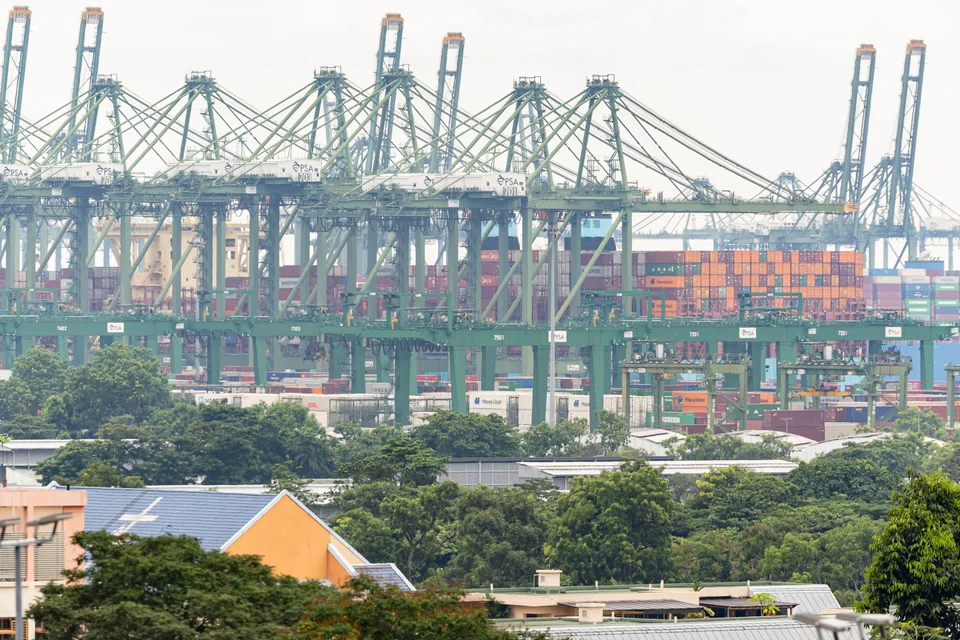
[SINGAPORE] Singapore and dozens of other economies are at risk of being used by Chinese exporters to avoid US tariffs, President Donald Trump’s administration said on Thursday (Aug 13).
A report issued by the White House, titled “The Great Transshipment Scam”, frames the routing of Chinese goods through an intermediate lower-tariffed country by concealing the true origin.
It also said the administration will use an artificial intelligence-powered “Detective Border”, among other initiatives, to help crack down on illegal transshipments.
“The message to the world is simple. The age of untraceable illegal transshipment is over,” the report said.
The report does not say what immediate action will follow. In August 2025, the US announced an additional 40 per cent tariff specifically on goods determined to have been illegally transshipped to evade duties.
Using estimates from government and private-sector studies, the report estimates that tariff-evading transshipments may have robbed the US of Customs revenue in the range of US$40 billion to US$303 billion.
“The available data show a substantial reallocation of US import sourcing following the 2018 tariffs. As China’s direct share of US goods imports declined, the combined share supplied by identified transshipment countries increased,” the White House report noted.
It added that the 40 lower-tariff economies have become the launchpads and hubs of a new evasion architecture, namely “products made largely in China, lightly touched abroad and exported to America under new identities”.
But this relationship does not establish that all displaced Chinese trade was illegally transshipped.
“Some of the shift reflects legitimate changes in production, investment and sourcing. However, the timing, magnitude and direction of the two trends support further investigation of the extent to which tariffed goods were rerouted through third countries.”
The 40 economies, including Singapore, identified in the report as participants in the “shadow transshipment network”, were grouped into three tiers.
Tier 1 economies include Canada, the European Union, India, Israel, Japan and Taiwan, and were described as major US-bound export platforms where transshipment risk is embedded within broad legitimate trade flows.
Tier 2 economies are those with significant economic integration with China, and include Brazil, Indonesia, Malaysia, Thailand, Turkey and Vietnam.
The White House placed Singapore in Tier 3, which the report said consists of “small, opportunistic Chinese targets”. Others in Tier 3 include Cambodia, Laos, Myanmar and the Philippines.
“These are smaller economies with lower absolute illegal transshipment volumes but specific weak-link advantages – including low-cost labour, free zones, port or border access, bonded warehousing, niche assembly capacity, preferential US access or limited Customs enforcement capacity – that make them attractive opportunistic targets for China-linked rerouting.”
The report also said that China-linked exporters may use these jurisdictions for both limited production activity and logistics side-routing.
The report warned the 40 economies that as their local export sectors and transportation networks become increasingly dependent on Chinese inputs, logistics and capital, “Beijing may gain additional commercial and geopolitical leverage while preserving indirect access to the US market”.
The Straits Times has asked the Ministry of Trade and Industry for comments on the White House report.
Singapore has repeatedly stated in the past that it takes trade compliance seriously. Singapore Customs, in response to media queries in September 2025, said: “Singapore’s legislative and regulatory framework governing transshipment is consistent with international best practices and rules, including those from the World Customs Organization, and seeks to facilitate trade through greater transparency and predictability for businesses.”
The agency added that transshipment in Singapore refers to the movement of goods from their source to their destination via Singapore, involving a change from one conveyance to another. “Transshipped goods do not originate from Singapore and are not for domestic circulation or storage. Their transshipment through Singapore does not change their country of origin (that is, they cannot be relabelled as originating from Singapore).”
Companies transshipping goods through Singapore must fully comply with the Republic’s laws and regulations, noted Singapore Customs, adding that the agency works closely with international counterparts to detect and take action against illicit goods imported, exported or transshipped through the nation.
The report is part of the Trump administration’s efforts to rebuild the US leader’s tariff regime after it was undermined by a court decision earlier in 2026.
In July, a new 12.5 per cent levy, covering about a third of Singapore’s domestic exports to the US, was imposed after the White House alleged that the Republic and dozens of other economies failed to adopt and effectively enforce prohibitions on trade in goods produced with forced labour. THE STRAITS TIMES
Decoding Asia newsletter: your guide to navigating Asia in a new global order. Sign up here to get Decoding Asia newsletter. Delivered to your inbox. Free.
Share with us your feedback on BT's products and services
TRENDING NOW

Once staunchly pro-China, Malaysian Chinese businesses are now distancing themselves from Beijing

Looking beyond looming CEO succession, should UOB potentially pursue a transformative merger?

Could stablecoins be the future of money?

Grab CEO’s wife Chloe Tong on life with Anthony Tan and finding her purpose

