

Wealthy investors can trust Singapore to manage their assets: Gan Kim Yong
He says that it is important for the Republic to invest in supply chain resilience amid geopolitical uncertainties and climate change
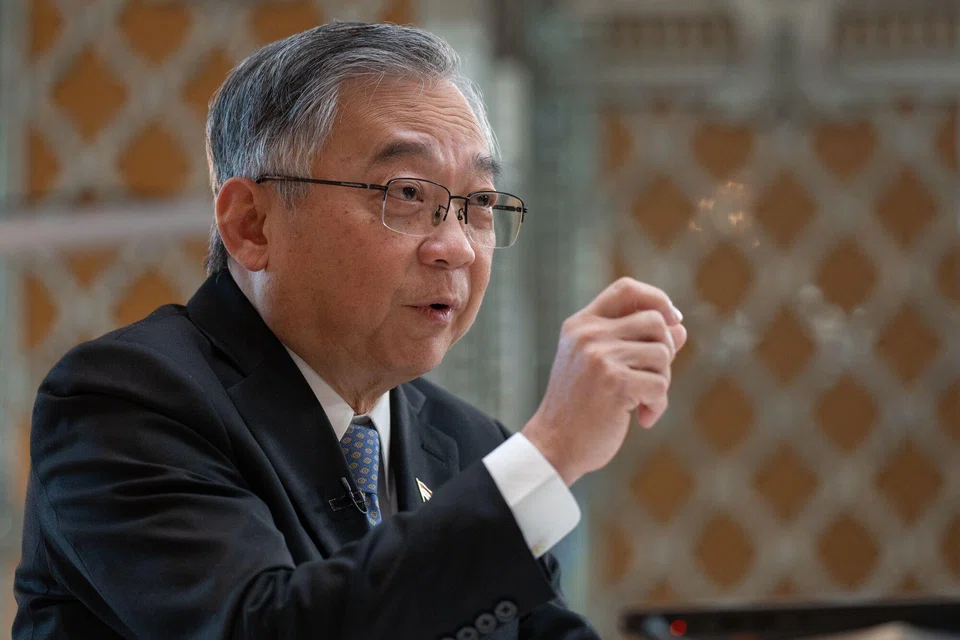
[NEW DELHI] The rich can trust Singapore with their assets, said Deputy Prime Minister Gan Kim Yong, as the Republic seeks to strengthen its position as a global wealth management hub.
He was speaking to Bloomberg TV on the sidelines of the Bloomberg New Economy Forum 2026 in New Delhi, India, on Oct 14. Gan is on a three-day visit to India from Oct 13 to Oct 15 to strengthen bilateral economic cooperation.
“You can trust Singapore to manage your wealth. This is where the wealthy people want to put their assets,” said Gan, who is also minister for energy, trade and industry.
Asked about how Singapore competes with the likes of Hong Kong and Dubai as a wealth hub, he said that Singapore has to work faster and harder.
“Competition is a given. We continue to make sure that our regulations and rules are up to date and facilitate many of these operations for wealth management. We continue to improve ourselves and make sure that we are efficient,” he said.
Earlier in the day, he also spoke on a panel together with India’s union minister of commerce and industry Piyush Goyal, DP World group chief Yuvraj Narayan and Canada’s minister of international trade Maninder Sidhu.
Gan said that it is important for Singapore to invest in supply chain resilience amid geopolitical uncertainties and climate change.
Citing the Covid-19 pandemic and Strait of Hormuz disruptions, Gan noted that “the cost of disruption may be higher than the cost you are paying for resilience”.
He added: “In time to come, it may not be Strait of Hormuz, it may not be geopolitics, it may not be (a) pandemic. It could be climate change. It could impact on supplies. We just have to prepare for the new future.”
SEE ALSO

To build supply chain resilience, the Republic is diversifying natural gas supplies and studying nuclear gas as an option, said Gan. “We are looking at different sources of natural gas, so that we don’t depend on a single source for our supply of natural gas.”
On the feasibility of nuclear gas, Gan noted: “We are still studying today. We have not made a decision, but it’s important for us to keep pace with the development of technology, so we know what is available, and we continue to keep our options open. I think this is something that we consider very seriously.”
Asked about the Asean Power Grid, he replied that while it is a major challenge for countries to come together to decide and to implement the initiative, there is a need.
The Asean Power Grid is a regional energy integration initiative to connect electricity networks across Asean member states for cross-border power trading and clean energy security by 2045.
“With the need for green energy, the interest in developing this project is there. It is going to be very complicated because it will involve cross-border electricity trading, and this is something that we need to develop,” said Gan.
Acknowledging that it will be a multi-decade-long project, Gan pointed out that the countries “have to look at it from an incremental point of view”.
He explained: “First, for example, Singapore will connect ourselves with Malaysia, with Indonesia. Next, Malaysia will connect to Thailand and the rest of Asean. It’s going to be a step-by-step, phase-by-phase approach and component by component. It’s also important to upgrade the internal domestic power grid in order to be able to carry that.”
It comes as Singapore assumes the Asean chairmanship in 2027, taking over the role from the Philippines on Jan 1, 2027, and serving through Dec 31, 2027.
Gan said that the priorities are implementing regional trade and digital economy agreements such as the Digital Economy Framework Agreement, which Asean is expected to formally sign in November under Manila’s chairmanship, and the Trade in Goods Agreement.
Gan added that he is optimistic that the upgraded Trade in Goods Agreement will facilitate further intra-regional trade. “This will also benefit our trading partners because we are able to trade among ourselves more efficiently. Other countries who are trading with us will find that their goods will be able to move more freely within Asean so it’s mutually beneficial for all.” THE STRAITS TIMES
Decoding Asia newsletter: your guide to navigating Asia in a new global order. Sign up here to get Decoding Asia newsletter. Delivered to your inbox. Free.
Share with us your feedback on BT's products and services






