The ‘mass affluent’ are losing their allure for wealth managers navigating AI
Such clients can now get ‘something close to private-banking quality’ from the technology

WEALTH managers keen to stay relevant in the age of artificial intelligence may soon find that clients with a mere US$1 million in liquid assets are no longer worth spending human hours on.
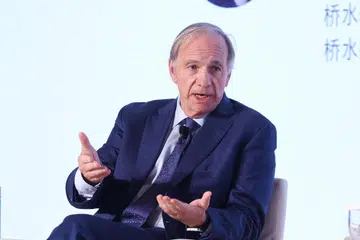
“The mass-affluent client now gets something close to private-banking quality from AI,” said Debasish Patnaik, senior partner at McKinsey.
That not only “strips the value from the adviser whose role was standardised advice”, but it also means “the kind of person hired into wealth management changes fundamentally”, he added in an interview.
The assessment implies that individuals with liquid assets between US$100,000 and US$1 million – broadly defined as the mass affluent within the industry – could soon be handed over to AI.
Instead, human wealth managers keen to show they can do better than AI need to focus their talents on the emotional needs of the truly rich, Patnaik’s analysis implies.
The prediction comes as financial professionals everywhere struggle to interpret how AI will upend their careers.
Signals from the industry and those advising it, meanwhile, are not always consistent. And in wealth management, there are even signs that AI is creating hiring needs as firms seize on the promise of extra productivity to expand.
Citigroup plans to recruit hundreds of humans for its private banking and wealth management business as it deploys AI. That comes as CEO Jane Fraser has made it an explicit goal for the bank to become a “global leader in wealth management”.
Citi has said that it wants to add 400 wealth advisers across its US retail bank and another 100 staffers for its private bank.
SEE ALSO





At the same time, the Wall Street bank is developing AI-backed software aimed at helping it produce near-instant reviews of portfolios at scale, down from the several hours such tasks take today.
Bankers will be able to “press a button” in order to instantly “draft an e-mail from the chief investment officer and distil what it means for the client,” Joe Bonanno, Citi’s head of wealth intelligence, said in an interview.
Among products being rolled out by Citi are a conversational AI-powered avatar specifically intended to support rich clients on issues such as how to manage their child’s college fund.
The upshot overall is that AI will let Citi have more contact with its customers, and “engagement keeps clients happier and stickier”, Bonanno noted.
Patnaik said that when it comes to handling ultra-wealthy clients, it helps if a manager has the emotional nous to deal with tense situations such as deciding which family member gets to inherit what, or being there to hold their hand through a market rout.
The adviser who successfully “reads the room” and “manages family dynamics” will have the best chance of surviving the onslaught of AI, he pointed out.
They need to be willing to “sit with a client through a succession or a liquidity event, and help them think clearly”, he added. “AI does not touch that, so firms will weight hiring heavily toward it.”
Professionals in the industry, where senior managers handling ultra-high-net-worth clients can earn millions of dollars a year, are trying to figure out what exactly makes a human adviser irreplaceable by AI.
That comes as the list of AI products continues to grow. Anthropic’s Claude, OpenAI’s ChatGPT and Alphabet’s Gemini already offer tools that allow users to model portfolios, optimise taxation and even explore possible philanthropic ventures.
Banks are also developing their own platforms. At UBS Group, the world’s largest wealth manager, 90 per cent of its advisory teams in the US are already using an internal AI platform to help make them more productive.
UBS private bankers and wealth managers now get personalised insights on clients, courtesy of the in-house AI tool the firm uses, a spokesperson said.
The Swiss bank is applying AI to improve areas such as adviser productivity and operational efficiency, while at the same time prioritising governance, transparency and trust, the spokesperson noted.
In fact, AI’s arrival now appears to be creating a need for new kinds of human expertise, such as AI governance. Patnaik said that firms will likely increasingly need to rely on “specialists, behavioural data scientists, personalisation architects, and human-in-the-loop oversight professionals”.
These are “entirely new roles” that “did not exist in wealth management a few years ago”, he added. “These hybrid profiles, combining domain expertise with technical fluency, are among the fastest-growing and hardest to fill anywhere in financial services.” BLOOMBERG
Decoding Asia newsletter: your guide to navigating Asia in a new global order. Sign up here to get Decoding Asia newsletter. Delivered to your inbox. Free.
Share with us your feedback on BT's products and services