Decision fatigue, complexity stop people from investing despite growing retirement needs: BlackRock
Wealthy investors here are shifting towards outcome-driven strategies, adds its head of Singapore wealth

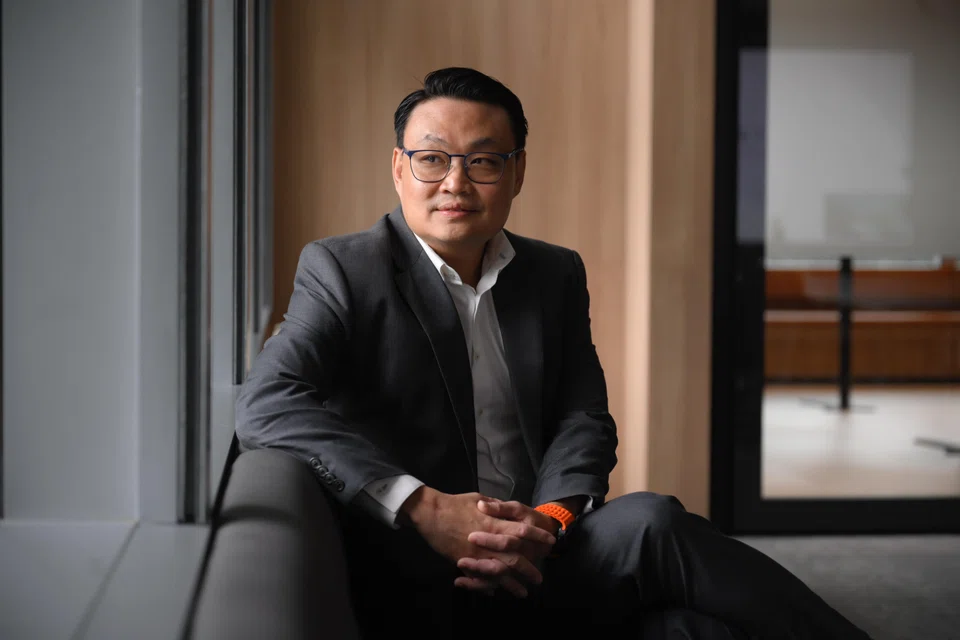
[SINGAPORE] Complex investment choices and decision fatigue are keeping investors on the sidelines, potentially depriving them of long-term stock market returns even as retirement planning becomes an increasingly pressing priority, said Dennis Quah, head of Singapore wealth at BlackRock.
In an interview with The Business Times, Quah noted that the technical nature of investing and emotional biases are among the biggest barriers preventing individuals from putting their money to work. “One of the key reasons why people don’t invest is that… it is complex and technical, so people tend to be averse (to)…asset allocation,” he added. “When I say equities, bonds, people get a bit concerned.”
The challenge is particularly salient in Singapore, where an ageing population is putting a spotlight on retirement adequacy.
Singapore has officially become a super-aged society, with more than 21 per cent of the citizen population aged 65 and older, as compared to 20.7 per cent in 2025 and 13.7 per cent a decade ago.
Against this backdrop, wealthy investors are moving away from individual investment products towards strategies focused on long-term financial outcomes, explained Quah.
“The earlier days of wealth management were more product-led,” he said. “What is structurally changing is that many investors are now trying to understand… (if they) should be… programmatic towards solving for a specific outcome.”
Move towards outcome-driven investing
This shift is changing conversations between wealth managers and their clients, with greater emphasis on asset allocation, portfolio construction and risk management, Quah noted.
One solution gaining traction is target-date investing, where portfolios automatically shift towards more conservative assets as retirement approaches, he said. Such solutions could address these concerns by putting the process into a longer-term plan tied to a specific goal.
That way, investors can focus on long-term savings and retirement milestones rather than individual market exposures, noted Quah.


When implemented across large groups of investors, they can also achieve economies of scale that lower investment and operating costs, he added.
The upcoming Central Provident Fund (CPF) life-cycle investment scheme, slated for launch in 2028, is another development that is welcomed by Quah.
The programme will allow CPF members to invest their savings into diversified life-cycle portfolios, including equities, with asset allocations that adjust as they reach retirement.
These help investors save for the long-term at low cost, and are relatively easy to access and understand, he added.
Technology reshaping portfolio management
Technology is also reshaping how institutional and retail portfolios are managed.
In May, Blackrock launched its BlackRock Systematic Asia Pacific Equity High Income Strategy, which Quah said leverages systematic platforms, artificial intelligence and machine learning to identify high-quality companies capable of delivering strong returns and harvesting income.
This is layered with covered calls to effectively generate income from underlying portfolio volatility, he added.
Quah said that artificial intelligence and machine learning tools allow asset managers to ingest unconventional datasets – such as shopping mall footfall, GPS metrics, and logistics delivery metrics – to generate sharper signals for portfolio positioning.
He is also optimistic about Asian equities, noting that the asset class remains under-owned. “Asia equities is actually an under-owned asset class. It is ironic because 10 years ago it was one of the most important asset classes for growth investors, and then you know in more recent years it has been less in favour.”
With the broadening of the AI theme taking firmer root in Asia and institutional investors beginning to increase their allocations, Quah viewed these trends as net supportive for the sector.
Changing demands on wealth managers
This technological and structural transformation is also altering the type of skills required of wealth management professionals.
Because retirement portfolios are multi-decade commitments now designed to run for 20, 30, or even 40 years into perpetuity, the playbook has changed, he pointed out.
“The salesperson quality now is not to necessarily know what the next 20 years will look like. It’s nearly impossible,” Quah said. “What they need to be is intellectually curious. They need to be able to understand the challenge, be empathetic to talk to a client, and properly distill... because sometimes it is difficult to articulate your challenge.”
Ultimately, the wealth management industry needs problem solvers and critical thinkers who can leverage robust technological platforms to address the evolving complexities of tomorrow’s retirees, he explained.
While technical skill sets remain important, adaptability, empathy, and long-term relevance will be the true cornerstones of successful wealth professionals in the years ahead, he added.
“We need problem solvers and problem identifiers,” said Quah. “We need people that are able to address the various challenges that the future may hold, and then be adaptable, nimble, (and) relevant over the long term.”
Decoding Asia newsletter: your guide to navigating Asia in a new global order. Sign up here to get Decoding Asia newsletter. Delivered to your inbox. Free.
Copyright SPH Media. All rights reserved.