

When family wealth becomes too complex to remain informal
More in Asia are moving from personal decision-making towards institutional stewardship

FOR many successful families, questions of wealth, business, succession and legacy inevitably find their way into family conversations.
What began as informal decision-making around a founder’s vision can become far more complex as wealth grows, assets cross borders and the next generation brings a different set of priorities to the table.
That is often the point at which decisions are best moved beyond the living room, when a family begins to benefit from the qualities of an institution: clarity, governance, accountability and continuity.
Across Asia, many families are entering a new phase of wealth from creation to preservation, and they begin to consider how to govern it and pass it on with purpose. The growth of family offices in global hubs such as Singapore reflects this shift from personal decision-making to more institutional stewardship.
There are many reasons why family offices have become more attractive. A clear regulatory environment, a growing pool of professional talent and increasing recognition from regulators are important elements of the financial ecosystem.
However, to me, the real driver is demand. Families are confronting a level of complexity that informal structures often struggle to manage.
Four key factors stand out:
1. Complexity demands institutionalisation
The clearest signal that a family may need to become an institution is when institutionalisation becomes the simplest way to manage growing complexity.
Historically, first-generation entrepreneurs have been able to balance business, wealth and family simultaneously. Subsequent generations, however, may span multiple jurisdictions, business interests and family branches, each with their own perspectives and priorities.


Family itself is a social construct. Growing up in an Asian family, I would argue it requires navigating a plethora of spoken and unspoken rules.
There comes a point when a family becomes too successful to remain entirely informal, when not everyone can see the full picture nor agree on the best course of action.
At this stage, a family office can strengthen these “ties through blood” with “ties through vision”, while introducing the governance and independent thinking needed to support long-term decision making.
Common tools such as family charters, investment policy statements and regular reporting all play an important role.
Complexity also affects the solutions families require. While many banks have extensive ultra-high-net-worth practices, family offices have evolved into a distinct coverage segment requiring access to a broader toolkit.
This is where an integrated approach becomes valuable. As families become more institutional in nature, they often require access to institutional capabilities.
The ability to draw expertise across a wider banking platform, such as a corporate or investment bank, can help connect the right solutions to increasingly sophisticated needs.
2. Purpose before process
Organisational-behaviour theory tells us that performance improves when members are aligned around a common mission. The same principle applies to families.
One of the most important roles a family office can play is helping to define and preserve a shared sense of purpose.
Whether wealth is intended to support shared values, long-term legacy objectives, entrepreneurship or philanthropy, clarity of purpose can provide a common point of reference.
Establishing this early can also influence the culture of successive generations. Over time, they can become part of the identity of the family’s wealth and a framework for decision-making.
Perhaps most importantly, a clearly articulated purpose can help prevent disagreements from becoming entrenched conflicts.
Principles should evolve with time but having them codified within a governance framework allows the evolution to occur in a structured and deliberate manner.
3. Clarity of role and thinking
Ambiguity is one of the strongest predictors of misunderstanding. Even the best intentions can lead to conflict when responsibilities and decision rights are unclear.
An institutional framework helps remove some of that ambiguity. Clear roles, accountability and a decision-making structure allow family members to determine how they wish to participate, while reducing the risk that disagreements become personal.
As families grow larger, a clearer distinction between family roles and institutional responsibilities can help preserve relationships during inevitable moments of tension.
Bringing experienced specialists into a family-office environment introduces independent perspectives and promotes a culture of stewardship. Separating the management of wealth from day-to-day family dynamics or operating businesses can create both accountability and focus.
In that way, each stakeholder is better positioned to concentrate on their own responsibilities while contributing to the broader success of the family.
4. Building success through succession
Succession is another area where family offices can add significant value.
In complex family structures, participation in the family office can provide practical experience under professional guidance, helping future generations develop the skills required for stewardship and leadership.
As generations pass, the family office can become a platform for identifying talent, nurturing leadership and preparing future successors. Continuity, education and leadership transition can all be embedded within the institution from an early stage.
The family office eventually becomes a permanent source of support across multiple generational transitions, helping preserve both capability and continuity over time.
More a human question than financial
Ultimately, the question of when a family needs to become an institution is not a financial challenge but a human one.
Investment policies, governance frameworks and succession plans are important, but they are only tools. The greater challenge is defining a vision, maintaining discipline and fostering stewardship across generations.
The growth of family offices, particularly in Asia, reflects the reality that wealth is changing hands more rapidly and family structures are becoming more complex. Professionalisation is not about replacing the family but about preserving what makes the family strong in the first place.
The best institutions are built on clarity, accountability and continuity. Applied thoughtfully, those same qualities can help families protect their identity, belonging and purpose, and help them navigate the complexities that success inevitably brings.
Done well, institutionalisation does not diminish the family. It helps ensure the family itself becomes the institution that stands the test of time.
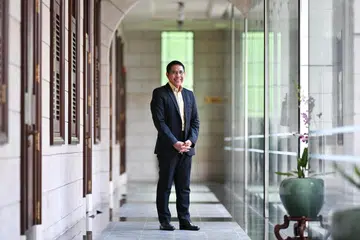
The writer is head of investments Asia, Barclays Private Bank
Decoding Asia newsletter: your guide to navigating Asia in a new global order. Sign up here to get Decoding Asia newsletter. Delivered to your inbox. Free.
Share with us your feedback on BT's products and services
TRENDING NOW

Government to bring forward raising of retirement age, give employers more financial support to create flexi-load jobs
Former minister Maliki Osman, Revolut chairman join Asia Gulf Holdings advisory board

Is Manila Asia’s new dining hot spot?

Simba at risk of losing operating licence over spectrum misuse

