

10 stocks to watch in 2026: SingPost, UOB, ST Engineering and more
After the STI’s 22.9% romp in 2025, which way might Singapore equities head?
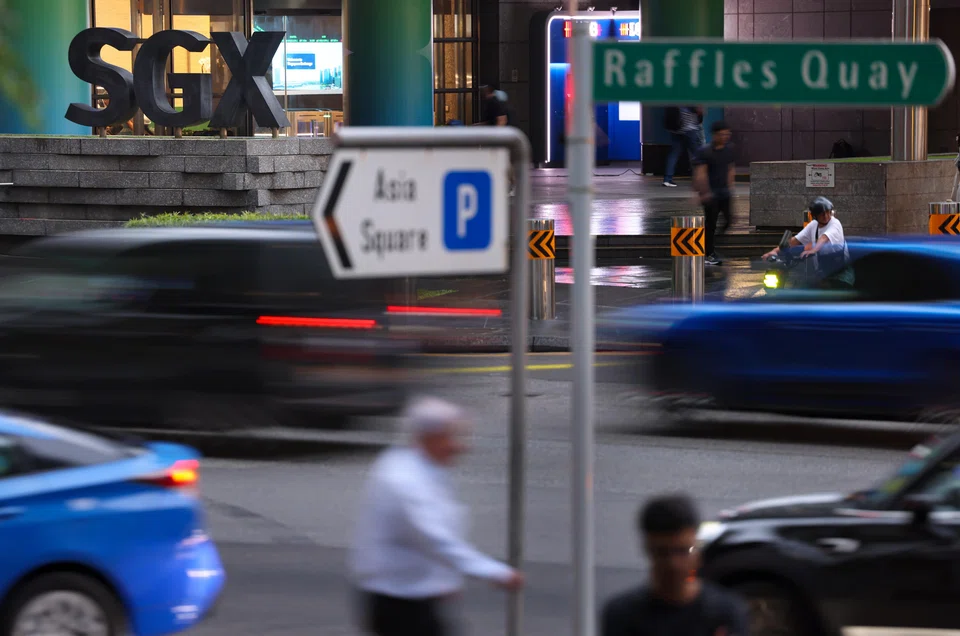
[SINGAPORE] For global stock markets, 2025 was a blockbuster year.
After a slump following US President Donald Trump’s “Liberation Day” tariff announcements, the equities markets romped to new heights. In Singapore, the benchmark Straits Times Index gained 22.9 per cent in the year to Dec 30.
What will the new year bring? Here are 10 Singapore-listed companies that The Business Times’ Companies and Markets team believes you should keep an eye on in 2026.
Singapore Post
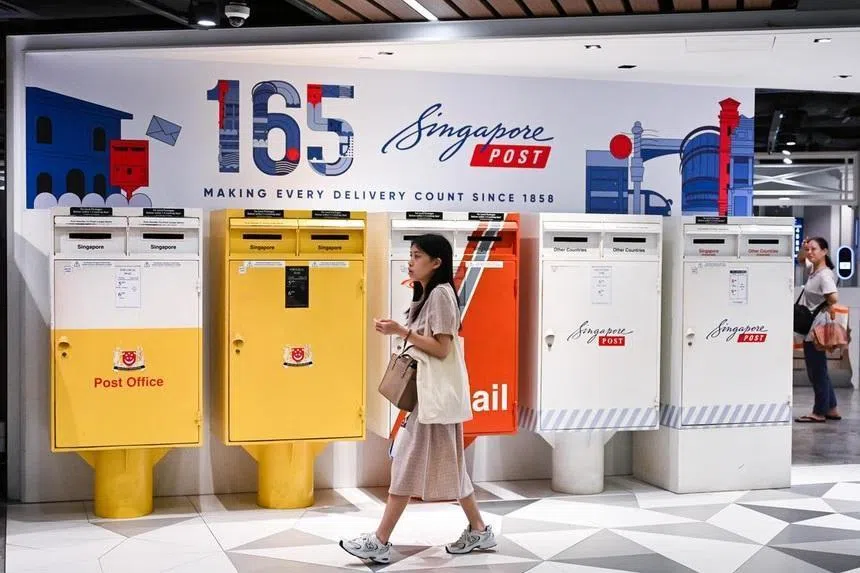
Singapore Post (SingPost) shareholders are yearning for the reset strategy that the national postal service provider has promised since the sale of its previous cash cow, Freight Management Holdings in Australia, in 2025.
The divestment left SingPost with a declining postal business, a highly competitive e-commerce logistics business, and property assets that have been classified as non-core.
There are hints of reconsiderations surrounding the sale of SingPost Centre, as the property was the most profitable of the group’s three business segments: logistics and letters, post office network, and property assets, as at end-September.
After the payment of a special dividend from the proceeds of the Australian divestment, SingPost’s share price has been on a steady decline, and is now hovering at a 52-week low of S$0.405.
With a new chairman and a new chief executive officer, shareholders are understandably expecting the two new appointees to deliver and lift the group out of its trough with the keenly awaited reset strategy.
UOB
UOB is the smallest of the trio of banks that form the backbone of the Straits Times Index. In 2025, however, it was among the worst performing constituents of this key market benchmark.



What has been weighing it down? A steep rise in pre-emptive general allowances crushed its third-quarter earnings, and is likely to see it report much weaker full-year results than its peers.
UOB also reported an unnerving deterioration in asset quality, with new non-performing assets (NPAs) rising significantly during the quarter. The lender said it saw looming danger in the commercial property sector in Greater China and the United States.
On top of that, UOB’s top line has been somewhat less resilient than its peers in the face of softening interest rates.
UOB is now trading at a significantly lower price-to-book ratio than DBS and OCBC, reflecting its markedly lower return on equity.
In 2026, the lender’s overall profitability may rebound, in the absence of further large allowances for NPAs. But it remains to be seen if it will improve enough to lift its depressed share price.
Genting Singapore
The operator of the Resorts World Sentosa (RWS) integrated resort has endured a tough couple years, with its profitability hampered by rising costs, upgrading works that deterred visitors, and a dip in the “win rate” at its casino.
These difficulties seemed to culminate in Genting Singapore being booted off the MSCI Singapore Index on Nov 24.
In 2026, however, the progressive opening of new attractions under the S$6.8 billion “RWS 2.0” expansion programme may excite visitors as well as investors.
Already, the group said in its Q3 2025 business update that the completion of the Singapore Oceanarium and the Weave mall had attracted higher footfall and resulted in stronger non-gaming revenue.
Towards the end of 2026, analysts and investors will be watching out for news about the renewal of RWS’ casino licence. The licence was last renewed for only two years, starting from Feb 6, 2025. Previous licence renewals were for periods of three years.
The Gambling Regulatory Authority said in late 2024 that RWS’ tourism performance had been assessed to be unsatisfactory, and that the evaluation panel had recommended the next evaluation be carried out in two years.
UltraGreen.ai
UltraGreen.ai is the largest non-real estate investment trust (Reit) initial public offering (IPO) since 2017, and a biotech listing that could pave the way for similar companies to list here.
Its performance post-IPO will be closely watched, not just by investors, but also market players looking for exits for their portfolio.
The company’s product, a dye that helps doctors see blood flow via its cameras and platform, has an immediate global reach. Beyond getting the dye to become a standard of care for medical procedures, UltraGreen.ai is also building out its data platform.
A potential listing on the Nasdaq could be on the cards, but the company would rather be valued as a tech company than a medtech or pharma company.
Should the data platform be built out enough to make up a bigger portion of its revenue mix, UltraGreen.ai’s fortunes might just see another lift.
Linked to notable names such as chairman Kwa Chong Seng and lead independent director Hsieh Fu Hua, the company could have the corporate backing to go far.
UltraGreen.ai will be one to watch as a herald for similar companies to list on SGX.
Wee Hur
Mainboard-listed property developer Wee Hur is shaping up to become a resilient player in Singapore’s real estate market.
A constituent of the newly introduced iEdge Singapore Next 50 Index, the group’s share price rose 78.6 per cent in the year to Dec 30.
Wee Hur has diversified into multiple segments, including construction, workers’ dormitories, property development, fund management and purpose-built student accommodation (PBSA).
It has been expanding its portfolio of projects; recently, it took a stake in a fund managed by Singapore-based asset manager Aravest, which acquired the former Hotel Miramar Singapore on Havelock Road for S$160 million – marking the group’s first investment in the hotel sector.
Its wholly owned subsidiary, Wee Hur Property, has also entered into a joint venture to develop an international school in Singapore, as part of its focus on demand-driven, long-term property segments.
These initiatives follow its April 2025 divestment of seven PBSA properties under its first PBSA Master Trust (Fund I) to global investor Greystar for A$1.6 billion (S$1.3 billion).
Wee Hur’s fund management arm, led by CEO Goh Wee Ping, noted that the group’s track record in the Australian student housing market, including two large-scale PBSA transactions, positions it to raise additional institutional capital as it prepares for further expansion.
Singtel
Singtel , the largest telecommunications company in Singapore by market share, experienced a mixed 2025.
It started off the first half of the financial year strong, as it reported a 33 per cent year-on-year increase in profit.
This success led the group to widen its operating companies’ earnings before interest and tax guidance to “high single digit to low double digit”, an upgrade from the previous “high single digit” at the start of the financial year.
Yet, Singtel’s Australian subsidiary, Optus, was plagued by operational failures – most notably, a fatal outage in September which resulted in the death of three people. A low five-year return on invested capital of 1.7 per cent also raised concern among shareholders.
Despite these concerns, Singtel’s efforts to improve Optus have been reflected in recent results.
Market observers are now watching Singtel and private equity firm KKR’s potential acquisition of ST Telecom Global Data Centre for about US$5 billion with keen interest.
This deal, if completed, could be Asia’s largest-ever leveraged buyout financing in the data centre sector, according to Bloomberg-compiled data.
ST Engineering
ST Engineering emerged as the Singapore market’s standout performer in 2025; its investment case remains compelling heading into 2026.
The stock is up about 81.1 per cent in the year to Dec 30, the strongest gain among Straits Times Index constituents, as investors rotate into defence-linked names amid a shifting global security landscape.
That backdrop looks set to persist. The prolonged Russia-Ukraine war, alongside Europe’s accelerated rearmament and structurally higher defence budgets, has reinforced demand for defence electronics, systems integration and long-term sustainment capabilities – areas where ST Engineering has built scale and credibility over decades.
Earnings visibility remains a key draw. The group’s order book reached a record S$32.6 billion as at end-September, providing multi-year revenue cover across defence and public security, aerospace, and urban solutions.
The aerospace segment continues to benefit from the steady recovery in global air travel, while government-linked urban and digital infrastructure projects offer resilient, non-cyclical demand.
Execution has also strengthened. Management has sharpened its portfolio focus, lifted cash generation and sustained a progressive dividend profile, including a special payout for FY2025 funded by proceeds from recent divestments.
Alpha Integrated Reit
Alpha Integrated Reit (AI-Reit) in late 2025 completed its transition away from its troubled past as Sabana Industrial Reit to become the first Singapore-listed Reit to fully adopt an internal management model.
Unitholders will be hopeful that this will mark a new beginning for the Reit, which had been weighed down by negative sentiment for some years, especially since its failed merger with ESR-Reit in 2020.
As fate would have it, the internal manager of AI-Reit will be helmed by industry stalwart Karen Lee – the CEO of the manager of ARA Logos Logistics Trust, which successfully merged with ESR-Reit in 2022.
The market appears to be positive about the changes; AI-Reit is the top performer among the Singapore-listed Reits this year, generating a total return – with distributions reinvested – of 46.2 per cent.
Swiss-based Volare Group also recently acquired more units in the Reit, which triggered a mandatory offer for all units in AI-Reit that it does not already own. The group said it intends to maintain the listing status of AI-Reit on the SGX.
It will be interesting to see if AI-Reit can replicate the success of Hong Kong-listed Link Reit, which was for the longest time the only internally managed Reit in Asia.
MetaOptics
Metalens manufacturer MetaOptics has taken the stock market by storm.
Since its listing in Singapore in early September, MetaOptics’ share price has climbed 495 per cent – making it one of the best performers on the SGX in 2025.
Now, it is looking to conquer the US as well, with a proposed dual listing on the Nasdaq.
The proposed Nasdaq listing, according to MetaOptics, will allow the company to tap a more varied group of investors and enhance the trading liquidity of its securities.
The company’s metalenses – flat, glass-based lenses built and fabricated using the same technology and manufacturing process as semiconductor chips – is poised to transform the optical industry.
These can be used in a wide range of applications, such as heads-up displays for cars and planes, augmented reality devices, and contactless 3D biometrics. Most visibly, the metalenses can be used in smartphone cameras to solve the “camera bump” problem.
Could MetaOptics’ stellar run continue into 2026? If only the company could create a crystal ball for us to gaze into the future.
CapitaLand Integrated Commercial Trust

CapitaLand Integrated Commercial Trust (CICT) had a strong year in 2025, with its unit price rising more than 20 per cent.
In October, the retail-focused Reit surpassed Link Reit to become the largest Asian Reit. As at Dec 30, its market capitalisation stood at about S$17.9 billion.
Primarily exposed to the Singapore market, CICT has been largely insulated from geopolitical uncertainties. It has also benefited from the strengthening of the Singapore dollar.
Looking ahead to 2026, it remains to be seen whether the momentum can be maintained. However, there are positive signs on the horizon. Retail rents are expected to rise further, while tourist spending looks set to grow.
However, the Reit could face some challenges in the coming years, particularly from competition across the causeway.
The upcoming cross-border Johor Bahru-Singapore Rapid Transit System Link, which is due to start services by December 2026, could see more Singaporeans flock to Malaysia for their spending.
Decoding Asia newsletter: your guide to navigating Asia in a new global order. Sign up here to get Decoding Asia newsletter. Delivered to your inbox. Free.
Copyright SPH Media. All rights reserved.
TRENDING NOW

DBS, OCBC, UOB rout lops billions off STI as inflation, rate concerns spook investors

Grab CEO’s wife Chloe Tong on life with Anthony Tan and finding her purpose

OCBC sheds S$8 billion in value as shares close nearly 6% down; analysts cautious on banks

Deal between tycoon friends sparks scrutiny of Philippine power sector

