

Are stock markets in denial about the true cost of Iran war?
Macro risks suggest that the markets are too sanguine and may be mispricing the impact of the war
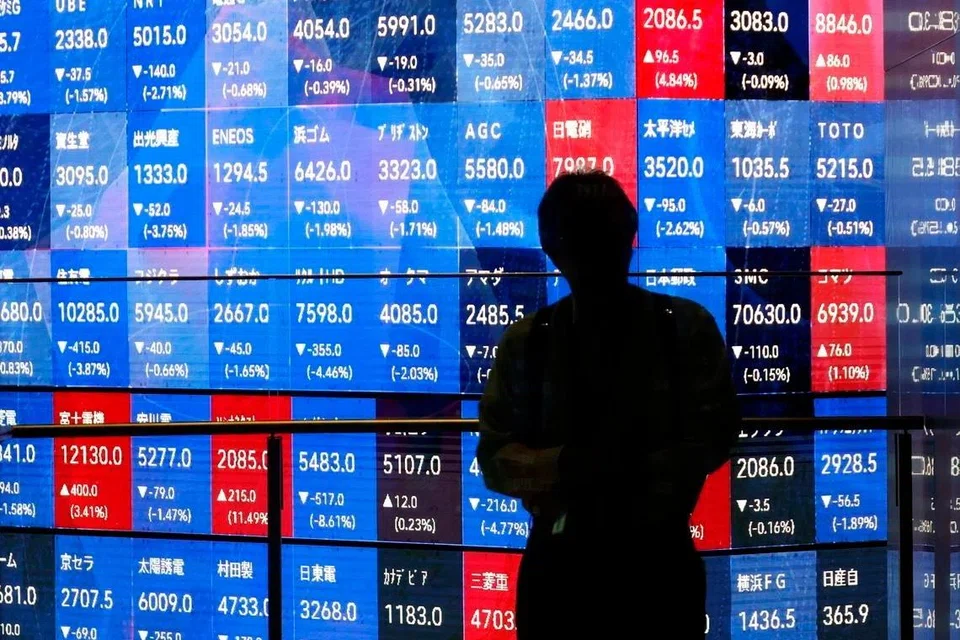
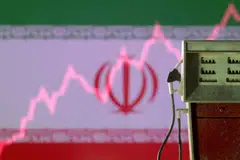
THE Iran war, which has raged for the better part of two months, has produced a curious paradox. As at Apr 26, Brent crude has climbed above US$107 per barrel – its highest since September 2022. The price of urea, the world’s most important fertiliser, is up more than 45 per cent since the war began, feeding into food prices globally. Inflation expectations have risen, and the hopes for interest rate cuts that ran high at the start of the year have quietly faded. Yet, key stock markets remain strikingly buoyant.
After dropping about 9 per cent in the immediate aftermath of the war, the S&P 500 has since recovered strongly to close at fresh all-time highs. In Europe and Japan, stocks have climbed over the two months. Singapore’s Straits Times Index sits at roughly the level it was when the war began. The market, in other words, took a hard look at the crisis – and then decided to move on. That decision deserves scrutiny.
‘Biggest energy security threat in history’
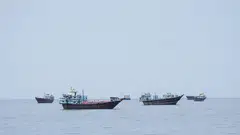
The scale of the disruption resulting from the closure of the Strait of Hormuz – through which around 20 per cent of the world’s oil trade normally passes – is not in doubt. International Energy Agency chief Fatih Birol has described it as “the greatest global energy security challenge in history”. The EU’s energy commissioner, Dan Jorgensen, has said it exceeds the oil shocks of 1973 and 2022 combined.
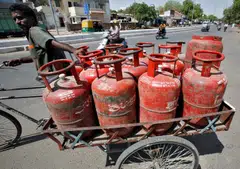
This crisis is about more than crude oil. Up to 30 per cent of internationally traded fertilisers transit the Strait of Hormuz. Fertiliser prices have spiked in the middle of the planting season – a particularly cruel timing. The consequences will materialise six months from now, at grain harvest time, in the form of lower crop yields and higher food prices. And then there is liquefied national gas (LNG). On Mar 18, Iran struck Qatar’s Ras Laffan LNG complex, causing a 17 per cent reduction in Qatar’s production capacity.
The 1970s mirror
Before accepting the markets’ confidence, it is worth holding the current moment up against a historical mirror. During the oil crisis of the 1970s, the Dow Jones Industrial Average returned a paltry 1.3 per cent over the nine years from 1973 to end-1982. In the first phase alone – from January 1973 to December 1974 – the index lost 45 per cent. Stocks and bonds fell simultaneously.
True, today’s economy is very different. That of the 1970s was dominated by energy-hungry industrials; today’s is led by high-margin technology and services companies with formidable pricing power and valuable intangible assets. The energy intensity of advanced economies is far lower – it takes much less energy to produce the same amount of gross domestic product than it did 50 years ago. And there are now alternatives to oil, from renewables to electric vehicles, that did not exist in the 1970s.
Nigel Green, CEO of the deVere Group, has pushed back against doomsaying: High valuations, he argues, do not automatically imply irrational ones. If earnings growth, pricing power and artificial intelligence-driven capital investment are all accelerating, a premium can be justified.
He has a point. S&P 500 companies are forecast to report combined first-quarter profits of more than US$605 billion (S$771 billion) above earlier estimates, and enthusiasm for AI-linked technology stocks continues to underpin the Nasdaq’s gains. But even the strongest corporate balance sheets cannot insulate an economy from a macro shock of the magnitude the war can generate. The earnings story and the geopolitical story are not independent of each other.
There is also psychology at work. Investors appear to be making a calculated bet on a quick resolution, partly because they have been conditioned by experience to believe that US President Donald Trump will back off if economic pain becomes too intense – the so-called “TACO” trade, shorthand for “Trump always chickens out”. After tariffs cratered markets earlier in his term and he blinked, investors learnt a lesson. The question is whether the Iran war will follow the same script; Iran also has a say in how the conflict will play out.
SEE ALSO
The IMF’s uncomfortable arithmetic
The International Monetary Fund (IMF) has tried to thread the needle between reassurance and alarm – and has not fully succeeded at either. Its “reference forecast”, which assumes a short-lived conflict and a moderate 19 per cent increase in energy commodity prices in 2026, projects global growth of 3.1 per cent in 2026 – only a slight deviation from the pre-conflict outlook of 3.4 per cent growth. Global inflation is forecast at 4.4 per cent in 2026, falling to 3.7 per cent in 2027.
But the fund’s chief economist, Pierre-Olivier Gourinchas, acknowledged that this reference scenario was already out of date on Apr 14, the day it was released. In the IMF’s “adverse scenario” – sharper energy price increases, rising inflation expectations and some tightening of financial conditions – growth falls to 2.5 per cent and inflation rises to 5.4 per cent. In a severe scenario, where energy supply dislocations extend into 2027 and inflation expectations become less anchored, global growth drops to 2 per cent, many economies fall into recession, and inflation exceeds 6 per cent.
Nobel laureate Paul Krugman has written in his Substack that the IMF is “seriously underestimating how badly the global economy could be hit”, and that a full-on global recession is more likely than not if the Strait of Hormuz remains closed for another three months – a scenario he regards as plausible. Drawing on the 1973 precedent, when a supply shock of roughly comparable magnitude produced a 7.5 per cent decline relative to trend global growth, Professor Krugman estimates oil could range anywhere from US$99 to US$372 per barrel, depending on how demand responds. That is an unusually wide range – but its very width is the point. The uncertainties here are not noise. They are the signal.
Duration risk: The overlooked variable
Markets and forecasters alike have paid insufficient attention to what might be called duration risk – and it cuts in two directions.
The first is the duration of the war itself, which shows no clear sign of ending. The Strait of Hormuz has remained all but closed throughout the conflict, even after a brief ceasefire; Iran re-imposed tighter control within hours of a temporary re-opening, with reports of gunfire on tankers and vessels turning back. Negotiations have stalled.
The second is the duration of the shock itself – which will outlast any ceasefire. Even if oil can be shipped again tomorrow, production will not snap back. Wells and reservoirs need careful restarting; equipment and infrastructure may be degraded; logistics and personnel need to be repositioned. Some damage is irreversible in the near term. Even after an eventual reopening, analysts expect supply chain bottlenecks and lingering production outages to keep the market tight. For Qatar’s LNG facilities, the repair timeline is three to five years. Food prices could be high for at least a year.
Then there are the tail risks that must be factored into any honest scenario analysis. A prolonged closure of the strait is not the worst that could happen. There are also risks of further attacks on Gulf energy infrastructure – which Iran has threatened if struck again – a closure of the Red Sea, or a fresh military escalation involving Israel, each of which could ratchet the crisis to a new level. These risks may seem unlikely, but they are not negligible.
3 scenarios, 3 very different portfolios
In the face of these uncertainties, investors face a fork in the road – one that the current market consensus seems to be navigating by looking away.
The benign scenario – the one markets appear to be pricing – assumes a contained shock: Oil stabilises around US$80 to US$100 a barrel, inflation bumps and drifts back down, global growth slows but avoids recession, and the Federal Reserve eases rates before year end. This justifies the current tilt towards long equities, especially large-cap technology and other AI beneficiaries. It is a coherent bet. It may also prove badly wrong.
A more prolonged disruption scenario assumes oil remains persistently elevated at US$90 to US$120 per barrel, inflation proves stickier than expected, growth becomes uneven across sectors and geographies, and central banks are constrained from easing. In this world, energy stocks, inflation-linked bonds, gold, commodities and defensive sectors – healthcare, consumer staples – outperform. Technology does not.
The stagflation scenario is the darkest: Oil above US$100 for an extended period, potentially spiking towards US$150; inflation entrenched; multiple economies tipping into recession; and central banks facing a dilemma between rate hikes that crush growth and rate cuts that further fuel inflation. In this scenario, long commodities (including gold, which performs well when real interest rates are negative), short-duration bonds and selective short positions in equities are the trades that offer shelter.
The market is not always right
The efficient market hypothesis holds that prices reflect all available information. But it also has a corollary that is easy to forget in a bull run: Markets can be persistently wrong – especially when the downside risks are fat-tailed and hard to model.
Bank of England deputy governor Sarah Breeden put it plainly in a BBC interview: Global equities “look too high and are likely to fall because prices do not fully reflect the risks facing the global economy”. That is an unusual statement from a central banker. It is also, on the evidence, a reasonable one.
The Iran war is not a passing squall that a resilient global economy can simply sail through. It is a structural shock to the energy system, the food system, and the outlook for growth and inflation – one whose full consequences will take months, possibly years, to unfold. The markets’ willingness to look past it reflects genuine structural shifts in the economy and a well-founded faith in eventual de-escalation. But it also reflects something less admirable: the very human tendency to discount dangers that are real but not yet fully visible. THE STRAITS TIMES
Decoding Asia newsletter: your guide to navigating Asia in a new global order. Sign up here to get Decoding Asia newsletter. Delivered to your inbox. Free.
Share with us your feedback on BT's products and services
TRENDING NOW

DBS, OCBC, UOB rout lops billions off STI as inflation, rate concerns spook investors

Grab CEO’s wife Chloe Tong on life with Anthony Tan and finding her purpose

OCBC sheds S$8 billion in value as shares close nearly 6% down; analysts cautious on banks

Deal between tycoon friends sparks scrutiny of Philippine power sector

