

Opec+ ratifies planned oil quota hike as Gulf flows rebound
The group agrees to add 188,000 barrels a day to August output target
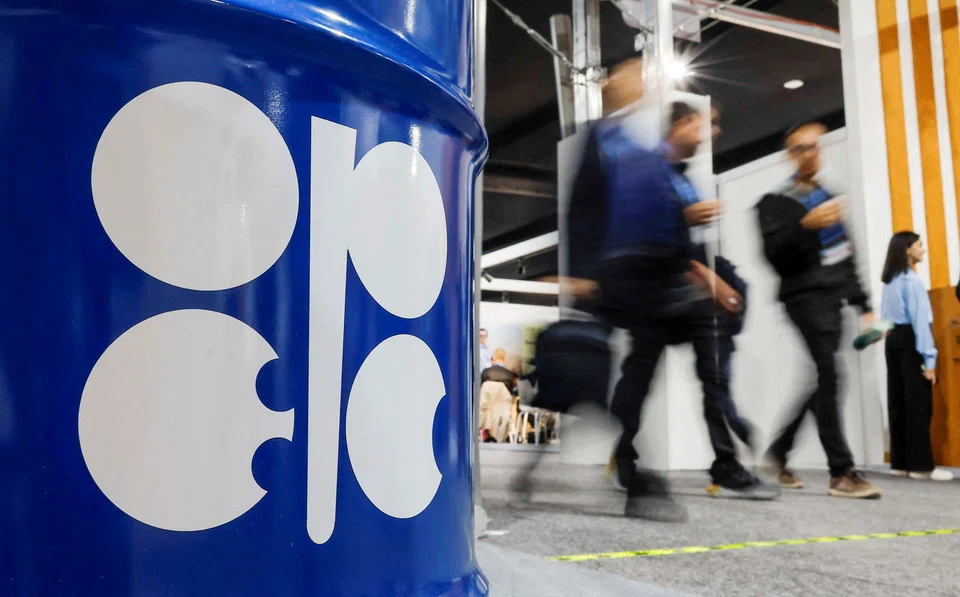
MAJOR Opec+ members on Sunday (Jul 5) agreed on another modest increase to their collective oil-production quotas for next month, adding to the prospect of more supply eventually hitting the market if a US-Iran peace pact can stick.
Seven nations led by Saudi Arabia and Russia agreed during a video conference to add 188,000 barrels a day to their output target, the Organization of the Petroleum Exporting Countries said in a statement on its website.
This is in keeping with the group’s plan to finish reversing output curbs made a few years ago, and means that since the war began, it has added 940,000 barrels a day to quotas – equivalent to almost 1 per cent of global demand.
Those increases have so far been theoretical because the war blocked the Strait of Hormuz and stopped Persian Gulf members from ramping up exports and output.
However, since Teheran and Washington signed an interim peace pact, the Saudis and their neighbours have started to restore shipments, helping drive a surplus in key Asian markets.
Oil futures have tumbled 43 per cent from their wartime peak to near US$72 a barrel in London. With some forecasters predicting the re-emergence of a global glut, Opec and its partners could soon face a choice between restraining output or fighting over market share – a potential price war.
Opec is already facing a challenge to its unity, after founding member Iraq last month suggested it could ultimately exit if denied a higher production limit.
The United Arab Emirates quit the organisation in May over similar frustrations with the oil cartel’s mandated output limits. Abu Dhabi has significant production capacity idled by the war to restart and, with ambitions to add more over time, could add pressure to prices and its former alliance counterparts.
Saudi Arabia and the UAE have restored oil exports to near pre-war levels, tanker-tracking data showed, thanks to both the peace accord and their success in getting cargoes through Hormuz.

Still, their production levels remain well below normal rates, based on data compiled by Bloomberg.
Russia, which jointly leads Opec+ with the Saudis, is contending with its own issues. The country’s crude exports have climbed to record highs, but the surge comes as Ukrainian drone strikes take a toll on its refineries, potentially diverting supplies that would have been processed domestically for sale overseas.
Revenue losses during the war have spurred Iraq to push Opec for a considerably higher limit on how much it can produce, and even threaten it could leave the organisation.
Its campaign comes as the alliance conducts an audit of how much each member can physically produce, in order to determine individual targets for 2027.
In May, Bloomberg reported that Opec+ had a road map to continue its series of quota increases until the end of September, thereby completing the restoration of two layers of production halted back in 2023. An increase for August would mark the penultimate month in that process.
A third and final tranche of curbs is scheduled to remain in place until the end of the year, though some delegates said last month that its restart could be fast-tracked. The group will next meet on Aug 2.
Even before Hormuz was closed, many members were struggling to pump as much as allowed due to physical capacity constraints, and so only part of this third tier would likely materialise. BLOOMBERG
Decoding Asia newsletter: your guide to navigating Asia in a new global order. Sign up here to get Decoding Asia newsletter. Delivered to your inbox. Free.
Share with us your feedback on BT's products and services
TRENDING NOW

Once staunchly pro-China, Malaysian Chinese businesses are now distancing themselves from Beijing

Britain’s mansion tax shows the difficulty of targeting wealth

Three hats, one goal: How Ng Kian Swan runs sustainability at NUHS
COE review: The gap between luxury and mass-market cars isn’t the only one worth bridging

