

‘IPOs are not the only vehicle’: KKR heads for record exits even as firms stay private for longer
Control deals and infrastructure investments in South-east Asia have grown, says the firm’s Henry McVey

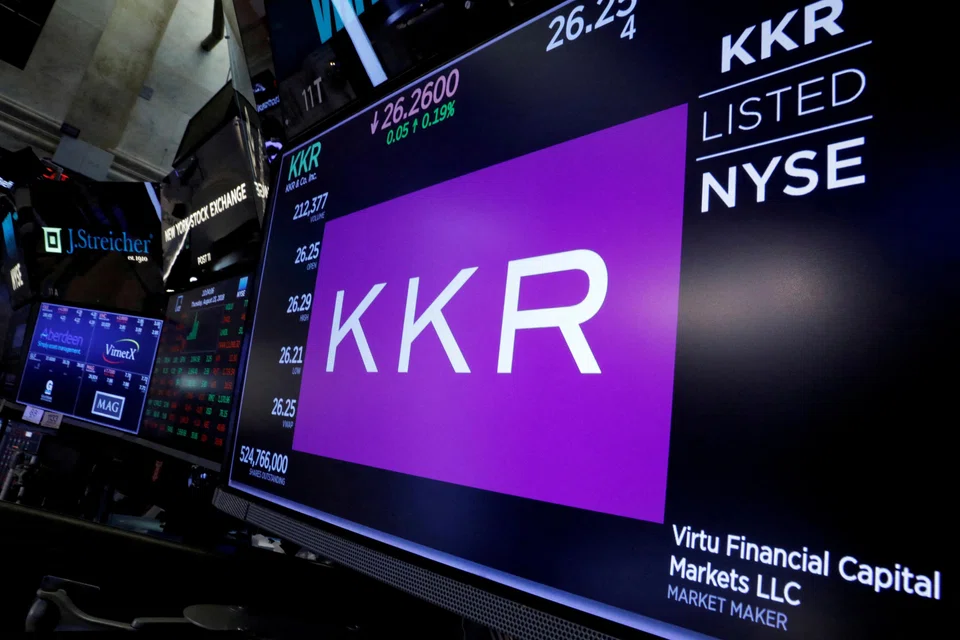
[SINGAPORE] Global investment firm KKR is on track for a record year of exits, even as more companies stay private for longer and initial public offerings remain just one avenue for returning capital to investors.
Sales to strategic partners and industry consolidation are alternative exit routes, said Henry McVey, partner, head of global macro and asset allocation and chief investment officer of KKR’s balance sheet.
“IPOs are one vehicle for recycling capital, but they are not the only vehicle,” he told The Business Times on the sidelines of KKR’s 50th anniversary event on Sep 30 at the Capitol Theatre.
The shift comes as companies, particularly those in the artificial intelligence sector, increasingly choose to remain private rather than list.
He contrasted this with the 1990s, when companies often went public at an earlier stage of development, sometimes prematurely.
“There are more private companies now than public companies, and you are not penalised with a valuation discount by staying private. Therefore, I do not view a slower IPO market as a negative indicator.”
Nevertheless, McVey acknowledged that public markets still offer vital liquidity and enable global allocators to build substantial positions through major exchanges.
Private markets in Asia
In Asia, KKR has larger portfolio allocations in Japan and India relative to other markets, although McVey emphasised that these allocation trends shift every few years.
In the past, allocators favoured country-specific funds, particularly in China, where recent exits have been lacklustre, he noted.

He added that while the firm’s past focus in China centred on consumption themes, the Chinese economy is now experiencing slowing growth and disinflationary pressures.
McVey said that global allocators today prefer pan-Asian exposure and have actively re-engaged with the region over the past three to four years.
He highlighted Japan as “ground zero” for corporate governance reforms, noting that the country is building on momentum from the Abenomics era as large conglomerates are becoming increasingly open to structural change.
For instance, some are spinning off non-core businesses and turning to private equity buyouts to improve profitability.
“We have done deals with Panasonic, Pioneer, Hitachi, lots of different firms,” McVey said, adding that there is now more acceptance of private equity involvement in corporate restructuring.
South Korea is similarly gaining momentum with its own corporate reforms to unlock market value; McVey noted that 70 per cent of the Kospi is trading below book value.
India’s market landscape has also evolved significantly, he said. In the past, the focus was primarily on backing local challengers to global brands such as Starbucks.
Today, investors can secure control deals – acquiring a majority stake to gain direct operational and strategic authority over a business – and partner with leading Indian franchises seeking foreign capital. He cited KKR’s partnership with Reliance Industries as an example.
Meanwhile, in South-east Asia, control deals and infrastructure investments have grown noticeably compared with previous years, he said.
A changing economic playbook
McVey highlighted that investors will need to adapt to an economic landscape that is behaving quite differently from the 1990s and 2000s.
“The economic playbook that worked for the past few decades was built on globalisation, where American consumers take on debt to buy goods produced in Asia,” he noted.
“Right now, what you’re seeing is a very different investment regime, there is much more capital expenditures going into AI, national security, and supply chain reconfiguration.”
Furthermore, intra-Asian trade has expanded significantly, driving distinct economic outcomes.
McVey attributed the global economic resilience to a productivity boom that originated in the US before expanding to Europe and Asia, alongside growth in sectors less sensitive to industrial cycles or energy costs.
Singapore’s role in private markets
Turning to Singapore, he highlighted efforts to strengthen its capital markets, attract alternative asset managers and establish the city-state as a primary destination for foreign capital.
“A major area of focus (for Singapore) right now should be broadening and deepening capital markets,” he said. This comes as a more developed capital market ecosystem would give businesses greater access to financing while strengthening Singapore’s appeal to global investors.
“Establishing Singapore as a hub not only for general business but specifically for financial services will be enormously beneficial,” McVey added.
“If Singapore takes a front-footed approach to enabling capital markets to blossom, it will yield better outcomes for businesses and the wider economy.”
Decoding Asia newsletter: your guide to navigating Asia in a new global order. Sign up here to get Decoding Asia newsletter. Delivered to your inbox. Free.
Copyright SPH Media. All rights reserved.
TRENDING NOW

Far East Organization’s The Serra Residences sells less than a quarter of units released at average S$3,460 psf

Singapore to use ‘every legal and regulatory lever’ against companies linked to haze: Shanmugam

Could stablecoins be the future of money?
The middle power moment arrives in South-east Asia – but not for Asean

