Asean’s challenge is to become resilient against global geopolitics: former Indonesia trade minister
Ongoing US-China tensions, Strait of Hormuz crisis and AI developments change the game, she says at AmChamSG event
 Add BT as a preferred source
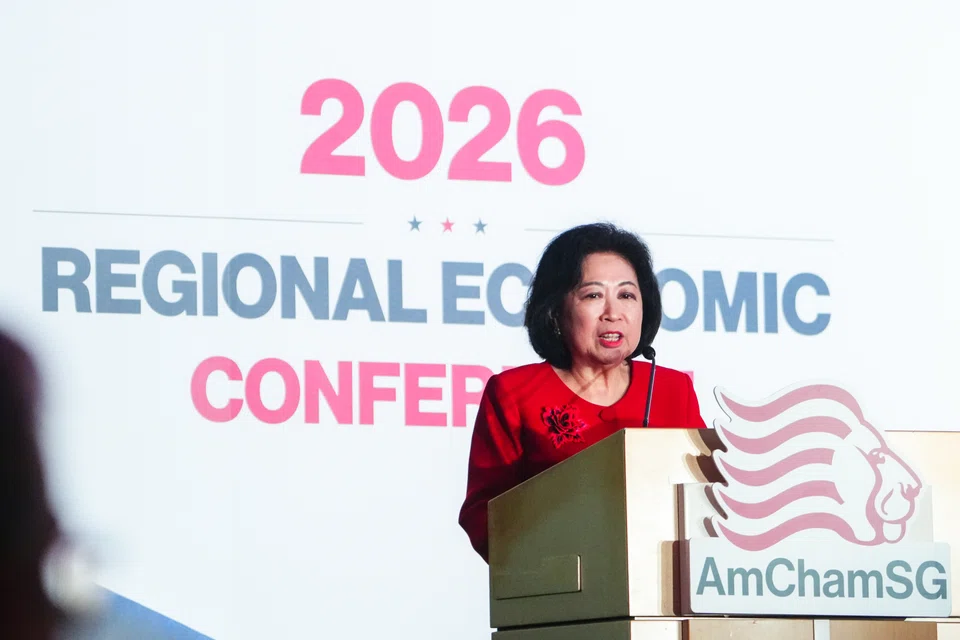
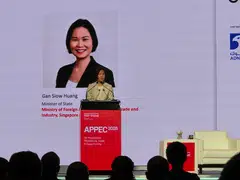
[SINGAPORE] A question that Asean faces now is whether it can build its own resilience, rather than absorb global shocks and let the world’s rules and disciplines determine the region’s fate, said Dr Mari Elka Pangestu, a former trade minister of Indonesia.
She was delivering her keynote address at the 2026 American Chamber of Commerce in Singapore Regional Economic Conference on Wednesday (Sep 9), the event’s second day.
Until 2016, Asean thrived on a multilateral trading system, which meant things were more predictable with clear, open, fair and “rules-based disciplines” in place, she said.
But shocks due to the Strait of Hormuz closure in the Middle East, continued US-China tensions and rapid artificial intelligence developments have changed the game – with Asean at the crossroads of such shifts.
“The increase in unilateralism (now) is very concerning because… the region’s growth model really depends upon openness and” a rules-based global order, Dr Pangestu said.
Unilateralism refers to a state acting independently and pursuing its own national interests without consulting, coordinating or seeking approval from other nations.
The key ways that Asean has stayed adaptable include adjusting to new normals amid trade disruptions in the Middle East strait, as well as accelerating renewables production.
“I see companies becoming more innovative and efficient in finding solutions that they didn’t really think about before,” said Dr Pangestu.
Issue of economic security
The former trade minister, who is now deputy chair of the National Economic Council for the Republic of Indonesia, also noted that several countries are using trade restrictions and industrial policy to achieve economic security.

“Countries have the right to become more resilient, like how companies need to become more resilient in their supply chains,” she said.
But how will developing countries and other Asean nations resist over-securitising in the process? Dr Pangestu offered a six-layer strategy for the region when evaluating trade flows.
The first five layers of her framework indicate vulnerability, while the final layer determines economic security risk.
Dr Pangestu said this is important to consider, to avoid speeding up geo-economic fragmentation and wider supply chain bifurcation.
She cited China as an example – and the “import risks” it brings to Asean, particularly in the areas of electronics manufacturing and electric vehicles.
This comes as Chinese manufacturers offer goods at lower prices, which can underprice domestic businesses.
“Asean countries need to address (this issue), whether it’s through traditional trade remedies or (new coordination methods...and better) manage this relationship with China.”
Trade complexities can lead to an investment flux, too, Dr Pangestu said. As more relocation occurs, companies from China or China-based firms will expand. And when they do, they will go to Asean.
The region must therefore ask “how will we benefit – and win – as Asean, and diversify supply chains to help Asean countries?”
Asean should not need to take sides on AI
The AI moment is “top of mind” these days, said Dr Pangestu, sharing that nearly all the board meetings and conferences she has attended recently are about how businesses can better manage AI.
Although 89 per cent of manufacturers surveyed already have some type of AI policy, she noted that many companies still struggle integrating the technology into their operating systems.
Additionally, countries are at varying stages of understanding how to come up with new policies on AI. In the process, they are pulled in different directions.
For example, US-led economic security initiative Pax Silica was launched last December to secure global supply chains for AI infrastructure, semiconductors and critical minerals, while China’s World Artificial Intelligence Cooperation Organization was founded in July this year.
On the rules and governance around AI, Dr Pangestu said Asean “should not be asked to choose” sides in this conversation, and should be able to “take the benefits of both types of models and come up with our own”.
“It’s not about trying to control AI, but about how AI doesn’t control us.”
Decoding Asia newsletter: your guide to navigating Asia in a new global order. Sign up here to get Decoding Asia newsletter. Delivered to your inbox. Free.
Copyright SPH Media. All rights reserved.