



Indonesia bets on creative economy, IP for growth amid rising global competition
Intellectual property should be seen as a strategic economic asset, says the country’s creative economy minister

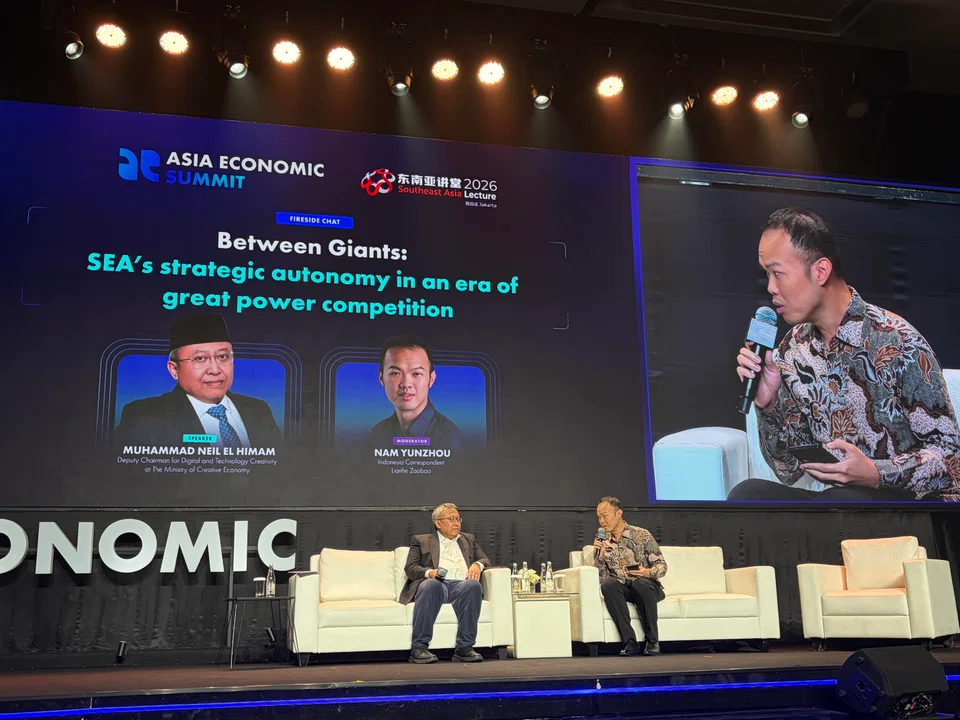
[JAKARTA] Indonesia is betting on its creative economy and intellectual property (IP) assets as a pathway to future growth and greater strategic autonomy in a world increasingly shaped by competition between major powers.
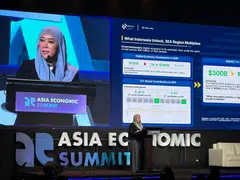
In a speech at the Asia Economic Summit in Jakarta on Tuesday (Jun 17), the country’s Creative Economy Minister Teuku Riefky Harsya said that South-east Asia’s biggest economy views the creative sector as a new engine of growth.
He added that IP should be treated as a strategic economic asset, capable of creating jobs, attracting investment and generating long-term value.
“Nowadays, the challenge is no longer simply how to participate in the global economy,” he said. “The challenge is how to remain competitive, adaptive and relevant in an environment where ideas, innovation, technology and talent increasingly determine economic success.”
Indonesia has introduced regulations recognising IP as an asset that can be used as collateral for financing. It is also developing a system of “IP valuators”, to support wider adoption by financial institutions.
Indonesia’s creative economy expanded 6.86 per cent in 2025, outpacing overall economic growth, ministry data showed. The sector generated nearly US$32 billion in exports, attracted US$10.3 billion in investment and employed more than 27 million people.
Looking beyond Indonesia, Harsya said that South-east Asia is uniquely positioned between major economic and technological powers, and it should use that position to strengthen its own competitiveness.
“Our future should not be defined by choosing sides,” he added. “It should be defined by strengthening our own capabilities.”
The minister’s message was echoed by Muhammad Neil El Himam, deputy for digital creativity and technology at Indonesia’s Ministry of Creative Economy, during a panel discussion moderated by Nam Yunzhou, Indonesia correspondent at Lianhe Zaobao.
El Himam said Asean’s rich cultural diversity and population of more than 680 million people provide a strong foundation for the region to become a global creative powerhouse.
He argued that IP and the creative industries could help South-east Asia strengthen its strategic autonomy amid growing geopolitical tensions.
“It’s time for Asean to rise,” he said, adding that countries in the region should collaborate more closely in areas such as film, gaming, music and digital content.
He warned that many Asean countries still lag in recognising the economic value of IP, creating a risk that creators could lose ownership and commercial benefits from their innovations.
Drawing lessons from countries such as Japan and the US, El Himam said Asean creators should view IP as a platform that can be commercialised across multiple products and industries, from films and games to merchandise and publishing.
“If we work together and push our cultures and IP, Asean can become a powerhouse in the creative economy,” he added.
Held at Fairmont Jakarta, the second edition of the Asia Economic Summit was themed “Where South-east Asia’s Economic Decisions Take Shape”.
The day-long event, which convened some 250 regional policymakers, business leaders, investors and technology stakeholders, was aimed at aligning policy intent with investment priorities and execution pathways across South-east Asia.
Decoding Asia newsletter: your guide to navigating Asia in a new global order. Sign up here to get Decoding Asia newsletter. Delivered to your inbox. Free.
Copyright SPH Media. All rights reserved.
TRENDING NOW

ComfortDelGro appoints two new independent directors

Once staunchly pro-China, Malaysian Chinese businesses are now distancing themselves from Beijing

NoonTalk needs continued financial support from CEO Dasmond Koh, auditors warn

DP Architects sets the benchmark for sustainability disclosure and design

