



Indonesia passes long-awaited Bill on recovery of assets linked to graft, crimes
It allows authorities to pursue confiscation without securing a criminal conviction first

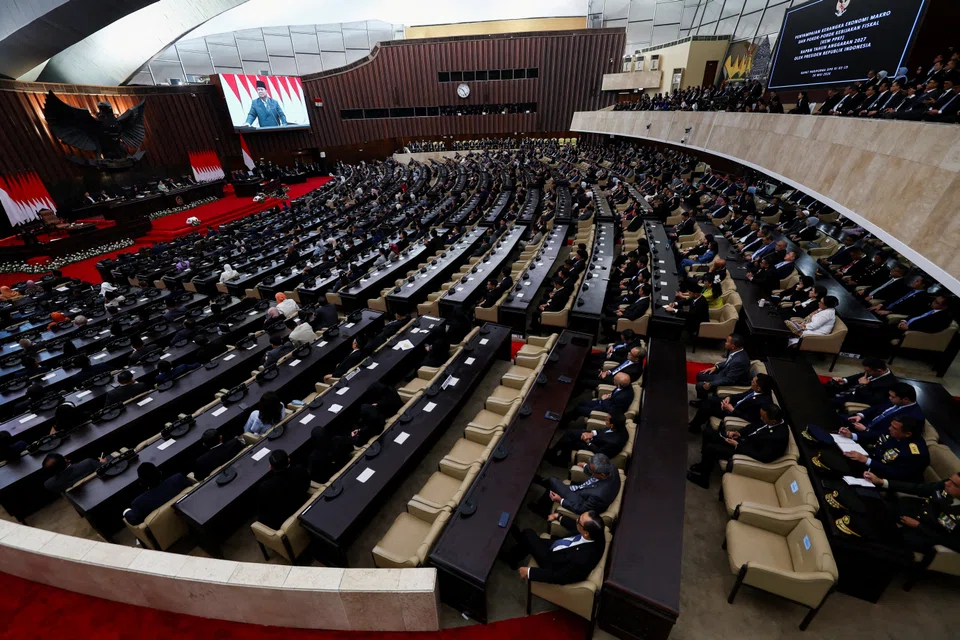
[JAKARTA] Indonesia’s parliament on Thursday (Nov 19) passed a long-awaited asset forfeiture Bill, marking a significant step in the government’s bid to recover assets linked to corruption and other financial crimes.
The legislation, which has been under discussion for 18 years, is intended to strengthen law enforcement by allowing the authorities to confiscate proceeds of crime and return them to the state or victims, including those affected by large-scale investment fraud.
Among the law’s key provisions is a mechanism known as non-conviction-based asset forfeiture. It allows the authorities to pursue the confiscation of assets linked to criminal activities without first securing a criminal conviction, under certain circumstances and subject to judicial proceedings.
The mechanism covers assets worth at least one billion rupiah (US$55,000), without ruling out later criminal prosecution.
The legislation covers corruption and a range of other offences, including narcotics trafficking, terrorism financing, human trafficking and large-scale fraud involving information technology.
It also provides a mechanism for compensating victims of fraudulent investment schemes and illegal share trading, who have often struggled to recover their money through existing legal processes.

Under the framework, victims could receive compensation directly from the proceeds of assets sold after being confiscated from perpetrators, rather than having the recovered funds transferred to the state without necessarily reaching those affected.
The Bill spent nearly two decades stalled amid political resistance and disagreements over the scope of the state’s powers to seize assets. There were concerns that the mechanism could be abused to target individuals or businesses without sufficient legal safeguards.
Habiburokhman, an MP, described the passage as the culmination of an 18-year legislative process and a long-awaited response to public demands for stronger action against corruption.

“This is good news for victims of investment scam and illegal stocks trading,” Habiburokhman said, according to local media reports.
The final version of the Bill has yet to be made publicly available, as the text is typically released to the public only in the week following its passage.
Corruption has long been a major governance challenge in South-east Asia’s largest economy, affecting public procurement, infrastructure projects and the management of state resources.
Lawmakers and the government completed deliberations at the committee level on Wednesday, before the Bill was endorsed at the plenary session on Thursday chaired by House Speaker Puan Maharani.
While Indonesia has prosecuted numerous high-profile corruption cases, recovering illicit wealth has often proved difficult, particularly when assets are concealed through complex ownership structures or transferred to third parties.
Despite the scale of state losses from corruption, Indonesia continues to face challenges in recovering stolen assets, with only a fraction of court-ordered repayments making their way back into state coffers.
In 2025, courts ordered the return of 65.7 trillion rupiah in corruption-related cases, but only about a third of the amount was ultimately recovered, highlighting shortcomings in asset tracing and management.
The legislation’s passage comes amid mounting public pressure on the government and parliament to strengthen accountability and address governance concerns.
Public frustration over corruption and economic grievances has spilled onto the streets, with protests putting pressure on lawmakers to respond to demands for greater transparency and stronger enforcement.
The law also provides for the management of confiscated assets, including their storage, maintenance, use and eventual sale, with oversight intended to ensure transparency and accountability.
Sweeping power
The Bill has long faced scrutiny over concerns that its far-reaching powers could be subject to abuse.
The Indonesian Legal Aid Foundation (YLBHI), a non-profit legal advocacy group, warned that the law grants the authorities sweeping powers to trace assets, seize property, demand documents and manage confiscated assets, without equally robust safeguards against potential abuse.
Under the new law, the authorities can also freeze transactions and bank accounts to prevent funds suspected of being linked to criminal activity from being transferred or concealed before formal seizure and confiscation proceedings take place.
YLBHI cautioned that such measures risk becoming a form of punishment before a court has established guilt.
Wijayanto Samirin, an economist at Paramadina University, described the legislation as a “very sharp knife” that could be beneficial in the right hands but cause “extraordinary damage” if misused.
“Without stronger safeguards and reforms to law enforcement agencies, the law could become a powerful instrument of pressure, while provisions allowing asset confiscation without a criminal conviction could heighten legal uncertainty for businesses,” he said.
Decoding Asia newsletter: your guide to navigating Asia in a new global order. Sign up here to get Decoding Asia newsletter. Delivered to your inbox. Free.
Copyright SPH Media. All rights reserved.
TRENDING NOW

Peter Kwee’s Ridley Park bungalow on the market with S$100 million asking price
Motoring tycoon Peter Kwee is back in court: Here are his previous legal battles

Demand, tech capabilities position Apac and AI as Skyscanner’s next growth frontiers: CEO Bryan Batista

South-east Asia has lost Nvidia’s best salesman

