



As Indonesia picks new vice-president to succeed Gibran, investors see risks and opportunities
Several names have emerged, including senior figures from Prabowo’s Gerindra Party and coalition partners

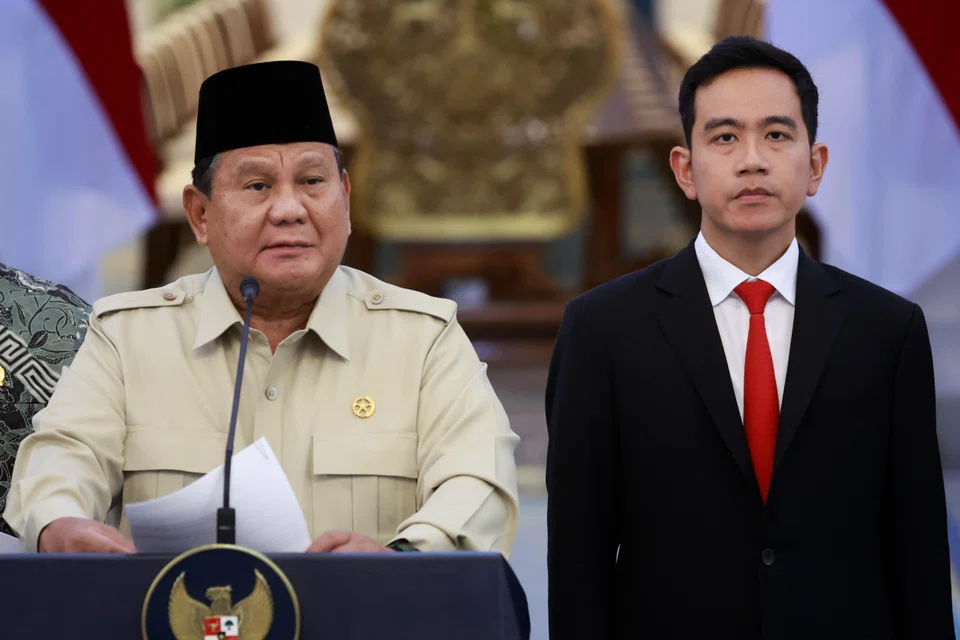
[JAKARTA] Investors are closely watching Indonesian President Prabowo Subianto’s pick for the next vice-president, for clues about the direction of his administration and its approach to economic policymaking.
His choice to replace Gibran Rakabuming Raka could indicate whether power is becoming increasingly concentrated around the administration, at a time of eroding investor confidence and growing concerns over policy direction and regulatory certainty.
Mohit Mirpuri, senior partner at SGMC Capital, said the latest political developments could further unsettle investors, potentially prompting businesses to delay major capital commitments.
Investors will be looking for a successor who demonstrates independence and credibility, and is committed to upholding institutional checks and balances.
“Instead, if the appointment raises further concerns about the concentration of political power, it could add another layer of uncertainty. Investor confidence is already fragile,” Mirpuri told The Business Times.
Gibran, 39, formally submitted his resignation on Thursday (Nov 12), ending his term as vice-president less than two years into the administration.

His tenure was dogged by controversies, from legal challenges over his eligibility to run for office to questions surrounding his educational qualifications.
Observers said the departure removes a key political link between Prabowo and former president Joko Widodo – Gibran’s father – whose political support and popularity among voters helped strengthen Prabowo’s electoral position in 2024.
Prabowo must now nominate two candidates for the vice-presidency, with the People’s Consultative Assembly (MPR) required to elect a successor within 60 days.
SEE ALSO

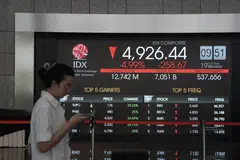
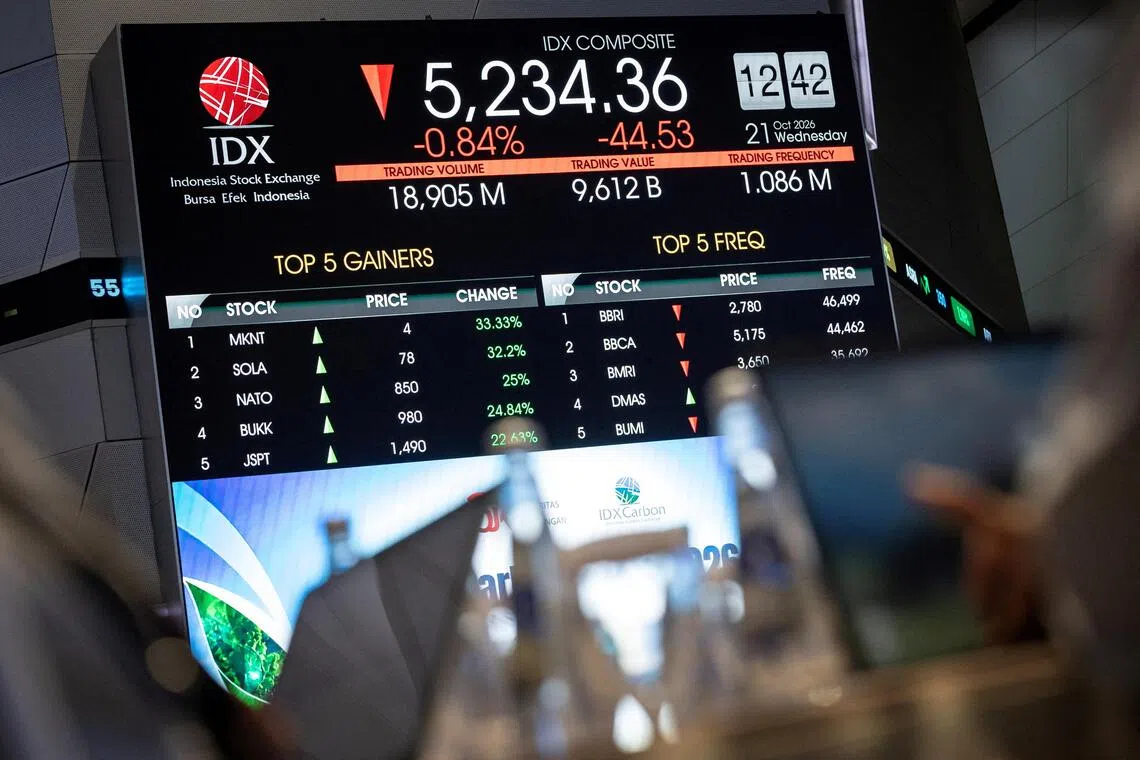
The development comes as Indonesia faces the prospect of being downgraded to a standalone market by MSCI, following concerns over market transparency and investability that have already shaken investor confidence in the country’s capital markets.
The benchmark Jakarta Composite Index has fallen 38 per cent this year, sharply underperforming regional peers; the rupiah, meanwhile, has weakened more than 8 per cent against the US dollar.
Public approval of the Prabowo administration has dropped amid concerns about the cost of living, corruption and the implementation of flagship programmes such as one that provides free meals to schoolchildren.
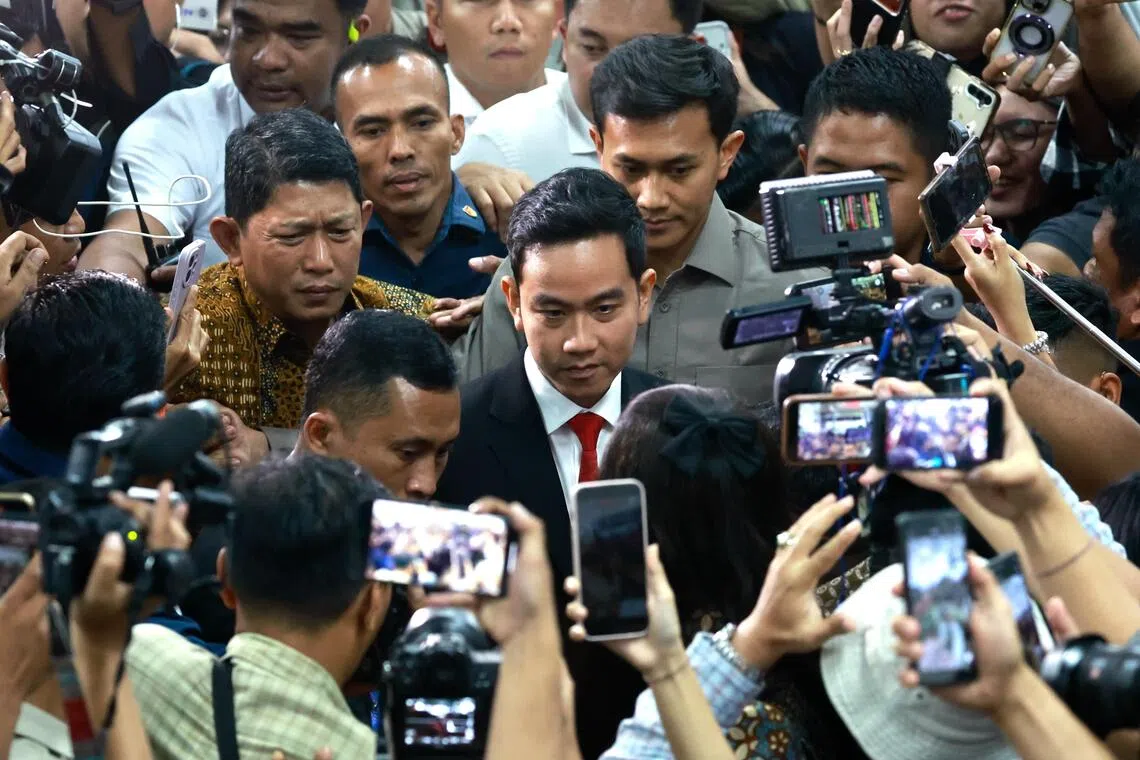
Potential candidates
While Gibran’s resignation does not necessarily signal an immediate change in economic policy, analysts said the appointment could offer important signals about the administration’s approach to political power and economic governance.
Ross B Taylor, a board member of The University of Western Australia’s Public Policy Institute, said Gibran’s resignation presents both risks and opportunities for Prabowo.
“Prabowo risks losing an important political bridge to Widodo’s supporters, but could gain greater freedom to nominate a vice-president more closely aligned with his own ambitions,” Taylor said.
Several names have emerged as potential contenders for the position, including senior figures from Prabowo’s Gerindra Party and its coalition partners.
Among those being mentioned are Gerindra figures Sufmi Dasco Ahmad, the party’s deputy chairman; MPR chair Ahmad Muzani; and Sugiono, the party’s secretary-general and coordinating minister for human development and culture.
The potential field also includes political figures from prominent Indonesian political dynasties.
Democratic Party chairman Agus Harimurti Yudhoyono, the son of former president Susilo Bambang Yudhoyono, and House of Representatives Speaker Puan Maharani, the daughter of former president Megawati Soekarnoputri,have also been tipped as possible candidates.
Puan is a senior figure in the Indonesian Democratic Party of Struggle.
Investors are also watching who is shaping Prabowo’s economic decisions, as well as how much scope his advisers have to offer alternative views and temper his policy ambitions.
Prabowo already commands a formidable parliamentary coalition, giving his administration considerable latitude to push through its policy agenda.
Those concerns carry greater weight as the president pursues an ambitious target of achieving 8 per cent economic growth, backed by large-scale initiatives and Danantara, the state investment agency tasked with mobilising capital for strategic projects.
Bob Herrera-Lim, managing director of Teneo, said Prabowo’s economic agenda was largely independent of his former political alliance with Widodo, pointing to flagship initiatives such as the free meals programme as policies driven by the current president.
“The bigger question,” he said, “was whether Prabowo would continue receiving sound economic advice when his ambitions collide with fiscal constraints and market expectations.”
Indonesia yet to lose its allure
Despite mounting political headwinds and market turmoil, analysts cautioned against interpreting the developments as signs that Indonesia was heading towards an immediate crisis.
Herrera-Lim said it is important for investors to keep a close eye on political developments and policymaking so they can adjust their strategies accordingly.
“There is also a need for investors to make their voices heard, particularly foreign direct investors who are committing capital to build facilities and establish operations in Indonesia,” he said.
Indonesia’s economy grew 5.47 per cent year on year in the third quarter of 2026, accelerating from 5.29 per cent in the previous three months and beating economists’ expectations.
Mirpuri from SGMC cautioned against viewing political uncertainty as an automatic reason to withdraw from the Indonesian market. “While the country’s valuations remain attractive, cheaper assets alone would not be enough to bring foreign capital back,” he added.
A sustained recovery would depend on credible reforms, regulatory certainty and consistent policymaking.
The stakes are particularly high for industries such as natural resources, downstream processing and infrastructure, where projects often require billions of dollars in upfront capital and depend on predictable regulations and a stable policy environment over many years.
Decoding Asia newsletter: your guide to navigating Asia in a new global order. Sign up here to get Decoding Asia newsletter. Delivered to your inbox. Free.
Copyright SPH Media. All rights reserved.
TRENDING NOW

Higher rates, weaker spending: Is the Philippines entering stagflation?

Singapore’s deep-tech startups tap China for scale, set sights on the US for higher margins
Who are some of the longest-serving CEOs among Singapore’s blue-chip companies?

Grit built in the genes: Malaysia’s Lee Yeow Seng drives IOI’s bold Singapore push

