Indonesia’s sovereign wealth fund INA rebalances portfolio as it targets AI, advanced manufacturing
The plan is to reduce its reliance on traditional infrastructure assets, says new CEO Oki Ramadhana

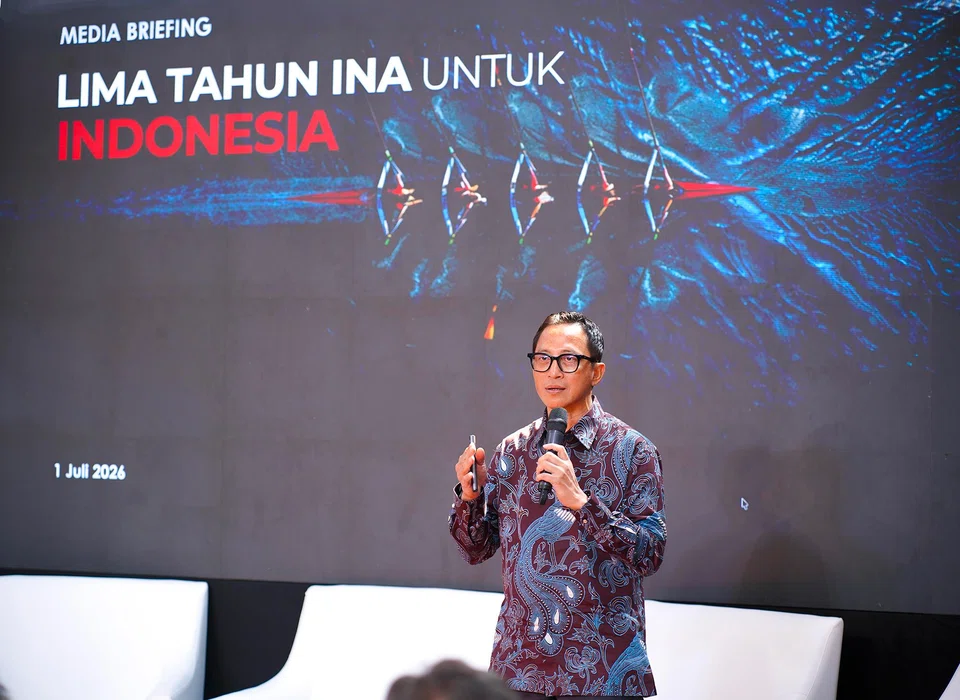
[JAKARTA] Indonesia’s sovereign wealth fund, the Indonesia Investment Authority (INA), is diversifying beyond infrastructure into advanced manufacturing, artificial intelligence and data centres to support President Prabowo Subianto’s industrialisation drive.
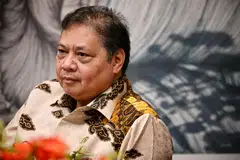
Oki Ramadhana, INA’s newly appointed CEO, said on Wednesday (Jul 1) that the fund has identified advanced materials and manufacturing as a new priority investment sector, alongside transportation and logistics, digital infrastructure and AI, green energy, and healthcare.
The strategy marks a shift in INA’s investment focus as it looks to capture opportunities in higher value-added industries that align with the government’s push to move Indonesia away from exporting raw commodities and towards downstream manufacturing.
“In the past, Indonesia relied too much on exporting raw materials. The objective now is to build domestic industries that generate higher-value-added products.”
Oki Ramadhana, CEO, Indonesia Investment Authority
Transportation and logistics remains INA’s largest investment sector, accounting for 44 per cent of its cumulative portfolio, while the digital infrastructure and AI sector makes up 29.6 per cent.
Ramadhana said that INA plans to make its portfolio more balanced over time by increasing investments in its newer priority sectors, reducing its reliance on traditional infrastructure assets.
“In the past, Indonesia relied too much on exporting raw materials. The objective now is to build domestic industries that generate higher-value-added products,” said Ramadhana in a media briefing in Jakarta.
INA said that it is diversifying across asset classes, increasing allocations to private equity, hybrid capital solutions, real estate and indirect investment structures, to improve risk-adjusted returns while broadening access to global investment opportunities.
It has secured around US$25 billion in investment commitments from 40 strategic partners in 15 countries, including sovereign wealth funds, pension funds, insurers, asset managers and private equity firms.
Ramadhana explained that INA is rebalancing its portfolio “because investors cannot rely on a single asset class or one sector alone”. He added: “That’s why we are committed to making disciplined, high-quality investments that can deliver sustainable returns over the long term.”
The move comes as Indonesia accelerates efforts to develop domestic processing industries, particularly in battery materials and electric vehicle supply chains, under President Prabowo Subianto’s economic agenda.
INA has also expanded its investments in advanced materials, including a 75 trillion rupiah (US$4.7 billion) lithium iron phosphate (LFP) cathode manufacturing platform in Kendal, which it said will be among the world’s largest outside China.
The facility reached an annual production capacity of 30,000 tonnes in 2025, with further expansion planned over the next two years to support Indonesia’s ambitions of becoming a global battery manufacturing hub.
Within the digital segment, INA has invested in telecommunications towers, fibre optic networks and hyperscale data centres that support the development of AI infrastructure.
Its investments include one in Mitratel, one of South-east Asia’s largest tower operators with more than 40,000 towers across Indonesia, over 57,000 km of fibre optic networks and a hyperscale data centre platform.
The fund has also invested in hyperscale data centres in Nongsa Digital Park, Batam, through its partnership with Singapore-headquartered hyperscale data center platform, DayOne.
This supports the development of one of Indonesia’s largest data centre campuses as demand for cloud and AI infrastructure accelerates.
INA was established in 2021 under former president Joko Widodo.
Since its inception, the sovereign wealth fund has invested 33.3 trillion rupiah of its own capital and mobilised 41.2 trillion rupiah from investment partners, bringing total investments to 74.5 trillion rupiah.
It has assets under management worth 146.2 trillion rupiah, nearly twice the level when it began operations.
Asked how INA would work alongside Indonesia’s other sovereign wealth fund, Danantara, Ramadhana dismissed concerns about overlapping mandates, saying the two institutions would complement each other as investment partners supporting the country’s economic growth.
“INA and Danantara will continue to coexist,” he noted. “Both sovereign wealth funds serve as catalysts for Indonesia’s economic growth.”
Ramadhana added that both funds would continue to pursue investment opportunities in Indonesia and overseas that generate benefits for the country.
He noted, however, that INA differs from Danantara because it is legally required to invest alongside partners. “Every investment made by INA must involve co-investment partners entering Indonesia.”
Decoding Asia newsletter: your guide to navigating Asia in a new global order. Sign up here to get Decoding Asia newsletter. Delivered to your inbox. Free.
Copyright SPH Media. All rights reserved.