Mekong Capital’s Chris Freund turns hard lessons into better leadership
The Vietnamese PE firm now wants to build a company led by a new generation of partners
CHRIS Freund’s biggest investment success reaped a 57-fold return.
But having invested in Vietnam for 25 years, the founder of private equity firm Mekong Capital appears more concerned with the mistakes behind its patchy results.
Too much of Mekong’s returns have depended on a handful of outsized winners, he said. Investors seek consistent returns, which they can count on.
“That’s kind of a failure,” he said, adding: “We have made some bad investments. And that’s on us.”
That’s a candid acknowledgement for a firm that has invested in some of Vietnam’s most recognisable listed corporate names and consumer brands: Mobile World, FPT, Masan Food – now part of Masan Consumer, Loc Troi, Pizza 4P’s, Pharmacity and PNJ.
It also sets out Freund’s next leadership challenge. “I’m very committed that we’re going to be more consistent moving forward and make fewer mistakes.”
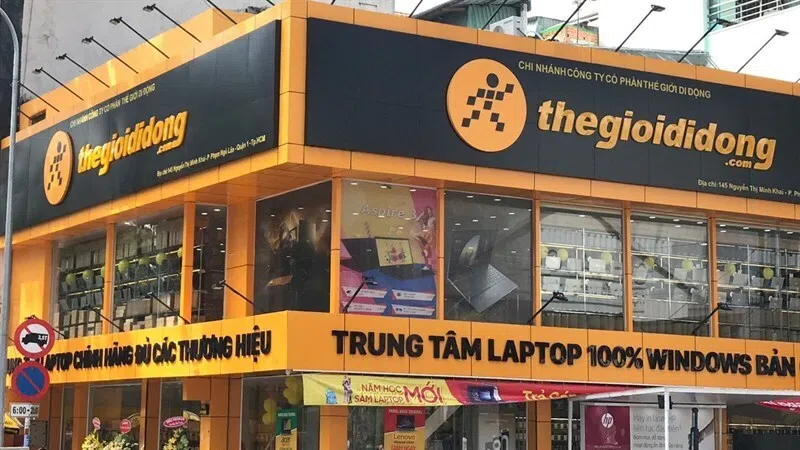
That ambition is shaped in part by the outsized success of Mekong’s biggest winner. Mekong Enterprise Fund II invested US$3.5 million in electronics retailer Mobile World for a 35 per cent stake in 2007, when it had just seven stores.
About 10 and a half years later, the fund exited with a 57-time return. By then, the retailer had more than 2,000 locations nationwide.
Across five funds, with nearly US$480 million in assets under management, Mekong has made 46 investments and completed 36 full exits.
“There are no mistakes in life, only lessons”
Freund first arrived Vietnam as a backpacker in 1992, carrying an image of the country shaped largely by Hollywood’s portrayal of the war in Vietnam.
What surprised him was not an emerging market or an untapped private sector, but how warmly he was received as an American. “The contrast was not what I expected, but it made me so interested in Vietnam,” he said.
The country eventually became the centre of his career. Freund founded Mekong Capital in 2001 as Vietnam’s first hands-on PE firm focused on private local businesses.
Some of Mekong’s earliest investments were built around a thesis that sounded logical at the time.
Vietnam’s private sector was still small in the early 2000s and state-owned enterprises dominated much of the economy. Freund assumed the strongest private companies of that era would naturally become the country’s corporate champions as the economy developed.
“A lot of them remained small or struggled,” he said. “(That was) one of the strategic mistakes of our first fund.”
The problem, he concluded, was that many were traditional family businesses that hired people they trusted, often relatives, rather than executives chosen primarily for performance.
“The most critical thing is really about the founders and the CEO, and how capable they are and what kind of leadership they provide,” Freund said.
Mekong later shifted towards professionally managed companies founded by entrepreneurs.
Another lesson was to look beyond management’s account of the business and seek insights from former employees, competitors, customers, suppliers and service providers.
“If you meet a company and you rely completely on what they give you,... that is the worst source of information to use,” he added.
Mekong has now compiled lessons from previous investments into a database and is using artificial intelligence to challenge assumptions in new investment memos.
Getting the right people
By 2007, Freund faced a broader leadership challenge: strengthening Mekong’s own operations alongside those of its portfolio companies.
He led a three-year overhaul of his leadership and Mekong’s workplace culture, emphasising personal accountability and frank communication on difficult issues.
That approach also shaped Mekong’s engagements with portfolio companies. Freund recalled investment teams tolerating problems for fear that confronting a chairman or chief executive would damage the relationship.
“The comfortable thing is just to do nothing and hope that the CEO gets better,” he said. “But that normally doesn’t happen.”
Sometimes the uncomfortable conclusion is simply that a company has the wrong chief executive. “When you get the right people on the board, they make a huge difference,” he added.
Those experiences eventually fed into Mekong’s “Vision Driven Investing” framework, which evaluates companies across 15 components including vision, the CEO, management team, culture, governance, digital capability and strategy.
Mekong scores portfolio companies against this framework, but Freund said it learned not to overemphasise the numbers.
“Telling them that they have a low score for their vision statement won’t solve anything,” he added. “We have to inspire them to redo.”
Hiccups on the road
Vietnam’s current push to strengthen its private sector will not automatically yield more investable businesses, he opined, though clear government planning can signal where infrastructure and growth sectors are heading.
“What Vietnam needs more are strong leaders and managers who are well trained,” he added.
Freund is also watching the country’s effort to build an international financial centre, or VIFC, and is considering registering an asset management company within it.
That means the VIFC would need to offer fund managers like his something incremental: lower taxes, more flexible fund structures and better exit conditions.
He pointed to Vietnam’s listing rules as an area where reform could make it easier for companies to access public markets.
“A lot of funds would be able to exit some of their best investments more easily,” he said. “It would simply attract more funds.”
The final test
For a firm that spent much of its history teaching founders to build stronger management teams and organisations that do not depend on one person, it is a fitting test of its own playbook.
By 2030, Freund wants a new generation of partners to be running Mekong day to day. He and the other current partners would move towards coaching, mentoring and investment-committee roles.
The firm, with a headcount of about 40, has mapped around 80 internal functions, designated owners for each, and begun crafting handover strategies.
“There’s a person in charge of the whole succession planning,” he said. “All of those 80 components should be running smoothly without me or the other current partners.” THE BUSINESS TIMES
Three questions with Mekong Capital founder Chris Freund
Q: Was there a pivotal moment that changed your approach to leadership?
In 2007, I went to Singapore for a programme called the Landmark Forum. After those three days, I started to see myself as responsible in ways that I hadn’t before, to step out of my comfort zone, to communicate and get things handled, and to discover the importance of integrity.
Q: What is one piece of unconventional wisdom you believe that most business schools might tell you is wrong?
What I notice about business schools is that there is so much attention on decision-making through case studies – on what the right decision is. It’s actually okay to make a lot of wrong decisions as long as you deal with it quickly.
Q: When you feel burnout creeping in, what non-business activity or routine reliably resets your focus?
Twice a year I do a one-week fast where I don’t eat, soak in hot springs, and stay alone in nature. That really gives me a lot of empty space. I’ll usually spend that time thinking about big-picture stuff – the kind of things you can’t do day to day with all the meetings.