



The Philippines’ October inflation shock signals tough road to 2027
Price pressures broaden beyond food and fuel, threatening to prolong the country’s economic slowdown

[MANILA] Forget a quick return to price stability in the Philippines. Corporate boardrooms and investors are looking at a high-inflation drag that will stretch well into 2027.
Analysts said the latest acceleration in consumer prices reinforces expectations that the road back to the Bangko Sentral ng Pilipinas’ (BSP) target band may be long and uncertain.
Headline inflation accelerated to 7.8 per cent in October – the highest since February 2023 – up from 7.2 per cent in September, as underlying price pressures broadened beyond food and fuel. Meanwhile, core inflation climbed to 5.4 per cent, Philippine Statistics Authority data showed.
The reading strengthens the case for further monetary tightening as higher transport, utility and imported-energy costs weigh on households and corporate margins.
The headline figure pushed average inflation for the first 10 months of 2026 to 5.6 per cent, substantially higher than BSP’s 2 to 4 per cent target.
A sustained return to that band is “more realistically a 2027 prospect” than a late 2026 turnaround, said Toby Allan Arce, head of sales trading at Globalinks Securities and Stocks.
He said: “A meaningful deceleration would require stabilisation in global oil prices, easing transportation and electricity costs, improved agricultural supply and a relatively stable peso.” He added that the government’s ability to address food supply bottlenecks and logistics costs will be vital because “monetary tightening alone cannot directly resolve these supply-side pressures”.
For John Paolo Rivera, senior research fellow at the Philippine Institute for Development Studies, monetary policy can help “anchor expectations”, but durable disinflation entails improvements in agricultural supply, energy security and distribution efficiency.
The timing of a durable disinflation will remain uncertain if energy prices stay elevated or the peso comes under renewed pressure, the analysts said.
Threat to recovery
Rivera warned that the current price pressures “pose significant downside risks to growth” by compressing business margins, particularly among micro, small and medium-sized enterprises, and eroding household purchasing power.
BSP faces a balancing act heading into its Dec 17 policy meeting after raising its target reverse repurchase rate by 50 basis points (bps) to 5.5 per cent in October. The decision took cumulative tightening this year to 125 bps.
The central bank said the move was intended to tighten monetary conditions, contain spillover effects and anchor inflation expectations, and that it stands ready to act further to return inflation to target.
Forecasts diverge on how far BSP will go. OCBC Group Research expects a 25-bp increase in December, followed by another 25-bp move in early 2027, taking the policy rate to a peak of 6 per cent. Maybank Investment Banking Group projects a 5.75 per cent policy rate by end-2026, held through 2027.
Anatomy of the spike
Of the Asean-6 countries that have released October metrics, the Philippines is seeing price pressures that outpace its peers Vietnam (5 per cent) and Indonesia (3.2 per cent).
Manila has taken a direct hit from global crude shocks tied to escalating Middle East hostilities, but currency weakness has amplified the pain. The peso fell to a record low of 64.17 to the US dollar on Oct 27.
As a net energy importer, the Philippines is particularly exposed to higher oil prices. However, a weaker peso raises the local currency cost of imported fuel and contributes to transport and electricity inflation, said Azril Rosli, economist at Maybank Investment Banking Group.
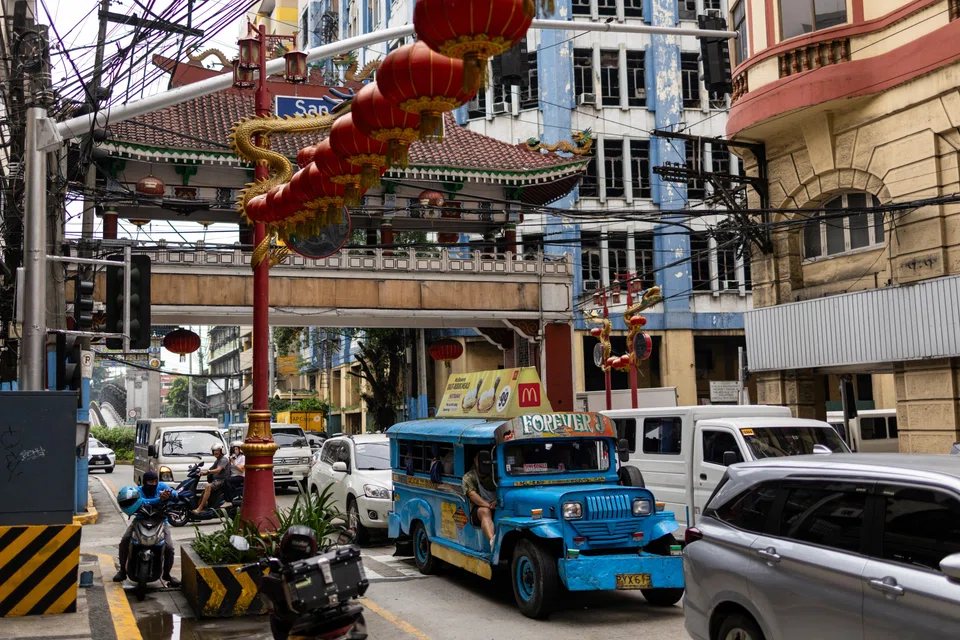
Philippine Statistics Authority data confirmed the broad pass-through. Transport inflation surged to 20.1 per cent in October from 14.6 per cent in September, driven by higher fuel prices and recent increases in bus, jeepney – a public utility vehicle in the country – and other road-transport fares.
Housing, water, electricity, gas and other fuels rose to 9.3 per cent, up from 8.4 per cent.
The consequence is a double squeeze. “Higher food, fuel and transportation costs are reducing households’ discretionary spending and increasing operating costs for businesses,” Azril said.
That could lead to more cautious consumer spending and slower investment decisions, particularly among energy-intensive and transport-dependent businesses.
Azril, however, cautioned that it would be premature to conclude that capital expenditure is already broadly delayed without further evidence from loan demand, business investment surveys and corporate credit data.
Targeted support
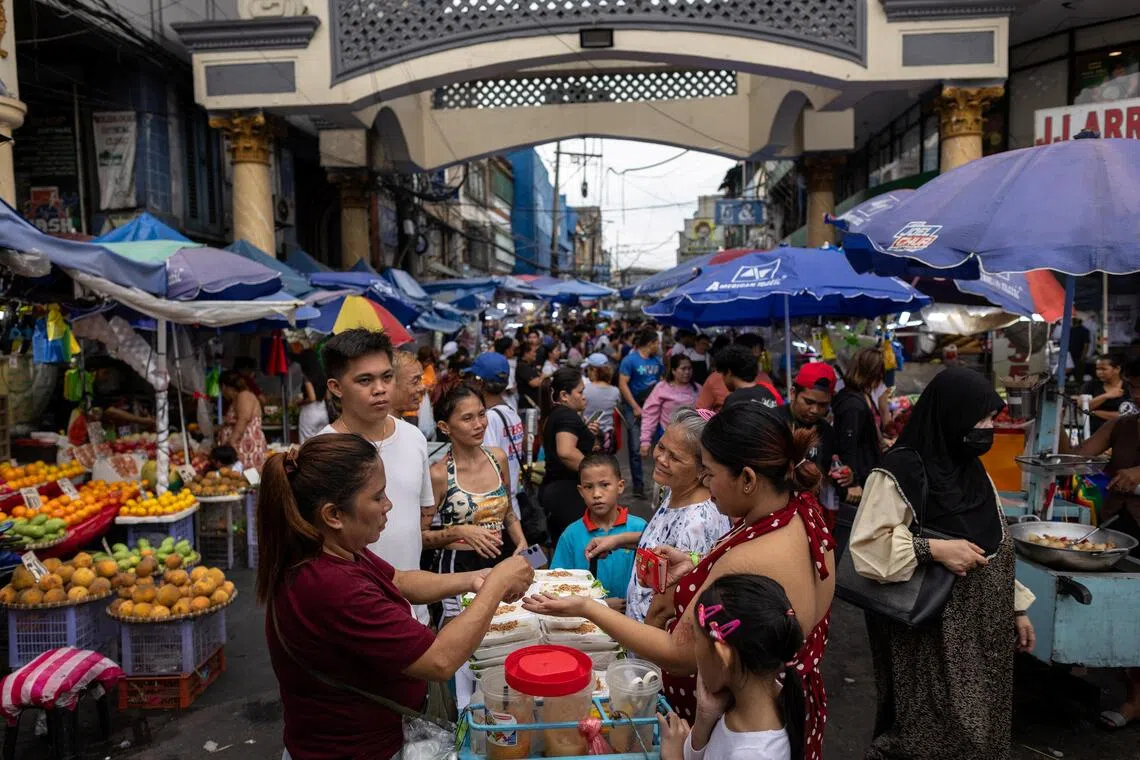
The fallout is hitting low-income households the hardest. Inflation for the bottom 30 per cent of households by income reached 9.5 per cent in October, up from 9 per cent in September, lifting the year-to-date average to 6.8 per cent.
With the peso’s real purchasing power sliding to 0.68 peso in September relative to its 2018 base, households that spend most of their income on basic necessities face acute pressure.
Rivera said the erosion of purchasing power in this segment threatens private consumption, the economy’s primary engine.
He urged time-bound, targeted cash transfers, transport assistance and support for vulnerable workers and farmers to cushion the blow without distorting market prices.
“Social protection must preserve purchasing power without compromising fiscal sustainability,” he said.
Equity market positioning
Despite the hotter-than-expected inflation print, the benchmark Philippine Stock Exchange index rose 1.5 per cent to 5,778.14 while the peso strengthened to 62.97 against the dollar on Nov 5.
The rally reflected lower global oil prices, broad dollar weakness and improved global risk appetite.
Arce said equity traders had already priced in monetary hawkishness following BSP’s 50-bp October rate increase.
He added that institutional investors are likely to focus on earnings visibility, pricing power, balance-sheet strength and sensitivity to borrowing costs.
Companies that can preserve margins and generate consistent cash flows can attract relatively stronger interest, but those dependent on discretionary spending or substantial debt financing may face greater pressure.
Arce added that institutional money is becoming more selective: favouring cash-generative companies with pricing power – such as consumer staples, regulated utilities and banks with manageable credit costs – while discounting property, consumer discretionary and highly leveraged businesses.
TRENDING NOW

China Investment Corp, PGIM’s 50% stake in Nex mall up for sale; asking about S$1.2 billion

Higher rates, weaker spending: Is the Philippines entering stagflation?
Singapore tech stocks plunge as Nasdaq bloodbath spills into region

OCBC wealth clients turn defensive amid market volatility as Q3 profit rises 3%

