Singapore businesses look beyond Jakarta to Bali as island seeks to diversify economy
SingCham Indonesia aims to turn that interest into concrete business partnerships

[BALI] Singaporean businesses are looking beyond Jakarta to Bali for investment opportunities in healthcare, education and tourism-related services, as the Indonesian island aims to reduce its reliance on hospitality and property development.
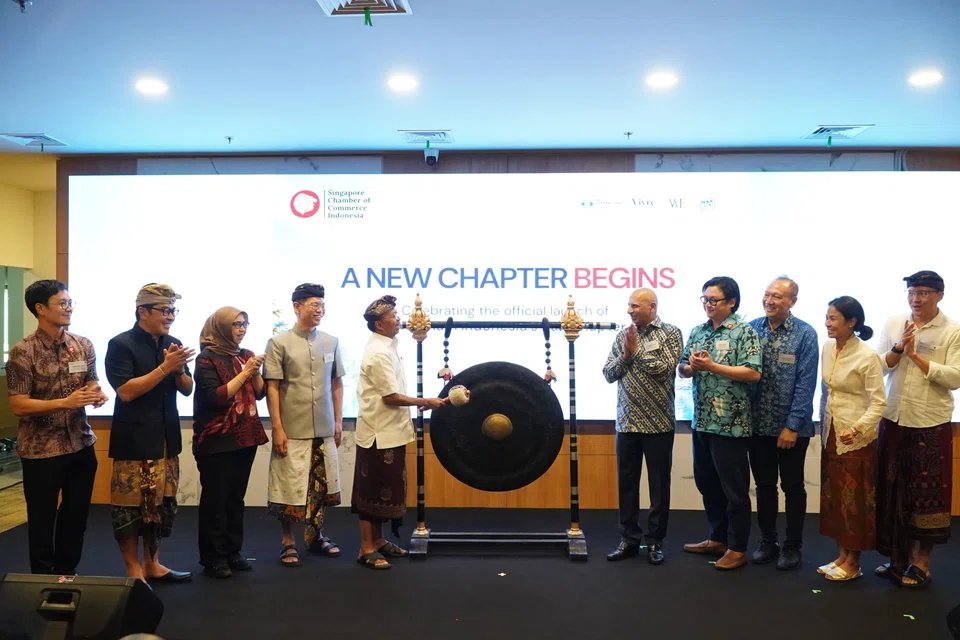
This interest was reflected on Thursday (Nov 12) at the launch of the Bali chapter of the Singapore Chamber of Commerce Indonesia, which also made SingCham Indonesia the first international business chamber to establish a chapter on the island.
Its chairman Shoeb Kagda said the organisation noted increasing interest and inquiries from Singaporean businesses regarding opportunities in Bali, although it did not have a consolidated number of prospective investors considering market entry.
While Singaporean businesses have traditionally concentrated on Bali’s hospitality, tourism and property markets, Kagda said the chamber was observing growing interest in a wider range of sectors – particularly healthcare, wellness, education, sustainability and professional services.
“Jakarta will undoubtedly remain the primary business and financial centre of Indonesia. However, new growth centres are emerging in the region and Bali is an interesting example of this evolution,” he added.
SingCham Indonesia aims to turn that interest into concrete business partnerships, connecting Singaporean and Balinese companies, over the next 12 to 24 months, the chairman said.

“Singapore has capital, expertise, technology and international business networks. Bali has tremendous potential, entrepreneurial energy and a strong international profile. There is considerable scope for both sides to complement each other.”
Growing Singaporean presence
Many Singaporean businesses already have a presence in Bali.
Hospitality group The Ascott, part of CapitaLand Investment , operates properties including Citadines Berawa Beach Bali, while Singapore-incorporated Banyan Tree Holdings runs luxury resort Buahan, a Banyan Tree Escape in Gianyar.

This presence now extends to education as well, with the establishment of Anglo-Chinese School Bali in the Kura Kura Bali development.
Kagda said education and workforce development could offer opportunities for Singaporean companies, especially as Bali looks to build the skills needed to support industries beyond tourism.
Healthcare is emerging as a particularly promising area, with the development of the Sanur Special Economic Zone (SEZ) that is focused on medical services and wellness.
Many Indonesians continue to seek healthcare abroad, particularly in Singapore and Malaysia.
Developing globally competitive medical facilities at home could help retain some of that spending, Kagda said, while also creating opportunities to attract foreign patients.
“There is an opportunity to leverage that reputation and develop a more sophisticated healthcare and wellness offering,” he noted.
The state-owned Bali International Hospital, located within the Sanur SEZ, is part of Indonesia’s push to develop the island into a medical tourism destination and reduce the need for Indonesians to seek treatment abroad.
Since its official opening in April 2025 by Indonesian President Prabowo Subianto, Bali International Hospital has treated 36,798 patients, the majority of whom are foreign nationals.
Dr Noel Yeo, chief executive of Bali International Hospital and a Singaporean founding member of SingCham Indonesia’s Bali chapter, said access to quality healthcare is important in attracting longer-stay visitors and residents.
Beyond tourism
The business chamber’s chapter opening comes as Bali seeks to diversify its economy and attract investment into higher-value sectors beyond tourism, which remains the island’s main economic engine.
I Wayan Koster, governor of Bali, noted that political differences between neighbouring countries are not uncommon, but Indonesia and Singapore have remained complementary partners. He said Bali could serve as a bridge for investment between the two countries.
Singapore is Indonesia’s largest source of foreign investment. Singaporean investors channelled US$17.4 billion into Indonesia in 2025, accounting for 30.9 per cent of total foreign investment, according to the Investment Ministry of Indonesia.
Bali also intends to broaden its investment appeal through the development of other economic hubs, including the nearly 500-hectare Kura Kura Bali SEZ, which is designed to attract investment in financial services, education and creative industries.
The island’s economy grew 5.8 per cent year on year in the second quarter of 2026, outpacing Indonesia’s national growth of 5.3 per cent, with gross regional domestic product reaching 89.3 trillion rupiah (US$4.9 billion).
Bali welcomed close to 4.6 million international tourist arrivals in the first eight months of 2026. Foreign investment in the island continued to grow this year, hitting 18.1 trillion rupiah in the first nine months of the year, the Investment Ministry said.
Ari Prasetio, assistant deputy for industry and investment at the Ministry of Tourism, said the ministry was ready to facilitate prospective investors, from identifying opportunities to coordinating with relevant ministries and regional governments.
“We will work with investors to identify opportunities, coordinate across ministries and regional governments, and help ensure that good projects move from intention to realisation.”
Decoding Asia newsletter: your guide to navigating Asia in a new global order. Sign up here to get Decoding Asia newsletter. Delivered to your inbox. Free.
Copyright SPH Media. All rights reserved.