‘Sell Indonesia’ sweeps trading desks as Prabowo tightens grip
What has unnerved investors is the more populist and interventionist agenda that the president has been pursuing
 Add BT as a preferred source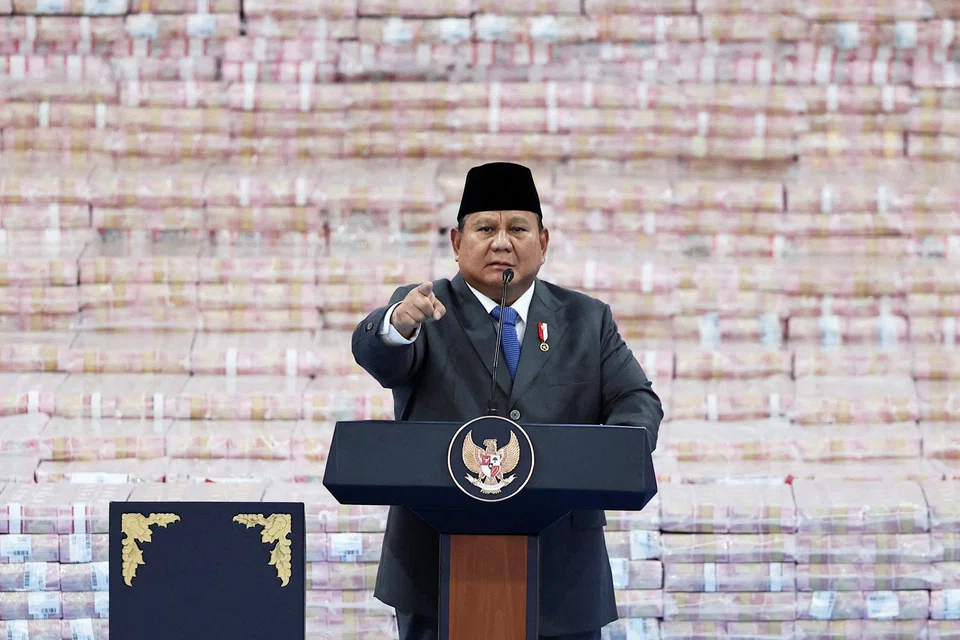
[JAKARTA] Global investors are rapidly losing confidence in Indonesia as the nation’s stocks tumble at the fastest pace worldwide and its currency sinks to all-time lows.
Just five months after hitting a record high, the benchmark stock index has tumbled 36 per cent to become the worst performer in 2026 among more than 90 global gauges tracked by Bloomberg. The rupiah has weakened more than 7 per cent, while foreign investors have pulled billions of dollars from Indonesian bonds.
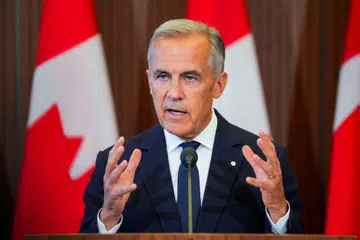
It marks a dramatic turn for a commodities-rich country that had been a staple allocation in many emerging-market (EM) portfolios. What has unnerved investors is the more populist and interventionist agenda that President Prabowo Subianto has been pursuing – and steadily ratcheting up – in a nation long seen as friendly to foreign investors.
The big trade in Asia “is sell Indonesia”, said George Boubouras, head of research at hedge fund K2 Asset Management, which oversees about US$4.3 billion. After decades of investing there, he exited all positions in 2024. “I have zero exposure to Indonesia,” he added. “I won’t give them an opportunity.”
Since taking office in October 2024, Prabowo has pledged to boost annual growth to 8 per cent, rolled out a nationwide free school meals programme, expanded the state’s role in the economy and channelled billions of dollars into sovereign wealth fund Danantara. More recently, his move to take direct control of key commodity exports to curb tax evasion triggered a sell-off in exporter stocks.
For many investors, the departure in 2025 of former finance minister Sri Mulyani Indrawati marked a turning point. Widely seen as a guarantor of fiscal discipline, she had reassured markets that Indonesia would maintain the conservative budget management that helped it earn investment-grade credit ratings and attract long-term foreign capital.
Now, investors are starting to question if those commitments still hold.
“Domestic political uncertainty is a typical EM risk that global investors tend to react to by staying on the sidelines until predictability re-emerges,” said Tang Yuxuan, Asia head of rates & foreign-exchange strategy at JPMorgan Private Bank in Hong Kong. “We still advise caution at this stage.”
The rupiah has become the clearest expression of market anxiety, falling about 14 per cent since Prabowo took office and ranking as Asia’s weakest currency in 2026.
SEE ALSO

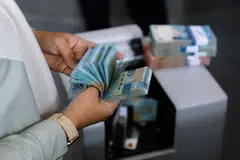


It breached a historic 18,000-per-dollar level on Thursday (Jun 4), and options markets signal further declines. Traders assign around a 45 per cent chance it falls to 19,000 by December and a 27 per cent probability of a slide to 20,000 one year from now.
“The core driver behind shorts in Indonesia is the bearish outlook for the rupiah, where investors remain concerned about macro imbalances and policy credibility, particularly on the fiscal side,” said Gary Tan, a portfolio manager at Allspring Global Investments, which oversees about US$624 billion.
Pressure has spread beyond the currency market.
Foreign investors have cut their Indonesian sovereign debt holdings by 86 trillion rupiah (S$6.1 billion), or about 9 per cent, since August 2025. The bonds have lost more than 8 per cent for US dollar-based investors in 2026, compared with a 1.6 per cent gain for EM debt overall – despite repeated intervention by Bank Indonesia (BI).
Another concern is the central bank’s growing ownership of government debt. BI now holds about 27 per cent of sovereign bonds, an unusually high share for an emerging economy.
“What started as purchases to improve the bond market’s liquidity might have become more of a type of quantitative easing,” said Rajeev De Mello, a portfolio manager at Gama Asset Management, adding that investors want clearer guidance on whether those holdings have stabilised or are likely to rise or fall.
The sell-off has also revived concerns about Indonesia’s sovereign credit profile. The country won investment-grade ratings from major agencies around 2012 to 2017 after years of improving fiscal discipline. Some investors now worry those hard-won gains could begin to unravel if confidence in policymaking weakens.
“They’re very hard to gain, very easy to lose,” said Shamaila Khan, the New York-based head of fixed income for emerging markets & Asia Pacific at UBS Asset Management. She manages an emerging markets fixed income fund that has outperformed 93 per cent of peers over the past three years.
“We want to see that they don’t jeopardise any of those policies, and the benefits they have received as a result,” she added.
MSCI shock
Investors were dealt another blow earlier in 2026 when MSCI said that Indonesia could be downgraded from EM to frontier status, triggering one of the country’s worst stock-market routs in decades. The warning carried weight because the index compiler influences how billions of dollars are allocated globally.
The issues MSCI flagged predate Prabowo and reflect structural problems his administration says it wants to fix, including concentrated corporate ownership and lax regulatory oversight. Authorities have responded with tighter disclosure requirements and proposed changes to free-float rules, but the measures have done little to halt the selloff.
On Thursday, the benchmark index fell to its lowest since late 2020, extending 2026’s losses to more than 30 per cent on worries over Indonesia’s outlook and the potential for a sovereign credit-rating downgrade.
“I’m not convinced the shareholder disclosure will be transparent enough to change the real issue,” said Ana Isabel Gonzalez Encinas, chief investment officer at Farringdon Asset Management in Singapore, which started selling Indonesian stocks in 2025 after being a long-term buyer. “If I can’t trust the plumbing, I don’t want to be the last one trying to get out.”
Prabowo and his government argue that the country needs more aggressive policies to escape the middle-income trap, move up the value chain and capitalise on its strategic position in global supply chains. “The markets are not understanding me,” he told Bloomberg in March. “I just do what I think is in the best interests of my people.”
Beyond the policy shifts, markets are also grappling with execution risk. The government’s plans to take greater control of commodity exports, carry out spending programmes and pursue a corruption crackdown have left many unanswered questions about how the new frameworks will work in practice.
“What is unsettling investors is less the concept itself and more the lack of clarity around implementation,” said Mohit Mirpuri, a partner at SGMC Capital.
Global investors have no lack of alternatives today. South Korea and Taiwan offer exposure to the artificial intelligence boom, India may continue to attract long-term capital on growth and reform optimism, despite recent pressure on the rupee, while Brazil benefits from higher commodity and energy prices.
Maxence Visseau, founder of Arkevium Capital in Dubai, said that the investment firm is underweight Indonesian stocks and that investors are “overwhelmingly cutting” exposure. “The domestic issues came first and are more structural. The Iran war is the accelerant.”
Not broken yet
To be sure, few investors believe Indonesia’s long-term story is broken.
The economy is still expanding by more than 5 per cent, government debt remains relatively low and the country occupies a critical position in global supply chains as the world’s largest nickel producer. Its population of 280 million is young, growing and increasingly affluent.
What global fund managers say they need now is reassurance – a fiscal anchor they trust, a central bank free to pursue its mandate, greater transparency around Danantara and the state’s role in the economy.
Whether Indonesia can restore that predictability may determine how quickly foreign capital returns. For all of Prabowo’s ambitions, investors say that the government ultimately needs markets to buy into its vision.
“They do need a partner – the bond-holder,” said K2’s Boubouras. Until then, “sell Indonesia is maintained for the foreseeable future”. BLOOMBERG
Decoding Asia newsletter: your guide to navigating Asia in a new global order. Sign up here to get Decoding Asia newsletter. Delivered to your inbox. Free.
Share with us your feedback on BT's products and services