



VinFast, Mitsubishi weigh Philippine EV production as state incentives near
Automakers’ proposed investments could mark Manila’s most serious step yet towards local manufacturing
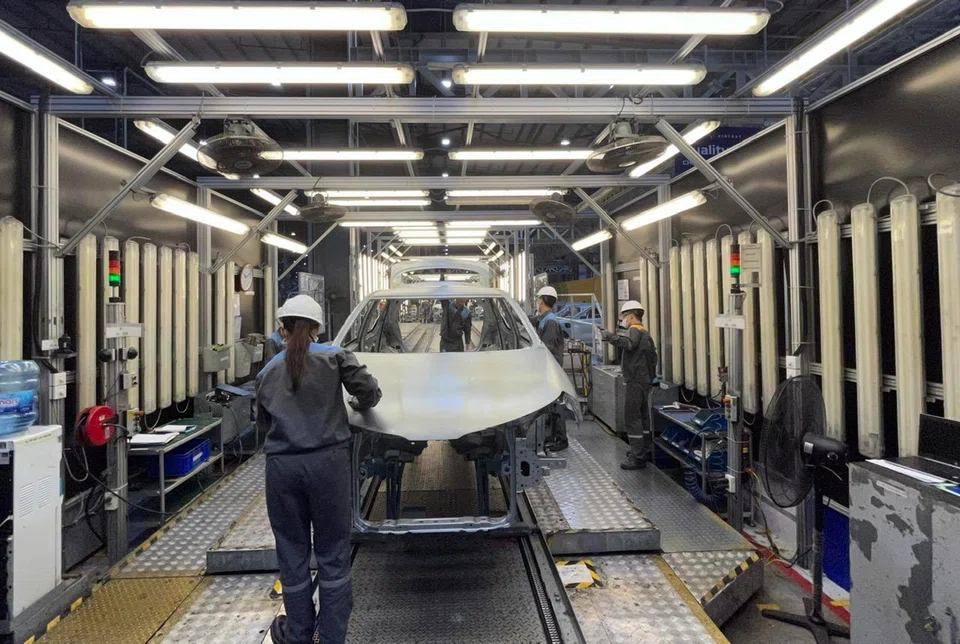

[MANILA] The Philippines is courting its most consequential automotive investment in decades from two of Asia’s most prominent electric-vehicle makers.
Vingroup, the Vietnamese conglomerate behind VinFast, and Mitsubishi Motors Philippines are gauging whether Manila’s EV incentives offer enough certainty to justify building or expanding factories in a market where demand is rising faster than local manufacturing capacity.
Vingroup is planning a US$500 million production hub south of Manila, while Mitsubishi is weighing a seven-billion-peso (US$374.5 million) investment to assemble hybrid vehicles at its existing plant in the region.
The two proposals represent the most serious sign yet that the Philippines’ Electric Vehicle Incentive Strategy (Evis) may be starting to attract the manufacturing investment the country has been struggling to secure.
Evis offers manufacturers up to 60 billion pesos in fiscal support to encourage the local assembly and production of EVs and critical components.
Speaking after a meeting this month with Vingroup, Trade Secretary Cristina A Roque said the conglomerate is scouting economic zones in the province of Batangas, an industrial hub about 90 km south of Manila where port access is a key advantage for imported components and prospective exports.
The proposed 300-hectare facility would have an initial annual capacity of 200,000 four-wheeled EVs for domestic and export markets. It is scheduled to break ground in the first quarter of 2027, with completion targeted within 12 to 18 months.
Mitsubishi – the Philippines’ second-largest automotive brand with a 16.3 per cent market share behind Toyota’s 49.3 per cent – is also considering expanding its plant in Santa Rosa, Laguna, another key manufacturing hub 40 km south of Manila, as it assesses whether to participate in Evis.
Ritsu Imaeda, president and CEO of Mitsubishi Motors Philippines, said plans remain flexible. The company is targeting Evis but weighing another incentive scheme for producers of internal combustion vehicles.


But while Evis is intended to pull automakers into local assembly, component production and, ultimately, export supply chains, delays over the guidelines are creating a drag.
So far, Vingroup and Mitsubishi have been the most prominent companies considering Evis participation, but neither company has committed to a final investment decision while the rules remain outstanding.
Both companies are still waiting for the government to publish the programme’s implementing rules, leaving prospective applicants unable to register formally.
Analysts at AB Capital Securities said the final guidelines, along with a proposed extension of zero EV import tariffs beyond 2028, would be key catalysts for these investment decisions.
A demand boom, an industrial deficit
The logic behind the proposals is gaining ground as high petroleum prices, amplified by geopolitical instability in the Gulf, give the Philippines’ automotive market an unexpected boost.
Total vehicle sales fell 10.2 per cent year on year to 307,060 units in the first nine months of 2026, according to the Chamber of Automotive Manufacturers of the Philippines (Campi).
Yet the sales of battery-electric, hybrid and plug-in hybrid models surged 163 per cent to 54,372 units over the same period, lifting their market share to 17.7 per cent.
The divergence reflects a market under pressure from expensive fuel, high borrowing costs and a depreciating currency.
BMI, the research arm of Fitch Solutions, said higher pump prices were weakening overall vehicle demand but improving the relative value proposition of electrified powertrains.
VinFast has been among the clearest beneficiaries. Its Philippine unit sold 5,417 vehicles in the first nine months, against 115 for the whole of 2025, and expects to exceed 8,000 units this year.
Campi data showed VinFast was the country’s top-selling battery-electric brand over the period, with a 33.8 per cent share of that segment.
Tesla followed with 3,460 units and China’s Omoda & Jaecoo with 2,443. BYD, a non-Campi member, is excluded from the association’s tally but has sold 5,844 battery EV units from January to August, the latest available data showed.
The Philippines’ rapid growth is unfolding from a low base, leaving it behind much of the region. The Philippines and Malaysia tied as the two lowest EV-adoption markets among the Asean-6.
Victor Jose Vela, deputy CEO of VinFast Philippines, told local media on Monday (Oct 26): “People are opting for alternative means of transportation, alternative sources of fuel, which is the electrified segment.”
Aftermarket potential
The boom has revived the longstanding question of whether the Philippines can convert a fast-growing consumer market into a credible manufacturing base.
The country remains a small player in regional automotive manufacturing. In 2025, Thailand and Indonesia each produced more than one million light vehicles annually, but Philippine output was only about 102,000 units, a gap that reflects decades of import dependence.
The imbalance is visible in the current sales boom. Models and components are imported, and battery EVs and related parts enter the Philippines tariff-free under a policy running until 2028. This lowers consumer prices but also reduces the immediate pressure to manufacture locally.
BMI expects EV demand to continue, forecasting Philippine sales to rise 11.2 per cent year on year to 32,776 units in 2026 and reach 91,730 units by 2030. But it cautioned that potential changes to incentives after 2028 pose a risk to affordability and consumer confidence.
Toyota Motor Philippines has warned that fiscal incentives alone will not create a competitive EV supply chain, stressing that local suppliers must be able to deliver cost-efficient, quality components if automakers are to source production domestically.
The aftermarket may offer an entry point. Global market research firm Imarc Group projects the Philippine EV aftermarket to rise from US$332.9 million in 2025 to US$1.65 billion by 2034, at a compound annual growth rate of nearly 19 per cent, driven by zero-tariff extensions and localised spare-parts production.
Partnerships between original equipment manufacturers and Filipino component makers are helping reduce costs and lead times, particularly in batteries, charging adapters and cabin accessories, said Imarc analyst Kirti Sharma.
Still, macroeconomic factors are adding a layer of risk. The Philippine central bank raised its target reverse repurchase rate by a larger-than-expected 50 basis points to 5.5 per cent on Oct 22, its fourth consecutive increase, as it sought to contain inflation pressures.
The peso has also weakened to record lows near 64 per US dollar, raising the cost of imported vehicles and components even as fuel prices strengthen the case for electrification.
Decoding Asia newsletter: your guide to navigating Asia in a new global order. Sign up here to get Decoding Asia newsletter. Delivered to your inbox. Free.
Share with us your feedback on BT's products and services
TRENDING NOW

If Europe goes to war, the fallout will be felt in East Asia

Indonesia stocks suffer worst plunge in nearly 30 years as MSCI proposes standalone status

Keppel seeks US$1 billion for Vietnam investments as it joins country’s international financial centre

Philippines’ FDI slowdown exposes uneven investment prospects across S-E Asia

