US vows ‘toughest sanctions in history’ on Iran as Bessent prepares new measures
Warnings put an immediate focus on China, which buys the bulk of Iran’s oil
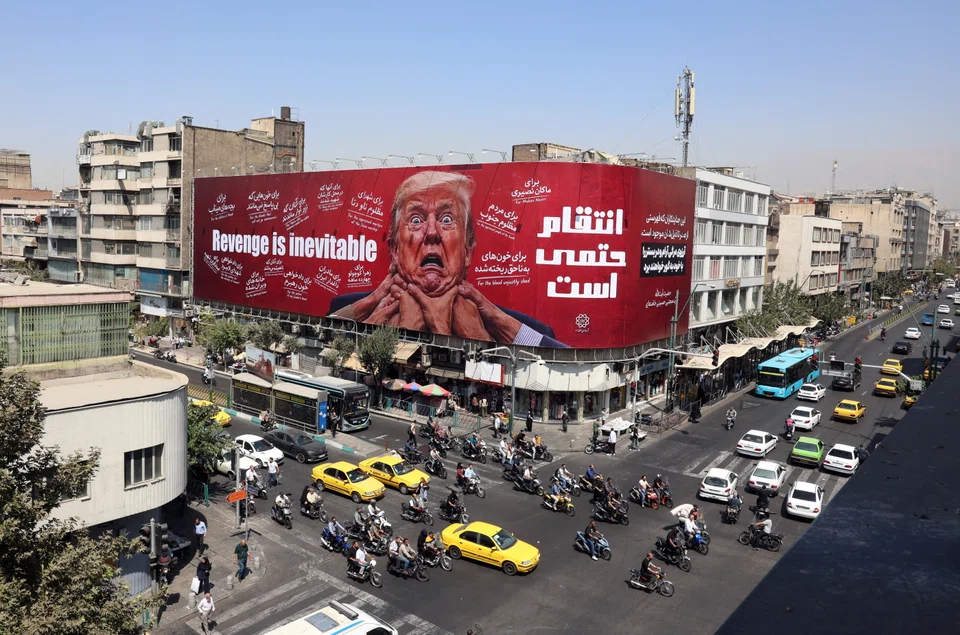
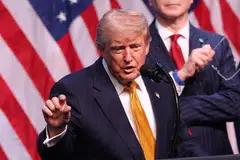
US TREASURY chief Scott Bessent said the US will impose “the toughest sanctions in history” on Iran, a move he suggested would lessen the need for new major military operations. This comes after US President Donald Trump threatened Teheran and others with “an ECONOMIC D-DAY” to end the current stalemate in the Middle East.
Bessent, in a CNBC interview, said he would hold a press conference on Monday (Aug 24) to “talk about exactly what we’re going to do” and sought to ratchet up pressure on US allies to join the effort.
“Economic pressure means that we are going to all of our allies – and this is going to be the greatest coordinated economic isolation in the history of the world – and we are going to them and saying, ‘You are either with us or against us’,” Bessent said.
The threats – echoing language used by then-President George W Bush in the wake of the Sep 11, 2001 attacks – come after months of military strikes and a full naval blockade of Iran’s ports failed to force Teheran to capitulate.
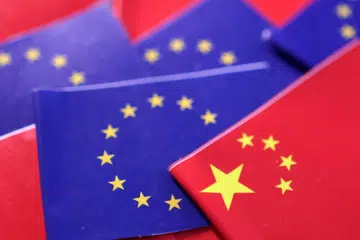
Neither Trump nor Bessent specified exactly what measures they would take or which countries would be targeted, but the warnings put an immediate focus on China, which buys the bulk of Iran’s oil.
Brent crude prices advanced for a fifth day to about US$94 a barrel, reaching the highest this month.
Asked on Thursday if China would be targeted, Bessent replied that “many conversations are best to have in private”, and said that everyone wants the vital Strait of Hormuz open again to commercial traffic.
“Keep in mind that the Chinese get 50 per cent of their energy from inside from the Gulf,” Bessent added. “So it would do them a big service to get with the programme.”
Sanctions, pressure would not work: Beijing
In its first reaction to Trump’s comments, Beijing said sanctions and pressure would not work and called for a diplomatic resolution. Iran, meanwhile, said Trump’s threats were a “diversion” from America’s own crises of unprecedented debt and surging interest costs.
“Doubling down on failed policies will only bring further defeat – and enmity of Iranians,” Iranian Foreign Minister Abbas Araghchi said on X. “US economic terrorism threatens global economy and sovereignty worldwide.”
Iran has weathered and adapted to decades of harsh economic sanctions and it is unclear what new economic punishment the US could impose, if any, that Teheran has not already endured.
Targeting Iranian oil sales would also risk fresh confrontation with China and complicate Trump’s bid to extend a tariff truce with President Xi Jinping, who is set to visit the US in September.
“I don’t think there’s a magic bullet,” said Daniel Fried, a former US ambassador to Poland, told Bloomberg TV.
“Is there more leverage we could apply against the Iranian economy? Probably. But I think they’ve got the workarounds pretty much in place right now. Our leverage is not great in the short run.”
Trump’s comments signal how the US, beset by munitions shortages and rising costs, wants to pivot from a military campaign that has eliminated most of Iran’s top leaders and battered its economy, but has so far failed to bring about its surrender.
China does not recognise unilateral sanctions, but its state entities generally stay away from blacklisted oil. Its biggest state banks also have a history of complying with US sanctions against Iran, North Korea and even top officials in Hong Kong, in order to avoid losing access to the US dollar-clearing system.
Washington has already sanctioned some independent Chinese teapot refineries and firms since the US launched the war against Iran in late February. But so far, the US has stopped short of targeting the major Chinese banks that finance the trade.
In May, China ordered domestic companies not to comply with US sanctions on five refiners, while its biggest banks were caught between Beijing’s directive and the risk of losing access to the US financial system.
“Sanctions and pressure will not help resolve the issue,” Chinese Foreign Ministry spokesman Lin Jian told reporters at in Beijing on Thursday. “China calls on relevant parties to take responsible measures and sought to solve the issue through diplomatic and political means.”
US needs allies to help ‘isolate, and defeat, the Iran threat’
Trump demanded that all countries stop giving Iran access to exchange houses, cash transfers, swap lines, ship registries, front companies and avenues to smuggle out its oil.
He also sought to rally other nations that have so far declined to support his war on the Islamic Republic, saying the US needs all its allies to help “isolate, and defeat, the Iran threat”.
The US got a boost on Tuesday, when the United Arab Emirates severed economic ties with Iran after accusing it of firing two ballistic missiles at its territorial waters. Iran denied responsibility for the attack.
The UAE ranked as Iran’s top trade partner in 2025, with Teheran relying on the relationship for access to foreign goods and hard currency, followed by China, Turkey and India.
Trump’s aim is to force Iran into fresh negotiations meant to end the war for good, force Teheran to abandon its nuclear programme and release its chokehold on the Strait of Hormuz.
Those goals were spelled out in a memorandum of understanding the two sides signed in June, but later collapsed amid a flurry of tit-for-tat strikes.
Iran has weathered economic sanctions for decades, and its response has been to make its own demands, including the unfreezing of its assets, an end to sanctions and war damages.
Resolving the conflict is increasingly urgent for Trump as he contends with high petrol prices, the war’s growing unpopularity and Republican concerns about losing one or both houses of Congress in November’s midterm elections.
Earlier this week, he even threatened to bomb Oman, an American ally that has sometimes played the role of mediator, if it gets in the way of the US.
Iran’s threats against commercial shipping have stifled traffic through Hormuz, while a counter-blockade ordered by Trump has severely limited Iran’s own ability to export oil.
The war, which is approaching the six-month mark, and the blockade have spurred almost 80 per cent inflation in Iran and its currency has lost almost 30 per cent of its value against the US dollar this year.
Economists have warned the conflict risks dragging it into one of the worst economic crises in the history of the nation of 90 million people. BLOOMBERG, REUTERS
Decoding Asia newsletter: your guide to navigating Asia in a new global order. Sign up here to get Decoding Asia newsletter. Delivered to your inbox. Free.
Share with us your feedback on BT's products and services