

China expands outbound investment rules to cover individuals
Moves to set up offshore entities, funnel money into foreign acquisitions are likely to face tighter scrutiny
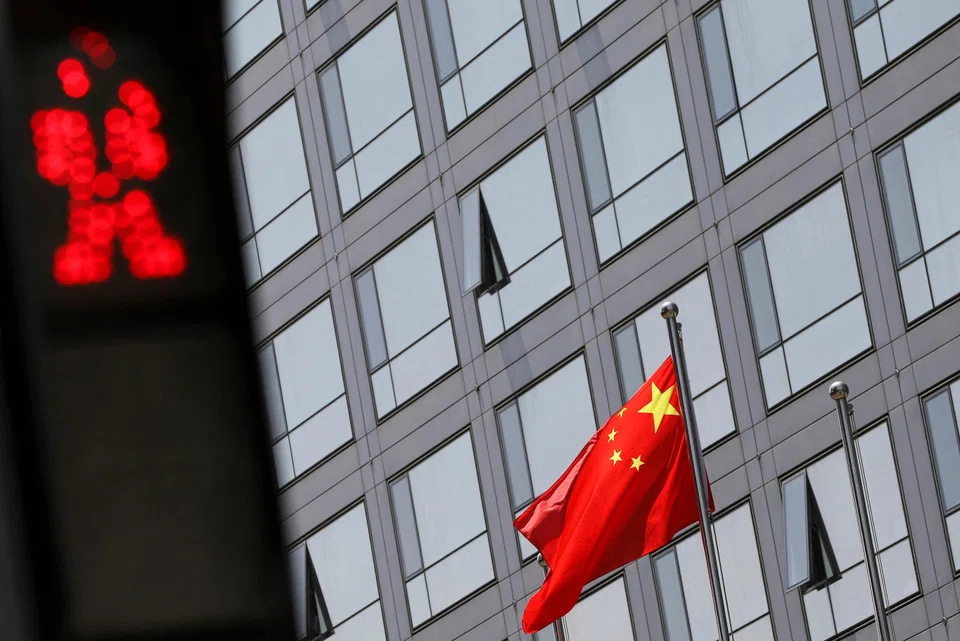
[BEIJING] China has expanded its outbound investment regulations to explicitly cover individual investors for the first time, in a shift that potentially raises compliance hurdles for tech founders and even ordinary stock investors.
The new rules, released on Monday (Jun 1) by China’s Cabinet, broadened the definition of “investors” to include individual residents.
The move marks a departure from existing frameworks that focused primarily on overseas corporate investments, bringing financial activities that have long operated in a legal grey area under closer scrutiny.
““In my view, the new regulation could potentially shut the door on Chinese investors buying foreign stocks.””
Henry Gao, professor of law, Singapore Management University
Under the previous system, Chinese firms seeking to invest abroad required outbound direct investment (ODI) approval from multiple government agencies, but the rules did not explicitly apply to individuals.
Wang Zhiyi, founder of the research firm Shanghai Fangchang Information Development, said that this left individual overseas investment activities in an “ambiguous state”.
He added: “Strictly speaking, China has long lacked a systematic institutional framework for ODI by individual domestic residents.”
No specific measures yet
For years, Chinese entrepreneurs and wealthy individuals have moved capital abroad by setting up offshore entities, funnelling money into foreign acquisitions, overseas property and stakes in companies outside China. Those arrangements are now likely to face tighter scrutiny.
Gene Ma, head of China Research at the Institute of International Finance (IIF), said a related concern is the offshore capital raised by China-linked companies through so-called “red-chip” structures.
Under that arrangement, an offshore entity holds China-based assets, a set-up that has long allowed domestic startups to raise foreign venture capital and conduct initial public offerings (IPOs) to list in New York or Hong Kong.
SEE ALSO





“The capital subsequently raised through offshore IPOs is not necessarily repatriated, but is instead retained overseas, creating a massive external capital loop,” Ma said. “By bringing individuals into the regulatory framework, China hopes to better manage this situation.”
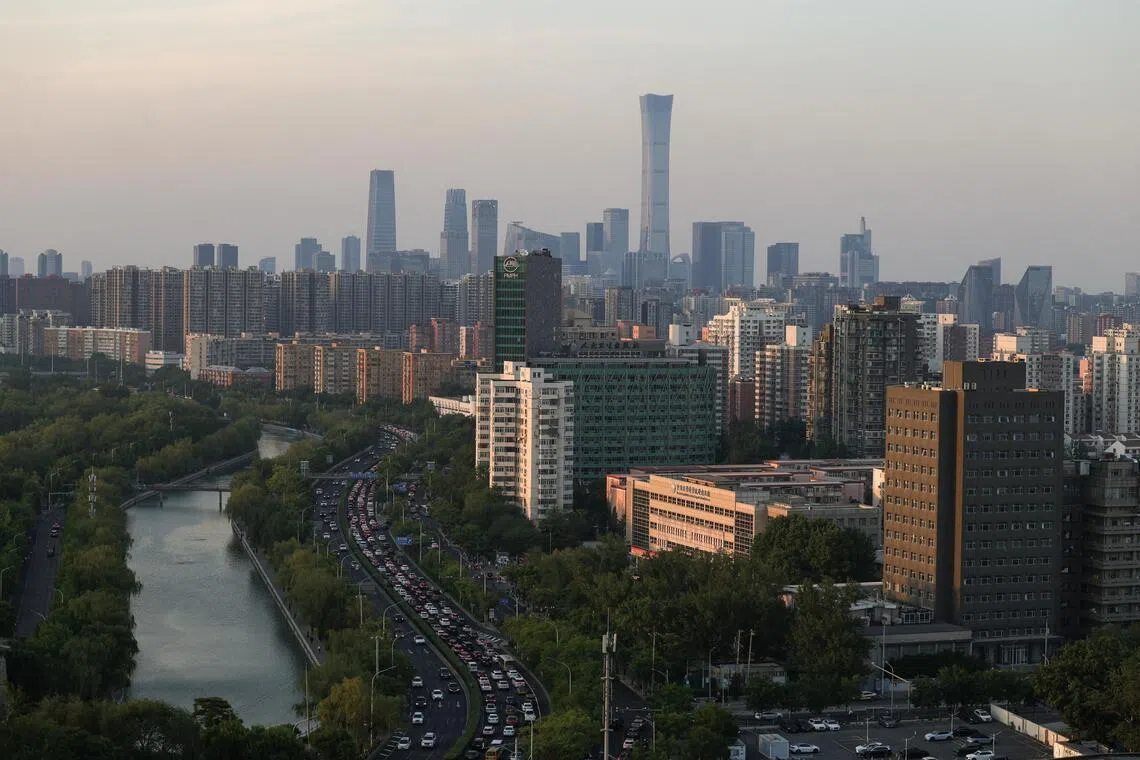
The new regulation does not spell out how individual outbound investment will be supervised. Instead, it says specific measures will be drawn up later by government departments responsible for investment and commerce.
The State Council Information Office did not immediately respond to a faxed request for comment.
Restricting retail capital
The regulatory overhaul comes as Beijing grows increasingly concerned about unregulated capital outflows. The IIF said that Chinese individuals, companies and financial institutions moved an estimated US$807 billion out of the country last year, the highest on record.
Within those figures, outflows into equities rose 67 per cent to US$208 billion, while bond outflows climbed 75 per cent to US$153 billion.
By contrast, ODI fell unexpectedly to US$157 billion, weighed down by tariff pressures, geopolitical uncertainties and a sharp contraction in intra-company lending, the IIF said in a report last month. It did not break down the amounts between individual and institutional investors.
The inclusion of individual investors has sparked confusion and debate over what the rules could mean for Chinese residents holding overseas stocks.
While some analysts believe the regulation is meant to steer investors to legal pathways, Henry Gao, a law professor at Singapore Management University, warned that it could be used to restrict retail capital.
“In my view, the new regulation could potentially shut the door on Chinese investors buying foreign stocks,” Prof Gao said, noting that the regulation states it applies to investments made in financial markets outside China.

That warning aligns with Beijing’s broader efforts to seal off unauthorised investment channels.
Last month, China launched its most forceful crackdown yet on illicit cross-border stock trading to stem capital outflows, penalising Futu, UP Fintech’s Tiger Brokers and Longbridge Securities for operating on the mainland without a licence.
Prof Gao said that restrictions such as the recent crackdown on offshore brokerage platforms are “intended to continue – and potentially expand – under the new regulation”.
Chinese citizens moving money overseas have for years played a game of cat and mouse with regulators, bound by an official annual foreign exchange limit of US$50,000 per person.
To bypass this, some have turned to alternative networks, including underground banks and cryptocurrency.
Shanghai Fangchang’s Wang expects regulators to maintain tight restrictions on those grey channels while expanding regulated routes. These include the Hong Kong Stock Connect and the Qualified Domestic Institutional Investor initiatives.
“Residents’ demand for cross-border asset allocation will not disappear,” he said, “but policy is more inclined to accommodate this demand through channels that are licensed, quota-controlled, regulated.” BLOOMBERG
Decoding Asia newsletter: your guide to navigating Asia in a new global order. Sign up here to get Decoding Asia newsletter. Delivered to your inbox. Free.
Share with us your feedback on BT's products and services
TRENDING NOW

He built the Vingroup empire. Now South-east Asia’s richest man is handing some key roles to his sons

CPIB hauls Multi-Chem CEO, COO in for questioning; stock hits ‘circuit breaker’
SC Capital Partners sells Rivervale Mall in Sengkang for around S$276 million

From Haidilao to Oriental Kopi: How some of Asia’s favourite F&B players are faring in 2026

