



Asia’s tech giants give AI bull run a new centre of gravity
Retail, institutional investors drive record buying, with leveraged bets
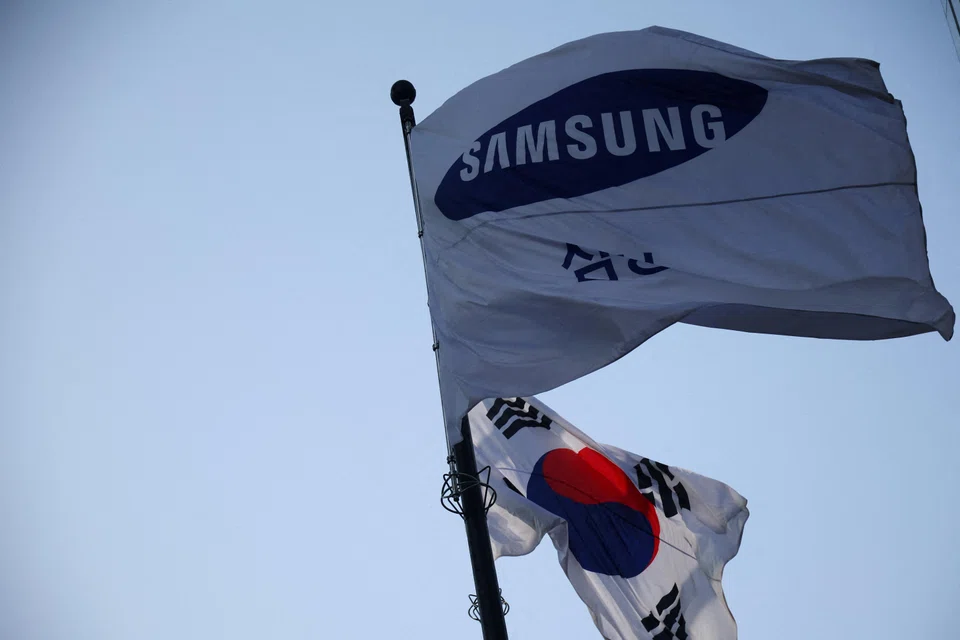
[TAIPEI/SEOUL] Just as the world’s AI bulls looked to be running out of puff, a fresh investor frenzy has hit Asia’s tech names, making Seoul’s stock market the world’s hottest and delivering bonuses of half a million US dollars to workers at one Korean chipmaker.
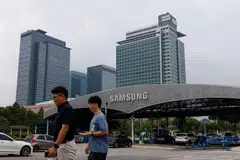
Asia’s three most valuable companies are chipmakers – Taiwan Semiconductor Manufacturing Co, Samsung Electronics and SK Hynix – and their recent record earnings have put the spotlight on their critical role in the global AI supply chain.
Chip revenues leapt nearly 50 times at Samsung last quarter and South Korea’s benchmark Kospi has doubled in little more than six months.
Investors big and small have piled in. Underscoring the fear of missing out, leveraged buying of Kospi shares by South Korean retail investors, known locally as “ants” due to their collective behaviour, hit a record of 25 trillion won in late April, data showed.
“After the rally of semiconductor stocks, other AI-related stocks will now have to catch up,” said Kwon Soon-kuk, a 34-year-old office worker who is chasing the market now after missing out on the post-pandemic rally in 2020.
Meanwhile, bigger investors are buying the story that Asian chipmakers and their suppliers already make a lot of money from AI, in contrast to Silicon Valley names whose heavy spending on chips and technology makes them riskier bets.
Samsung, SK Hynix and TSMC all count the “Magnificent 7” US tech giants as customers and sell hardware to Nvidia, a designer that has grown into the backbone of the AI industry.
“It’s a seller’s market for AI suppliers,” said Alex Huang, chairman of Fubon Financial Holding’s fund arm which owns TSMC shares.
“Rather than pricing, what Nvidia is worried about is failing to secure capacity,” he said. “When it comes to setting product prices and passing on costs to customers, Taiwan has formidable power.”
SEE ALSO




Asian chipmakers have signed multi-year agreements with customers, a move that Sam Konrad, investment manager at Jupiter Asset Management, said signals that the AI cycle is likely to go on much longer than many had expected.
Nearly half of his fund is invested in Taiwan and South Korea.
‘All built on AI’
The result has been a gusher of cash into the accounts and stock of almost anyone along the AI supply chain, and with Asia at the heart of chip manufacturing, the region has become the epicentre of the boom.
The region is home to what Andy Wong, head of multi-asset investment at Pictet Asset Management, calls “a shrimp among whales”: compact but highly advanced tech hubs that have quietly become indispensable to the global AI buildout.
“In certain tech themes, Asia has the best companies in the world,” he said, citing segments such as memory and foundry.
Samsung’s first-quarter profit increased eightfold, with chips responsible for 94 per cent of the record 57.2 trillion won (S$49.9 billion) total. Its stock price has more than doubled this year and this week it crossed the US$1 trillion market cap threshold, only the second Asian company to do so after TSMC.
SK Hynix, a chipmaker which was worth less than US$100 billion 16 months ago, is closing in on US$800 billion, which would put it within reach of JPMorgan, the world’s most valuable bank.
It struck a deal to share 10 per cent of its annual operating profit with workers, which in 2027 could amount to an average per worker payout of US$680,000, according to Reuters calculations.
The spillover is powering the economies of South Korea and Taiwan, with Taiwan’s 13.69 per cent jump in first-quarter GDP the biggest in nearly four decades and South Korea’s 1.7 per cent growth the fastest in nearly six years.
“It’s all built on AI,” said Chris Lo, a vice-president for Nomura Asset Management Taiwan, who said the growth rate for capital spending from cloud service providers is 70 per cent year on year, with room for upward revisions.
“Many Taiwan companies’ production capacities have been fully booked through 2027.”
To be sure, there are distorting effects and risks.
Any sign that big AI firms are finding fundraising harder would curtail chipmakers’ spending and hurt future earnings, while soaring stock prices are also starting to draw warnings.
“My sense is that it is getting dangerous,” said Nick Ferres, chief investment officer of Vantage Point Asset Management in Singapore.
A Hong Kong-listed exchange-traded fund tracking SK Hynix is now the world’s second-largest single-stock leveraged ETF, drawing HK$40 billion (S$6.5 billion) in the seven months since its launch.
For now, momentum is strong and positioning does not seem crowded nor valuations stretched. Global investors yanked nearly US$50 billion from South Korean and Taiwanese stocks in March and only about US$7 billion has flowed back since then.
“We’ve added ... and continue to see further upside,” said Ian Samson, a multi-asset portfolio manager at Fidelity International of markets in Taiwan and South Korea.
“Regardless of what you think of valuations or earnings, in the near-term positioning is what matters, and that has cleared up significantly.” REUTERS
Decoding Asia newsletter: your guide to navigating Asia in a new global order. Sign up here to get Decoding Asia newsletter. Delivered to your inbox. Free.
Share with us your feedback on BT's products and services
TRENDING NOW

LTA proposes combining car COE categories, adding rebate-surcharge system

StarHub to acquire MyRepublic’s mobile business amid ongoing telco consolidation

DBS, OCBC, UOB rout lops billions off STI as inflation, rate concerns spook investors

Grab CEO’s wife Chloe Tong on life with Anthony Tan and finding her purpose

