

Why China’s stimulus keeps missing the mark
Prioritising technology self-sufficiency and manufacturing has inhibited recovery in the property sector
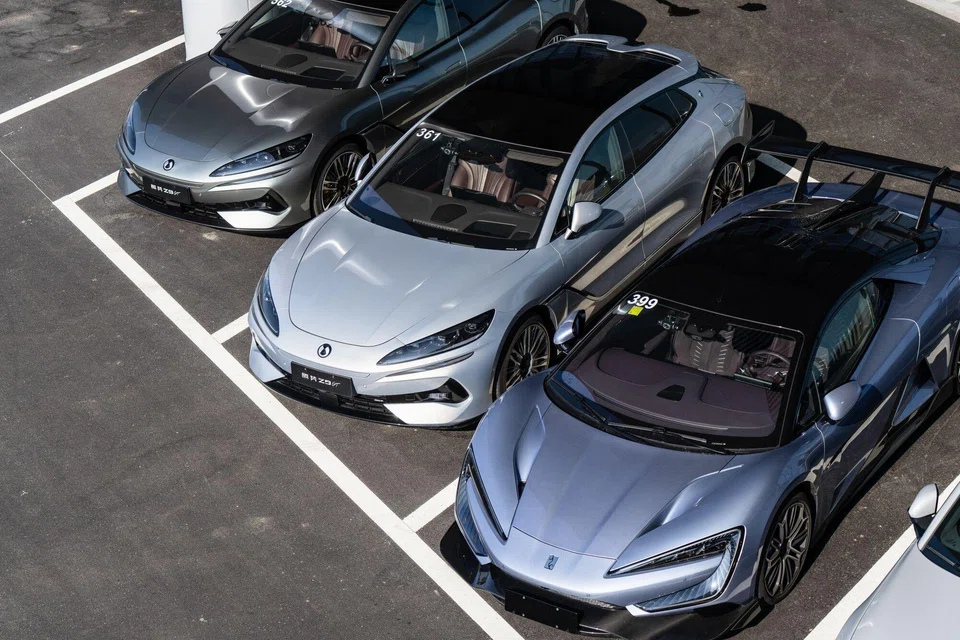
[HONG KONG] China’s economy has split in two: high-tech exports are surging, while domestic consumption and job creation are stalling.
Now that major trading partners are seeking to put up more barriers, Beijing may need to rethink its cautious approach to direct household stimulus.
China’s K-shaped economy was clearly illustrated by its third-quarter gross domestic product figures.
Exceptional export growth, driven by global artificial intelligence spending and clean energy investment, helped GDP growth hit 4.5 per cent year on year.
While retail sales rose slightly, the increase came from a low base, and the multiyear housing slump continued to weigh on the domestic economy.
The housing slump partly explains the consumption woes. With residential property accounting for about 70 per cent of Chinese household assets on average, dwindling home prices since 2021 have eroded household wealth and constrained consumption.
Meanwhile, increasing job insecurity appears to be driving up precautionary savings. The official urban unemployment rate has held around 5 per cent over the past three years, but youth unemployment has hovered between 14 and 19 per cent, underscoring the obstacles to creating new jobs.
A 2024 survey by the People’s Bank of China attributed the country’s rising savings rate to the weak job market.
Divergent by design
This divergent growth pattern reflects Beijing’s policy choices.


Technological self-sufficiency has long been China’s stated long-term strategic goal. The country’s “New Quality Productive Forces” growth model, articulated in late 2023, called for generous investment in digitalisation, networking, biotechnology and AI.
In March, the 15th Five-Year Plan reinforced this model, elevating six emerging industries – AI and robotics, semiconductors, advanced mobile communications, quantum technologies, biotechnology and drones and air taxis – as pillars of future growth.
There may be merits to this strategy given the tech arms race with the US, but it appears to come at the expense of domestic consumption, as it generates negative wealth effects, limits the resources available for social safety nets and reduces support for labour-intensive industries.
For example, since 2020, Beijing has shifted policy to divert capital away from real estate and towards advanced manufacturing and green energy.
In this period, outstanding bank loans to the property sector have flattened, while those to manufacturing and green technology have grown at annual rates of 10 to 15 per cent and 20 to 40 per cent, respectively.
This, in turn, has inhibited the recovery in the property sector, which has weighed on domestic consumption.
While generous investments in advanced manufacturing and green technology may boost GDP growth, they have not alleviated the country’s unemployment problem.
As the International Monetary Fund (IMF) has warned, the shift towards sectors like electric vehicles reshapes employment towards capital-intensive, highly automated production rather than broad job creation.
Moreover, regulatory crackdowns have negatively impacted white-collar work: research on China’s private education ban shows it wiped out three million jobs alone, alongside massive layoffs at Internet platforms and developers.
Even though Beijing’s focus on advanced manufacturing, AI, clean energy and other industries of the future makes strategic sense on the global stage – and may be the envy of the US and the European Union – at home, these priorities have left Chinese consumers facing a host of economic headwinds.
Narrowing options
The combination of breathtaking expansion in manufacturing capacity and weak domestic demand has led to overcapacity in many sectors, much of which has been exported – a charge frequently levelled by the US and EU.
This overcapacity has driven a destructive race for domestic market share, crushing prices and margins across EVs, solar panels, batteries and e-commerce. So far, Beijing’s plans to combat this “involution” have met with limited success.
Meanwhile, major trading partners, including the EU, are beginning to erect trade barriers, narrowing the scope for export-led growth. This highlights the risks China could face if it fails to revive household consumption.
China has periodically attempted to boost domestic demand.
A coordinated monetary and fiscal package in September 2024 included sharp cuts to banks’ reserve requirement ratios and benchmark policy rates, as well as relaxed home-purchase restrictions.
The central government also embarked on local-government debt resolution and support for low-income households.
In contrast, a new set of measures announced last month was much less ambitious, focusing on capital injections into state-owned banks and insurance companies as well as consumer credit subsidies.
Chinese policymakers have also been reluctant to commit to concrete consumption targets.
Several government advisers recommended that the 15th Five-Year Plan announced in March include a target to raise household consumption from 40 per cent of GDP to 50 per cent over the next two five-year cycles, but that recommendation went unheeded.
The lighter fiscal touch is not surprising given growing debt constraints. China’s total government debt, including central, local and off-balance-sheet government financing vehicles, has risen from 80 per cent of GDP in 2019 to 127 per cent in 2025, according to the IMF.
Additionally, rebalancing the economy would require more than fiscal and monetary support.
IMF has suggested allocating public resources from production to households, enhancing social safety nets for healthcare, unemployment and pensions, and relaxing the household registration system, or hukou, to grant urban status to 200 million rural migrant workers.
But such recommendations have received a lukewarm response.
While some officials in Beijing have indicated that the country should rebalance away from exports and towards consumption, doing so would likely mean slower growth in the short term and could require adjustments that would be painful to certain segments of the economy.
Ultimately, China’s economic rebalancing faces a deep structural impasse. Whether it can overcome it may be the key question for the global economy in the next decade. REUTERS
The writer is founder and CEO of Emmer Capital Partners, and former head of Asia-Pacific Equity Research at BNP Paribas Securities
Decoding Asia newsletter: your guide to navigating Asia in a new global order. Sign up here to get Decoding Asia newsletter. Delivered to your inbox. Free.
Share with us your feedback on BT's products and services
TRENDING NOW

Government to bring forward raising of retirement age, give employers more financial support to create flexi-load jobs

Former minister Maliki Osman, Revolut chairman join Asia Gulf Holdings advisory board

Is Manila Asia’s new dining hot spot?

Simba at risk of losing operating licence over spectrum misuse

