

Trump’s war on tariff evasion could turn into a battle over global manufacturing
The new crackdown may trigger a bigger confrontation over what ‘Made in China’ really means
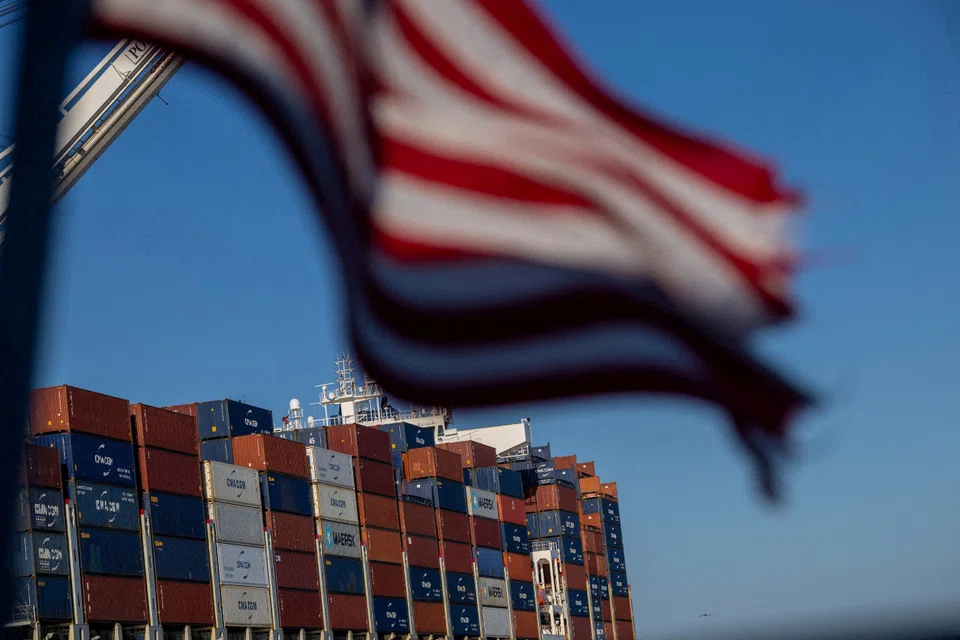
[PHILADELPHIA] The Trump administration’s new crackdown on tariff evasion may eventually trigger a bigger confrontation over what “Made in China” really means.
Most trade experts say the Aug 13 White House report on alleged China-linked transshipment is less an intellectually rigorous economic analysis than a political document designed to reinforce the administration’s case for tariffs and tougher enforcement.
The 25-page report, titled “The Great Transshipment Scam” and illustrated with the image of a Trojan horse, was produced by the White House Office of Trade and Manufacturing Policy, which is led by Harvard-trained economist Peter Navarro.
Navarro, a protectionist trade hawk, introduced it as an effort to expose a China-led system for routing exports through more than 40 third countries to evade US tariffs.
The report estimates the annual value of goods transshipped in a very wide range, from US$34 billion to US$303 billion (S$43 billion to S$387 billion). It also says that transshipment costs the US Treasury between US$19 billion and US$26 billion in revenue annually.
“China’s biggest enablers range from Mexico and Canada on US land borders to the European Union, India, Japan and South Korea,” the report says.
Singapore is named along with Cambodia, Laos, Myanmar and the Philippines among the smaller economies with lower illegal transshipment volumes but possessing features like low-cost labour, free zones, port or border access, niche assembly capacity or preferential US access that make them “attractive opportunistic targets for China-linked rerouting”.
Unintended incentives to reroute
The most consequential effect of the report may be to expose a contradiction at the heart of US President Donald Trump’s trade strategy: the tariff system itself has created new incentives for companies to reroute production and shipments through third countries.
The report acknowledges, albeit a bit indirectly, that Trump contributed to the problem by creating a system of differential tariffs rather than a simple Most Favoured Nation (MFN) rate for most goods, said William Reinsch, a veteran trade analyst.
SEE ALSO

MFN is the standard tariff a country charges on an imported product from most trading partners.
“Previously, the incentive to transship illegally was mostly focused on goods subject to high anti-dumping or anti-subsidy duties. Now, the differential tariffs have created an incentive for more cheating,” added Reinsch, a senior adviser at the Center for Strategic and International Studies in Washington.
The report tries to highlight a legitimate issue of transshipment in trade, said Marc Mealy, the executive vice-president of research and chief policy officer at the US-Asean Business Council, an advocacy group representing major US companies with business interests in South-east Asia.
“But this report is also being used in a way to further the narrative that the international trading system treats America unfairly.”
The immediate target of the transshipment report is fraud: false declarations, relabelling, repackaging or token processing in a bid to pass off China-made products as originating from elsewhere.
The stepped up Customs enforcement efforts, along with the use of a new artificial intelligence tool to help track the illegal practice, are welcome, said Wendy Cutler, a senior US trade official during the Clinton administration.
What the report does not do is call for strengthened coordination with US trade partners to help combat what has become a global problem, said Cutler, senior vice-president at Asia Society Policy Institute.
“It notes provisions in our bilateral trade agreements to address transshipment concerns, which are welcome but insufficient,” she pointed out in a social media post.
“We should be viewing our partners as part of the solution, rather than suggesting that they are part of the problem,” she added.
Higher tariffs for transshipped goods are already contained in some of the trade agreements negotiated with South-east Asian nations in 2025.
“Therefore, to the extent we might see more tariffs, they will likely be consistent with those agreements,” said Reinsch.
How to decide on country of origin?
But as scrutiny rises, the dispute is likely to shift from plainly illegal conduct to a far harder question in the era of globalised production chains: what level of manufacturing in a third country is enough to create a new national origin?
Longstanding Customs practice dictates that a product can acquire a new origin if it undergoes “substantial transformation” abroad, i.e. it is part of a process that creates a new and different article of commerce.
“The issue is fundamental,” said Reinsch. “If you’re going to treat products differently based on their origin, then you have to have rules that enable you to decide where something came from.”
Steel slabs exported to South Korea and then rolled into sheet, strip, coil or wire, are a good example. Under international Customs rules, the processing can turn the slabs into a new product of South Korean origin.
But critics of that framework may argue that the material should be regarded as Chinese, never mind the subsequent processing, because the core input originated in China.
Others could push a more radical and disruptive test: determining origin by corporate ownership rather than the location of production.
Under that approach, a product made by a Chinese-owned company in Vietnam, Indonesia or Germany could still be deemed Chinese, said Reinsch.
Reshaping the trading system
Either way, the trading system would be reshaped if the US moves away from an origin regime based chiefly on where economically meaningful transformation occurs and towards a system that tracks the nationality of inputs or owners.
That could cast doubt on a vast range of multinational supply chains across the world that use Chinese components or investment.
“That would seriously upend the trading system, particularly if nobody else followed the US lead,” said Reinsch.
“Supply chain managers would have to maintain two separate systems, one for products entering the US and one for products being shipped to their offshore subsidiaries,” he said.
The first major test may come in ongoing negotiations over the US-Mexico-Canada Agreement (USMCA).
Rules of origin are already expected to be a central issue in the review, particularly for autos but also in other sectors.
The administration could seek higher North American content, a “China shield” requiring tougher treatment of Chinese inputs or new standards aimed at Chinese-owned production in Mexico.
Currently, USMCA origin rules do not treat a Mexican-made item as Chinese merely because a Chinese company owns the Mexican factory.
Focus on the issue is likely to intensify ahead of a planned September visit to Washington by Chinese President Xi Jinping, following Trump’s visit to Beijing in May.
Countries waiting to see how Board of Trade works out
Experts question how the transshipment crackdown will sit with other initiatives being talked about to manage the US-China relationship, for instance, the proposed Board of Trade and Board of Investment.
The former will decide which non-sensitive goods the two countries should keep trading, potentially with lower tariffs. The latter will decide which non-sensitive sectors Chinese companies may invest in within the US without raising national security concerns.
These were proposed by the Trump administration and agreed to in principle at the Trump-Xi summit in May.
“In theory, to the extent that the Board of Trade identifies Chinese exports that the US would welcome, that might create more certainty in the economic relationship and reduce the pressure for circumvention, at least in the identified sectors,” said Reinsch.
The more volatile factor is how the US chooses its enforcement policies, he noted. “Much of the circumvention we are seeing is illegal under international Customs rules, and the Chinese know it,” he said.
“However, if the US starts to unilaterally change those rules by redefining substantial transformation or rules of origin, that would cause significant political objections in China, not to mention other countries,” he added.
“All in Asean are very much waiting to see what happens with the Board of Trade issue,” said Mealy.
“For instance, there are some areas where the differential between the import tax on a good made in Vietnam is relatively equal to the import tax on a good made in China. Then, global firms don’t have to arbitrage differing import tax costs.
“They can just focus on the competitive factor advantages of making something in China, and compare those competitive advantages to making something in Vietnam,” he said. THE STRAITS TIMES
Decoding Asia newsletter: your guide to navigating Asia in a new global order. Sign up here to get Decoding Asia newsletter. Delivered to your inbox. Free.
Share with us your feedback on BT's products and services






