

Vietnam stocks slip on first day in FTSE emerging-market benchmarks
New index flows are expected, but macro pressures and access gaps still worry investors
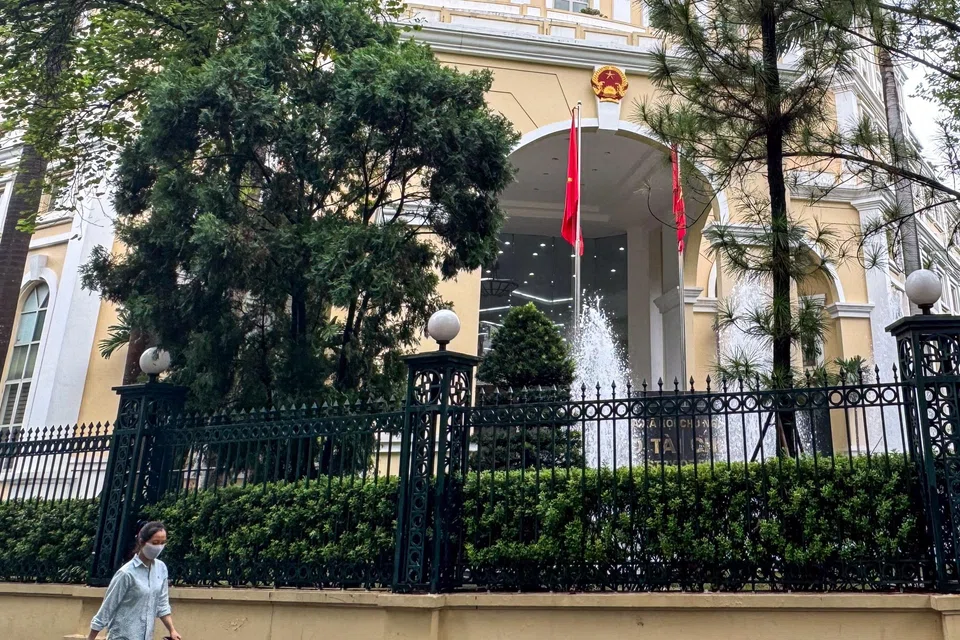
VIETNAMESE stocks fell on the market’s first day in FTSE Russell’s emerging-market benchmarks, underscoring how much the long-awaited upgrade had already been priced in and how gradually the expected foreign inflows will arrive.
The VN-Index dropped 0.88 per cent, or nearly 16 points, on Monday (Sep 21). Trading turnover on the Ho Chi Minh City Stock Exchange fell 33 per cent from Friday’s session and was nearly 9 per cent below last week’s average.
The muted debut came as Vietnam formally moved from frontier to secondary emerging-market status on Monday, ending an eight-year wait since FTSE Russell first placed the market on its watch list in 2018.
Rather than triggering a rush of fresh money, however, the first session suggested that investors had largely anticipated the event and were no longer treating the upgrade itself as a major short-term catalyst.
“The first wave of FTSE-related positioning has largely been absorbed, while the market is unlikely to receive another major index-driven liquidity catalyst until the next FTSE allocation in a few months,” said Tyler Nguyen, chief market strategist at Ho Chi Minh City Securities, in a note on Monday.
Nguyen The Minh, head of investment banking at An Binh Securities, also said that the upgrade had largely been priced in by this stage, with the first tranche of inflows relatively small compared with the size of the market.
Vietnam is entering the FTSE Global Equity Index Series in four tranches rather than at full weight immediately. Just 10 per cent of the country’s investability weight was added this September, to be followed by another 20 per cent in March 2027 and 35 per cent each in June and September.
FTSE Russell said the phased approach is intended to manage capital inflows and liquidity during the transition.
Market watchers expect the total passive inflows tied to the upgrade to be about US$2 billion, with combined active and passive investment potentially reaching US$6 billion to US$8 billion over 12 months.
SEE ALSO


SSI Research estimated that, for the first tranche, exchange-traded funds tracking FTSE’s global indices would make about US$240 million of net purchases across 27 Vietnamese stocks.
FTSE Russell first announced Vietnam’s upgrade from frontier to secondary emerging-market status last October. The VN-Index surged about 41 per cent in 2025, but has gained less than 1 per cent so far in 2026, after giving back much that was gained in an earlier rally that took it to a record high in May.
Macro headwinds
Foreign investors sold a net 676.7 billion dong (US$26 million) across the country’s three bourses on Monday, reversing some of the more than 2.6 trillion dong of net purchases made in the previous week ahead of the effective date.
Despite Vietnam’s high gross domestic product growth rates, they have remained net sellers, offloading nearly 95 trillion dong of Vietnamese stocks so far this year, following outflows of about US$5 billion in 2025.
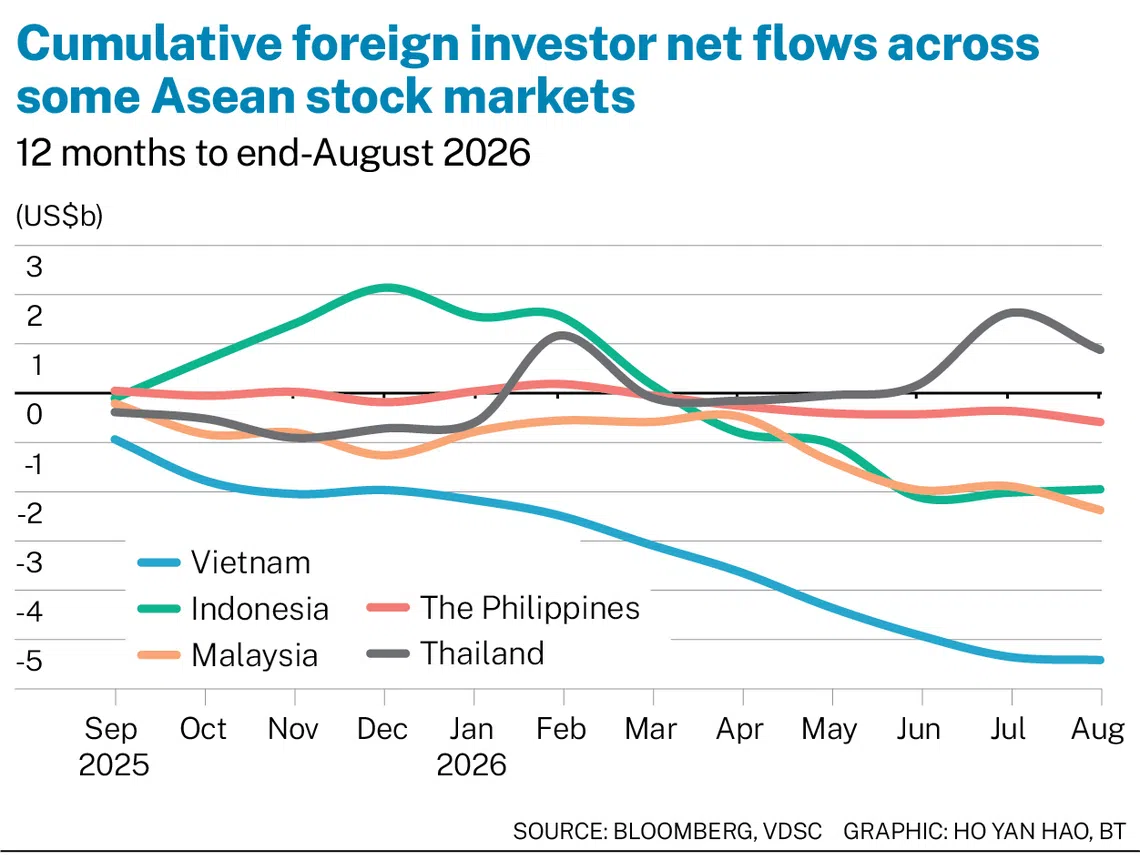
The bigger determinant of foreign buying is likely to be the global macro backdrop rather than the reclassification itself.
“Since 2024, shifts in the interest-rate environment have been a major factor affecting capital flows,” said Minh, noting that foreign investors have been persistent net sellers in the Vietnam market in recent years.
Higher bond yields and funding costs in major markets have made emerging-market allocations less attractive, while global capital has increasingly concentrated in artificial intelligence-related equities, where Vietnam offers relatively limited exposure.
The FTSE upgrade nevertheless introduces a new source of foreign demand, Minh pointed out, though the inflows are more likely to offset a part of the previous foreign withdrawals than reverse them outright.
“Whatever caused them to sell has to turn around before they come back as net buyers,” he added, pointing to inflation, global interest rates and funding costs as the key variables.
Longer-term challenge
The bigger test for Vietnam begins after the FTSE upgrade. The country will need to not only attract index-linked money, but also make sure that enough stocks remain sufficiently large and liquid to stay investable.
Active foreign fund managers have remained selective despite the upgrade, with some still staying on the sidelines over concerns about limited market breadth, valuations, corporate governance and uncertainty surrounding the geopolitical and tariff backdrop.
“The issue is not just about getting upgraded,” Minh said. “The first challenge is being able to hold on to that status.”
Vietnam has already removed one significant hurdle by allowing foreign institutional investors to trade without fully prefunding purchases, with brokerages guaranteeing settlement in the interim. But a central-counterparty clearing mechanism, seen as a more complete solution, is only expected from 2027.
Improving that market infrastructure will also be critical to Vietnam’s longer-term ambition of joining MSCI’s emerging-market universe. An MSCI upgrade would carry broader significance because its indices are more widely tracked by both active and passive investors.
Vietnam remains classified by MSCI as a frontier market, with foreign ownership limits, low free float, and gaps in information disclosure among the hurdles that continue to constrain market accessibility.
Indonesia offers a cautionary example: Insufficient progress on those fronts could ultimately trigger a consultation on downgrading the market from emerging to frontier status.
For Vietnam, addressing those constraints is also part of a broader push to deepen its capital markets and reduce the economy’s reliance on bank credit.
“The upgrade is not the final destination, but the starting line of a new game,” Minh said. “(It will) determine whether Vietnam sees only a short-term wave of inflows or becomes a lasting destination for international capital.” THE BUSINESS TIMES
Decoding Asia newsletter: your guide to navigating Asia in a new global order. Sign up here to get Decoding Asia newsletter. Delivered to your inbox. Free.
Share with us your feedback on BT's products and services
TRENDING NOW

Malaysian king buys stake in Singapore-listed mining firm expanding into rare earths

Family offices ‘kept captive’ by relationship managers turn to independent advisers, direct deals

Once staunchly pro-China, Malaysian Chinese businesses are now distancing themselves from Beijing

Could stablecoins be the future of money?

