Can you guess the word of 2026?
The Cambridge Dictionary's latest pick says much about how quickly our sci-fi realities have accelerated
LAST month, Dartmouth College held a conference celebrating the anniversary of a workshop conducted in 1956, in which a group of scientists and mathematicians coined the term “artificial intelligence”.
They were declaring a new field of study, one engaged with the question of whether human cognition and intellect could be replicated by a machine.
Decades later, we find ourselves swirling around in the vortex of the existentially destabilising answer, forced to make a positive case for people.
“AI at 70: What must remain human?” was the title of the Dartmouth convening, out of which it was determined that “human flourishing, human judgment and human will” were all worth preserving.
That we seem to require such explicit assertion is another indication of how quickly our sci-fi realities have accelerated. Maybe language is the best resistance we have; maybe if we say “human” often enough, the bots will not own us.
Some of that thinking seems to have informed the decision, announced on Tuesday (Nov 17), by editors of the Cambridge Dictionary, that the word of the year was not nearly as trendy as “parasocial” last year, not newly concocted or suddenly ubiquitous but rather the humble, simple and familiar: “human”.

“Agent” – as in, “I’ve asked my AI agent how to tell my spouse I want a divorce” – was a runner-up.
The Cambridge Dictionary, published by Cambridge University Press, has been available on the Internet since 1999. Editors arrive at their annual designation after examining online searches and looking specifically at “collocation”, Jessica Rundell, the dictionary’s commissioning editor, explained. This refers to instances in which one word is paired with another.
“Something for example like ‘human governance’ was coming up often,” she said. So were terms like “human offered”, “human written” and “human need”.


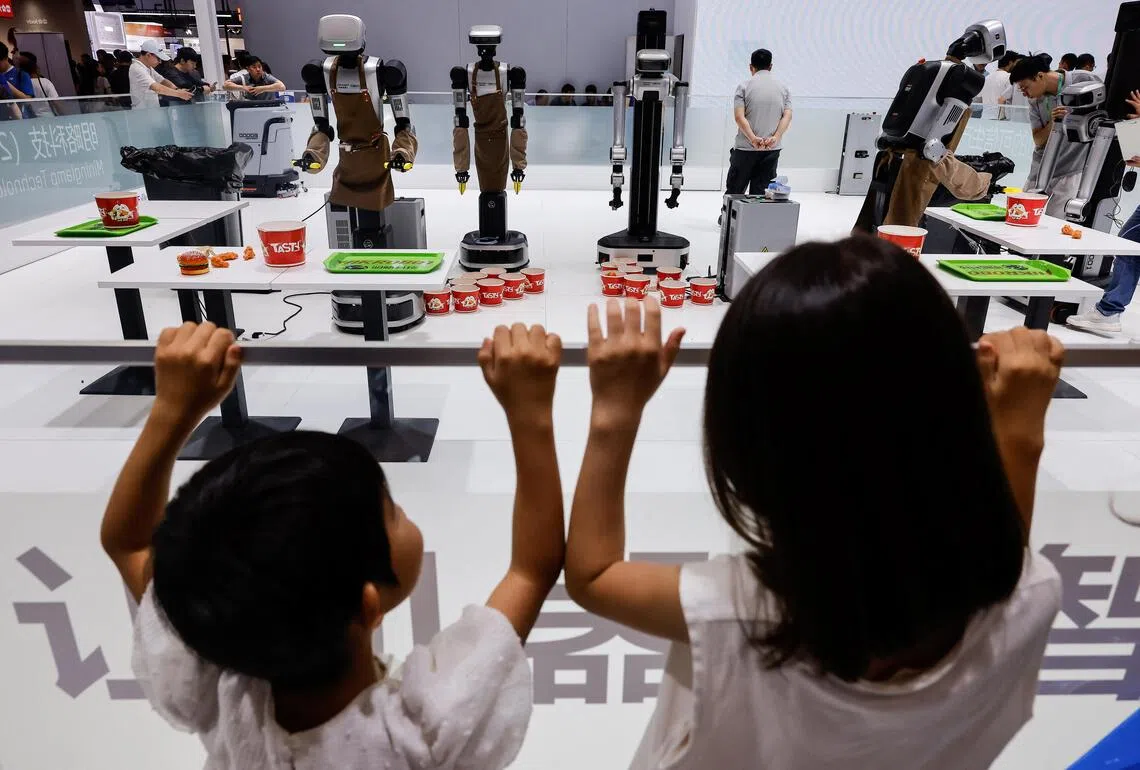
People might have made some of those searches while procrastinating at work and wondering whether their jobs would exist in eight or 10 months.
Or perhaps they were conducted in the middle of sleepless nights haunted by warnings from the creators of AI, who themselves were predicting that no matter how useful a role their products could play in disease eradication and finding cheap flights at Thanksgiving, they might also eventually flatten civilisation.
We can take that all in and still acknowledge that over the past year, real life did seem to have some victories. The Winter Olympics. The World Cup. Season 51 of Survivor.
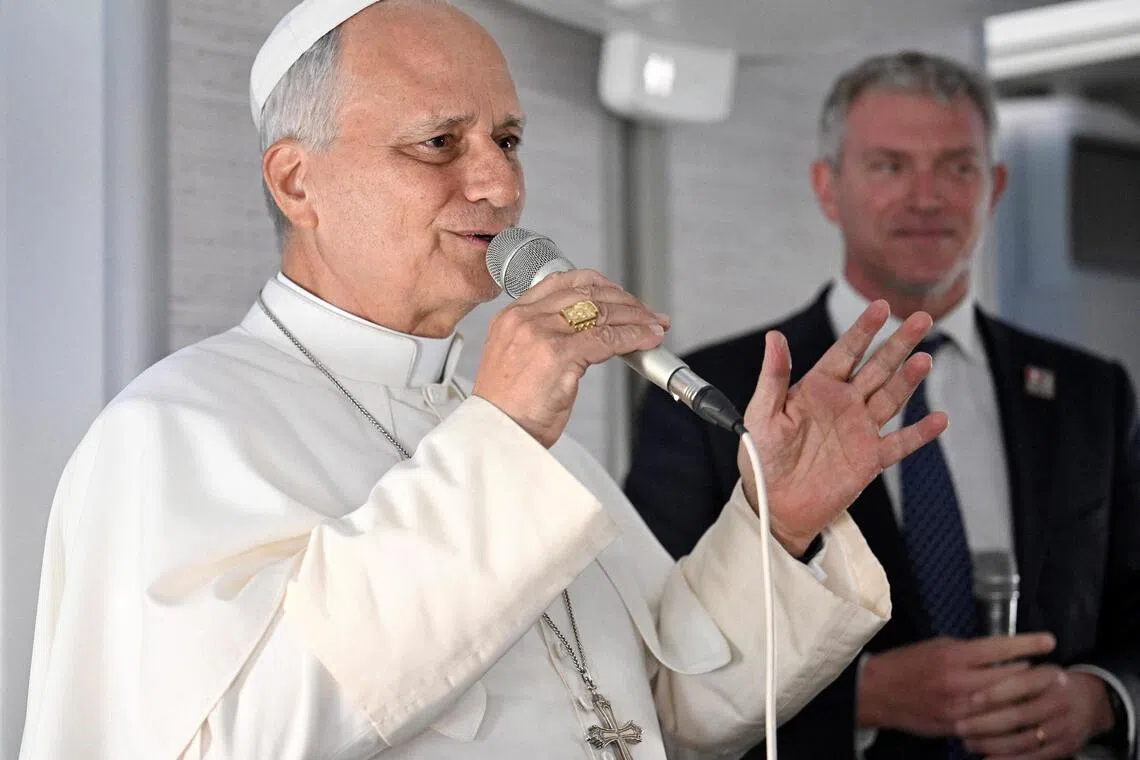
In the spring, Pope Leo XIV issued his first encyclical, Magnifica Humanitas. Its subject was the dangers of AI, and he denounced its powers as “entirely tied to data processing”.
He cautioned that “so-called artificial intelligences do not undergo experiences, do not possess a body, do not feel joy or pain, do not mature through relationships and do not know from within what love, work, friendship or responsibility mean”. The word “human” appears in the document more than 370 times.
Even if AI has been shown to simulate and improve certain aspects of human accomplishment, it has, at the same time, demonstrated little capacity to reproduce the distinctly human forms of social folly that unite us in a spirit of incredulous delight.
This year, the world learned that AI can solve mathematical problems that have perplexed academics for years. Then came the Nvidia scandal, in all its human mess and interpersonal drama.
An AI rendition of a tech executive might have been even better at manufacturing microchips, but what would a leader like that have done if confronted with the charms of a businessperson whom US intelligence identified as a Chinese asset?
Would this AI boss have fallen for the ruse and succumbed? Or cuffed her and called the authorities at the first signs of seduction, thus depriving the world of a scandal that seems teed up as material for Succession 2?
The irony has been irresistible. A ruler of Silicon Valley, Jensen Huang was nevertheless brought down as if he were Thyestes or Gary Hart.
Human judgment is often bad or even terrible judgment; people make mistakes out of desire, compulsion, distress. Maybe that is what makes us human most of all. NYTIMES
Decoding Asia newsletter: your guide to navigating Asia in a new global order. Sign up here to get Decoding Asia newsletter. Delivered to your inbox. Free.
Share with us your feedback on BT's products and services