Range Rover’s boss says the brand has one thing no one can copy
He adds that the company still leads in the technologies that count

“I NEED to correct you,” Martin Limpert, global managing director of Range Rover, says, cutting me off when I suggest that the brand is not a technology leader in a world of Chinese rivals that can float across rivers and recharge in half the time that the venerable British brand’s new electric models need.
His response is slightly prickly, but illuminating. Range Rover, he adds, does lead in technology. Just not necessarily in the areas that make for the most spectacular headlines.
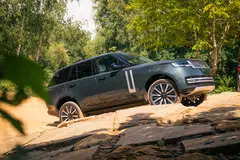
Its all-terrain management system can distribute torque and respond to changes in traction in 50 milliseconds, he indicates.
Its top models have an electrostatic sound system developed specifically for the cars, complete with a dedicated sound engineer. “It’s a completely new technology that nobody else uses,” he says. “We lead where it’s purposeful and where it’s right for Range Rover.”
That distinction is becoming increasingly important, as the luxury sport-utility-vehicle market fills with Chinese brands that compete aggressively on software and impressive tricks that wow influencers.
Yet, he is not interested in competing purely in terms of specification sheets. Instead, Range Rover’s technology has to reinforce what the brand believes its customers are buying: refinement, capability and a sense of effortless superiority.
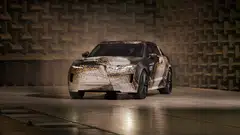
That idea defines the brand’s first battery-powered models – the Range Rover Electric, unveiled on Sep 2, and the Range Rover Sport Electric, launched on Wednesday (Sep 30).
In a similar vein, Limpert tells The Business Times that the company isn’t setting itself a target to match the electric-vehicle penetration of every market in which it operates.
Instead, he is content to have buyers choose whatever they want under the bonnet.
He’s kept the brand’s production lines deliberately flexible, allowing them to supply electric, plug-in hybrid, mild-hybrid and combustion power trains according to demand, rather than betting one way or another.
“We need to have the right power train for the customer,” he says.
It is a seemingly laid-back approach in an industry where many players are scrambling to push EV technology out the door.
He acknowledges the rapid progress of Chinese luxury marques, but says what Range Rover has to offer cannot be simply replicated. “One thing nobody can copy is our British heritage or British originality,” he says.
That may sound like brand management boilerplate, but it explains much of Range Rover’s strategy.
It is not trying to make its electric cars the cleverest gadgets on the road, or off it, but to make them unmistakably Range Rovers. Anyone who suggests otherwise can expect to be corrected.
Decoding Asia newsletter: your guide to navigating Asia in a new global order. Sign up here to get Decoding Asia newsletter. Delivered to your inbox. Free.
Share with us your feedback on BT's products and services