



Johor Causeway celebrates centenary; Vietnam wants China’s railway expertise

This week in Asean:
- Indonesia: Shopee to adjust its service after antitrust violation
- Vietnam: Expects faster GDP growth in Q2
- Thailand: To trial system for data centres to buy green power
- Malaysia: Genting inks US$1 billion energy deals with Chinese firms
Dear BT reader,
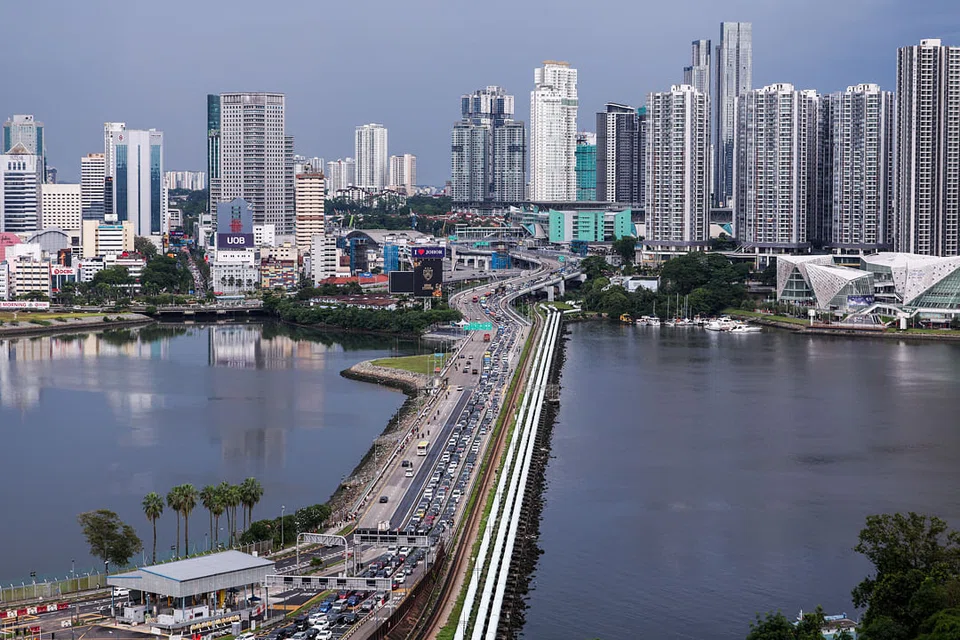
This Saturday (Jun 28) marks the 100th anniversary of the Johor-Singapore Causeway.
A vital travel link with an average of 350,000 daily crossings, the 1 km-long Causeway facilitates significant economic interactions between the two countries. Connectivity will soon receive an additional boost with the Johor Bahru-Singapore Rapid Transit System, set to commence operations by 2026.
Moreover, the Johor-Singapore Special Economic Zone (SEZ), nearly twice the size of China’s Shenzhen SEZ, is expected to transform Johor into a South-east Asia investment hub. Both countries are working towards finalising the agreement, with an update to be provided at the 11th Malaysia-Singapore Leaders’ Retreat later this year.
Join us as we trace the Causeway’s milestones over the past century and highlight new developments to watch for in the coming years.
As the region races to enhance connectivity through infrastructure, Vietnam is pushing forward with its high-speed rail ambitions.
On the sidelines of the World Economic Forum in Dalian this week, Prime Minister Pham Minh Chinh told Lou Qiliang, chairman of China Railway Signal Information, that Vietnam needs Chinese assistance with railway design, construction and technology transfers.
The country aims to begin constructing two railway lines connecting the capital Hanoi to China by 2030. These lines will be integrated into the US$70 billion North-South high-speed railway project, spanning 1,500 km from Hanoi to Ho Chi Minh City, with construction expected to commence between 2026 and 2027.
Over the past year, Vietnamese leaders have met with major Chinese and Japanese railway developers, who have indicated interest in the projects, although no agreements have materialised yet. Time is running short for Vietnam, as it falls behind regional peers like Indonesia and Laos, who already have high-speed rails built under China’s Belt and Road Initiative.
Meanwhile, Indonesia’s plans to scale up solar energy have been hindered by regulatory uncertainties and overcapacity challenges.
The government’s recent rollback of net-metering regulations has affected investor confidence. On the other hand, there is also an energy surplus – notably in the Java-Bali grid – that has been exacerbated by past overestimations of future demand and an excessive number of large fossil-fuel-fired generators being built.
Separately, Chinese electric vehicle (EV) brands remain pivotal to the region’s energy transition. I spoke with Great Wall Motor’s president of Asean operations, Cheng Jinkui, who highlighted that localised production features high on the group’s strategy list due to the protective measures in each member state, such as import quotas and additional taxation.
On top of its complete production site in Thailand, the group is launching assembly plants in Malaysia, Vietnam and Indonesia.
Fellow Chinese automaker BYD appears to be pursuing a similar strategy and is set to begin production in Thailand this year while also building an assembly plant in Indonesia. All this suggests that the region can expect more growth momentum from the EV sector.
Keep scrolling for more good reads on the region. Thank you and see you next week!
Trending
Malaysia’s Prime Minister Anwar Ibrahim affirmed that airport operator Malaysia Airports will remain under Malaysians’ control and that the deal will proceed, following a US$3.9 billion privatisation bid by a consortium led by the country’s sovereign wealth fund Khazanah and pension provider EPF.
The deal faced protests over concerns about foreign ownership, as the consortium also includes Abu Dhabi Investment Authority and Global Infrastructure Partners, which is in the process of being acquired by US fund manager BlackRock.
Asean in Brief
- South-east Asia battles with talent crunch and ecosystem gaps in global AI race The rapid adoption of artificial intelligence across South-east Asia has sparked an intense race to tap the region’s talent pool, but a limited supply of skilled practitioners is creating significant challenges. Read more
- Malaysia-Singapore Causeway: Bridging borders 100 years on The motorway has become a travel and trade lifeline between Johor and the city-state. Read more
- Over 180 Malaysia fishermen hit by Singapore oil spill; losses estimated at RM480,000 The recent oil spill in Singapore has hit the livelihoods of more than 180 fishermen in Pengerang in Johor, with estimated losses amounting to around RM480,000 (S$137,960). Read more
- Shopee to adjust services in Indonesia after antitrust violation E-commerce firm Shopee said on Wednesday it agreed to make changes to its services in Indonesia after the country’s antitrust agency said the platform had admitted to violating anti-monopoly rules. Read more
- Policy flip-flops, overcapacity dull Indonesia’s ambitious solar energy goals Regulatory flip-flops and overcapacity woes are straining Indonesia’s ambitious plans to scale up its abundant solar resources to decarbonise the energy sector. Read more
- Indonesia’s EV battery bet benefitting from regional supply chain shift: report Indonesia’s big bet on manufacturing batteries for electric vehicles is paying off as the country is one of the main beneficiaries of a realignment in the regional supply chain. Read more
- World Bank urges tax reforms as Indonesia’s Prabowo faces fiscal challenges Indonesia’s President-elect Prabowo Subianto must intensify tax reform efforts to offset the widening fiscal deficit even as he seeks to implement his campaign initiatives, a senior World Bank official said at an event on Monday (Jun 24). Read more
- Vietnam Air risks insolvency if state-backed loan isn’t extended National carrier Vietnam Airlines risks insolvency as early as July if the repayment deadline for a government-backed loan is not extended, according to a statement on the National Assembly’s website. Read more
TRENDING NOW

World’s largest offshore wind platform by Seatrium consortium on track to be completed by 2028

Is stamp collecting enjoying an analogue revival or are its best days over?

GovTech retrenches another 38 staff in second round of layoffs

MBS adjusted property Ebitda falls 20.6% in Q3 with fewer high-roller visits, weaker hold

