

AI believers hold the line after Nvidia ructions
Stock market bulls largely shrug off concerns about the concentration of risk
WHAT a wild couple of weeks in the dazzling, dramatic and utterly dominant artificial-intelligence trade.
The story has everything, from petulant politicians to a sprawling sex and suspected spying scandal at the world’s first US$5 trillion company, not to mention the nerdier stuff, with bond markets turning the screws on Big Tech’s lavish borrowing plans.
After a constant barrage of negative headlines, you might be wondering if it’s time to limber up, be brave and buy the dip. Stocks must be, if you’ll pardon the pun, cheap as chips.
The only problem with that is there’s not much of a dip left to buy. Instead, this whole thing is a nihilist’s dream. Nothing matters, everything is computer. The trick appears to be to just keep on buying until the robots steal your job or laser you in half, whichever comes first.
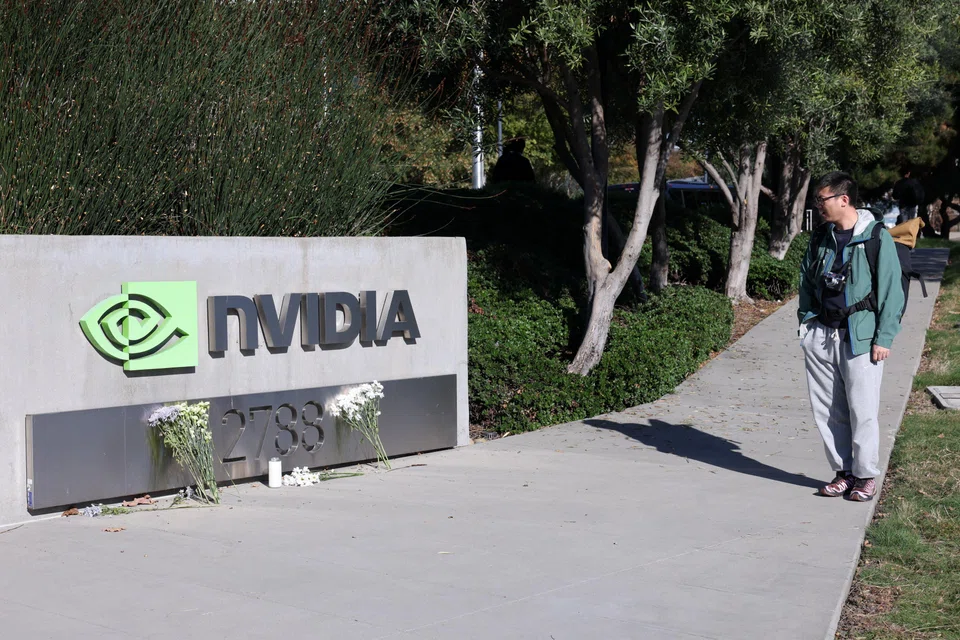
The recent Nvidia hellscape, culminating in the resignation of CEO Jensen Huang, nonetheless highlights one of professional investors’ most pressing concerns around the AI trade: its mind-bending levels of concentration at every level.
We’re all familiar now with the fact that stock markets in general are extremely top-heavy. Small clutches of big stocks are holding up a lot of sky everywhere from South Korea to, of course, the US. And those stocks all happen to be tech-flavoured.
In and of themselves, high levels of concentration are, counter-intuitively perhaps, not that important. The knowledge that stocks in AI and Big Tech account for something like 35 per cent entire S&P 500 index makes investors feel dizzy, and it is certainly highly unusual.
But the academic literature suggests it doesn’t really matter, unless and until it turns out that the concept at its centre collapses in on itself. Despite all the arrows slung at the AI trade of late, that is still conspicuously not happening.
The concentration doesn’t stop there, of course. Bond markets have a bellyache from trying to digest all the borrowing that companies are undertaking to fund data-centre projects. Buyers of corporate bonds are unable, for a variety of reasons, to load up too much on individual companies or themes.
Unlike their cousins in stocks, this is just not how bond markets work. We do now appear to be running up against the limits of what they can absorb, which suggests the cheapish borrowed money taps are squeezing shut.
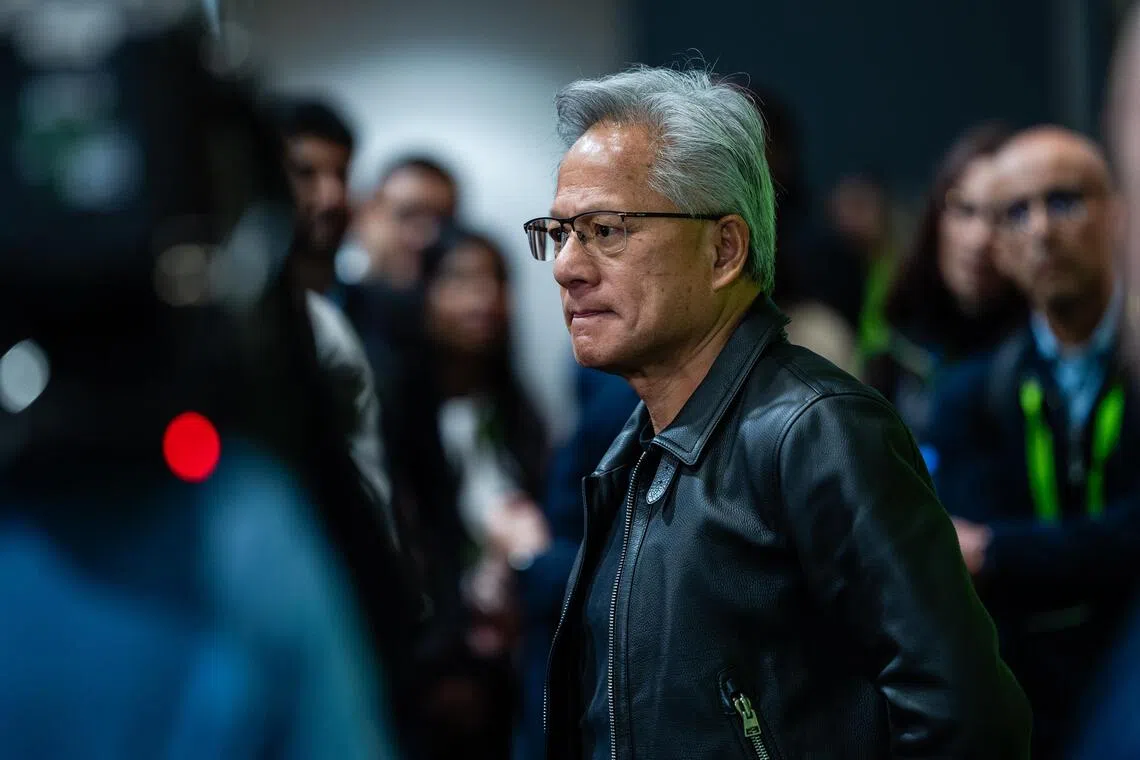
But the humbling of Nvidia, which shed around US$500 billion in market value in the past week, has also cast a bright light on the cult of personality in Big Tech.
Huang was seen within the company as a “god” to be “worshipped”, one person with the inside track told the Financial Times last week.
The king of chips quit on Nov 12 as the list of his inappropriate romantic relationships grew, but the whole sorry tale serves to illustrate that it’s a mistake to have key personalities in positions of such immense power in flat corporate structures dealing with matters of such pressing strategic importance.
It all adds to the sense, articulated by the tech backlash in the US midterm elections earlier in November, that too much national security and global wealth is perched on the heads of too few billionaires who are, as we are now reminded, fallible mortals like the rest of us.
Again, though, the overall damage to markets is hard to spot.
The Nvidia scandal could certainly get worse before it gets better; Huang faces a grilling in Congress over one relationship in particular, with a woman suspected by US authorities of being a Chinese asset.
But already, arguably the most fearsome army in global markets has rushed in. Nov 10 was a huge day of buying by US retail investors, but Nov 12 “blew that out of the water”, according to Vanda Research, which tracks this often market-leading investor segment.
Inflows at the market open from these buyers were around 40 times bigger than usual, it said. This kind of enthusiasm pulled the stock up from a brutal 14 per cent drop at the open to a 4 per cent decline on the day.
It is not hard to see why. After its 15 per cent swoon this year, Nvidia’s stock is now trading at a price-to-forward-earnings ratio of around 11.
That is roughly in line with one of the most often overlooked and frequently mocked stock indices in the world: the UK’s FTSE 100, which has an unfair but persistent reputation as a dusty repository for old-economy dinosaurs.
Once a company like Nvidia, at the front line of tech innovation, reaches this point, it does appear to have suffered enough. Elsewhere, it is hard to see the stress, despite the company’s sheer size – it is still one of the biggest stocks in the world.
The benchmark S&P 500 index of US stocks is now down by a modest 4 per cent from its peak last month, still dawdling around in the range it has occupied since the summer, caught between the pressure of rising interest rates and the bulletproof nature of the AI excitement.
The resilience of global markets has faced bigger tests than this in the years since the Covid-19 pandemic and come through just fine. Barring another ugly twist in the Nvidia soap opera, it looks like the nihilists will cling on. FINANCIAL TIMES
TRENDING NOW

Demand, tech capabilities position Apac and AI as Skyscanner’s next growth frontiers: CEO Bryan Batista

As Indonesia picks new vice-president to succeed Gibran, investors see risks and opportunities

Higher rates, weaker spending: Is the Philippines entering stagflation?
Malaysia’s BN and ally PN declare victory in Melaka state polls in a blow to PM Anwar

