

The Business Times at 50: Charting the next lap in a milestone year
Singapore’s premier financial daily aspires to be the voice of South-east Asia as it charts its future growth


DEAR readers,
Today, Oct 1, 2026, The Business Times marks its 50th anniversary. This occasion is more than a proud milestone for us; it is a celebration of five decades spent as a dedicated chronicler of Singapore’s economic transformation.
When this newspaper was launched in 1976 as Singapore’s first financial daily and the second English-language morning paper, the mission was clear and immediate. As our founding editor Tan Sai Siong said at the time, business leaders wanted news that was concise, succinct and undistorted – delivering the how, why and where of commerce.
It was to be markets-oriented, given that Singapore was in the fledgling years of developing its own stock and commodities markets and aiming to become one of the world’s top foreign-exchange centres.
BT served that momentum, reporting the daily beats of a rising economy: plant openings, corporate mergers, foreign investment inflows, stock movements and the unravelling of market misconduct. We were the ledger of record for Singapore business.
But as the Singapore economy developed, our mandate expanded.
BT has evolved from being a pure market historian to a distiller of global events. We have moved beyond asking what happened, to answering what it meant: How do global shifts affect Singapore’s companies, workforce and economic resilience? How do we mobilise every part of the ecosystem so that enterprises and employees move forward together?
Over the decades, we stepped up to be the convener and conscience of this ecosystem. We championed corporate governance, urged listed companies to engage openly with shareholders, examined the challenges facing board directors, and dived deep into national policies. We tried to keep markets transparent, systems honest and institutions accountable.
The journey has required continuous adaptation. In 1995, we were the first English-language daily in Asia to launch online. We introduced real-time market tracking for readers via BT StockWatch.
Over the years, we experimented with new products and formats: award platforms, magazines, newsletters, videos, podcasts and interactive graphics.
We sealed new partnerships. We even created The Business Times Budding Artists Fund to support children and youths from financially disadvantaged backgrounds in training in the arts. Some initiatives became permanent fixtures, while others were refined or retired as technology or market needs evolved.
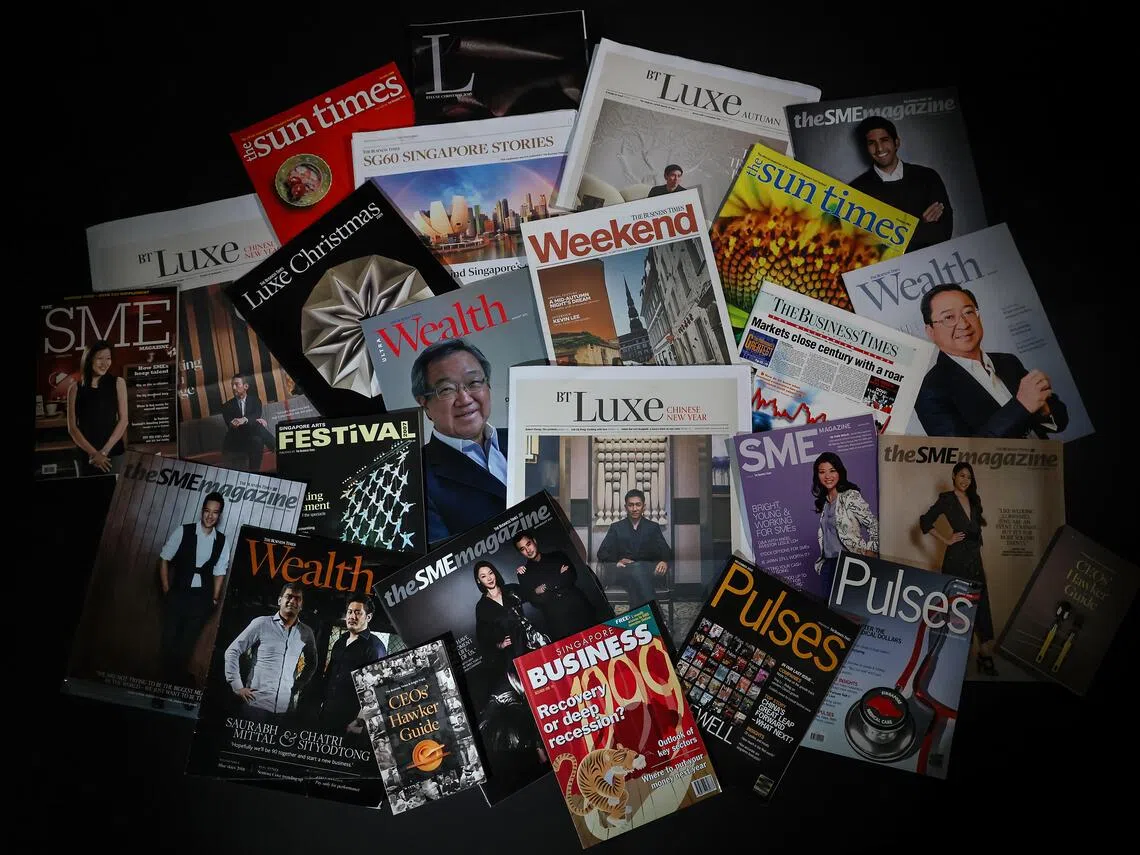
We have moved from a world of scarce financial data to one altered by information overload. Today, there are more asset classes, more complex trading methodologies, more compliance regulations and more unverified sources.
Yet, amid this noise, our core promise remains unchanged. In a recent audience survey conducted by Gfk, you told us that you rely on BT for decision-making, trend analysis and strategic foresight at work – as well as for information on personal wealth, lifestyle and career growth at home.
You also told us that while rigorous prose remains an important way to access news, visual journalism, podcasts and videos have increasingly become the preferred way you consume complex ideas.
In another focus group study, you told us that BT’s authority lies in local nuance. You told us to claim the space of authoritative, Asean-focused intellectual coverage while maintaining Singapore’s roots at the core.

Meeting your needs and expectations demands that we look outward. Just as home-grown enterprises are expanding across borders, BT needs to become more regional, more global in its perspectives and outreach.
South-east Asia is a US$4 trillion economy and Singapore sits at the centre of it as a regional gateway. This January, we launched a global edition for non-Singapore audiences, as well as the Decoding Asia newsletter to test the appetite for regional insight.
The signals we received were encouraging. In the first five months of the launch, non-Singapore page views doubled, non-Singapore users went up 142 per cent in number, and tens of thousands subscribed to the new newsletter.
Where BT is headed next
With consumption patterns shifting, expectations of what BT should be have shifted too.
We have moved from being a market historian to a provider of actionable intelligence, context and foresight for investors and business leaders – a remit that now extends beyond the traditional boardroom to the emerging themes and sectors that cross Singapore’s shores.
As we mark this milestone, we are also setting our sights on what comes next. Like our local enterprises that are heading to foreign markets, BT too is widening its horizons.
Our global edition was an early signal of where we are headed, guided by a simple belief that Singapore’s role as a hub calls for a business paper that can connect Singapore to the world, and the world to Singapore and the opportunities of this region.
We will keep South-east Asia, including Singapore, as our anchor, but our ambition over time is to cover business worldwide through a regional lens.
In practice, this means being more selective. We will not try to cover everything happening in Singapore. Instead, we will sharpen our focus on the themes that matter most to South-east Asia, such as capital and markets, technology and artificial intelligence, trade and supply chains, energy transition and demographic shifts.
We will offer less commoditised news, and more analysis of what it means and what will come next.
We also want to build direct, durable relationships, not just traffic. That means investing further in newsletters, communities and events, backed by a growing network of correspondents and partnerships that give us reach and depth in markets we do not know as well.
Our flagship awards – the Singapore Business Awards, the Enterprise 50 Awards, the Singapore Corporate Awards, the Emerging Enterprise Awards, the Sustainability Impact Awards and the Design AI and Tech Awards – already give us a foothold in this area, and we intend to build on it.
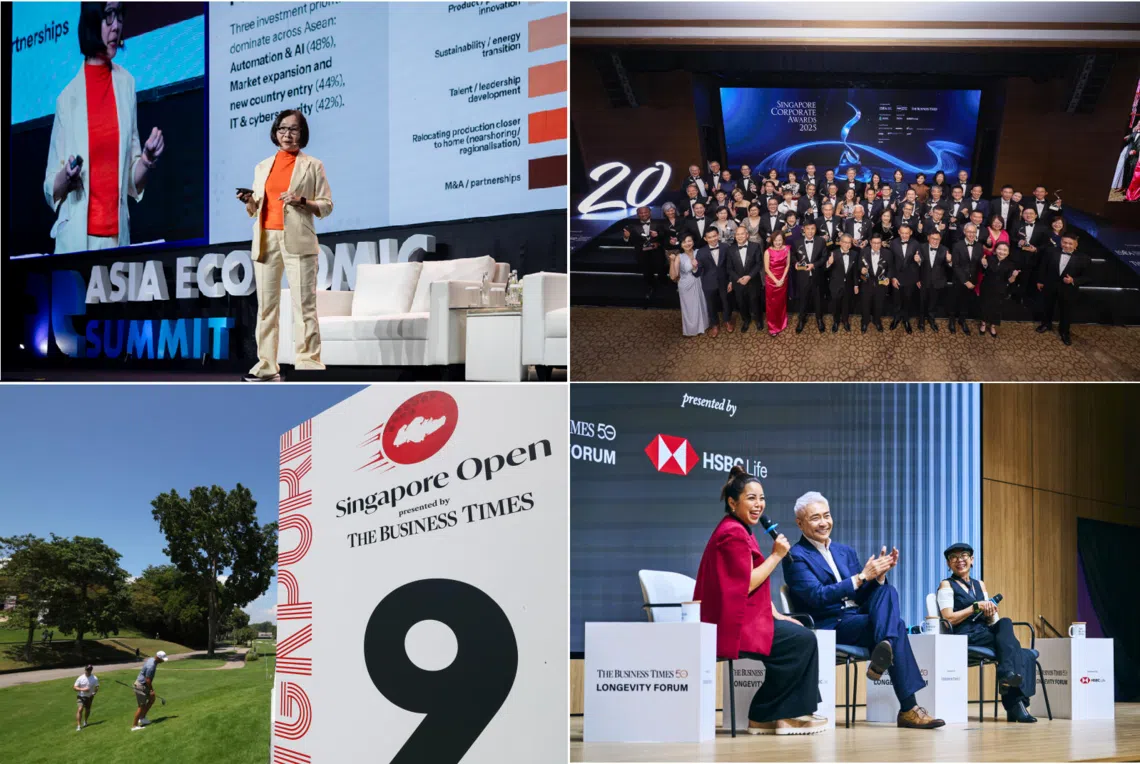
Alongside our journalism, we are developing a broader portfolio of products and experiences – including proprietary data – that can complement our reporting. This year alone, we have made several such steps that have taken us into new places.
In April, we struck a strategic partnership with the Asian Tour for the Singapore Open tournament, part of an international golf circuit that was broadcast to more than 600,000 viewers worldwide.
In May, we launched our inaugural Asean Intelligence report polling C-suite executives in South-east Asia on their investment intentions and outlook; this was the first in a regular series to be produced by BT Insights, a new capability we have built to collate data on regional business.
And in June, we sealed partnerships with five hospitality brands to put The Business Times on smart screens and in rooms in 200 properties on six continents.
None of this changes who we are at home.
In Singapore, our journalism will continue to support the next stage of growth of our capital markets and our broader business ecosystem. Our content and activities will aim to inspire our home-grown enterprises to become globally competitive companies, and inform them of market trends, insights, challenges and opportunities.
A dynamic enterprise ecosystem is not just about multinationals or capital providers. It is also about our local enterprises that are the backbone of our economy. It is about the entrepreneurship, platforms and infrastructure that help them grow, innovate and scale.
Across the region, we hope to fill a real gap – consistent, insight-driven coverage of South-east Asia’s key markets, delivered by a voice business audiences can trust.
If we succeed, we hope it will be a small but meaningful contribution to Singapore’s role as a convening point for business, finance and policy dialogue in this part of the world.
Fifty years ago, our founding editor set out to give Singapore’s business community news they could trust and use. That has not changed. What has changed is the distance our readers now travel, and the ground we must cover to keep pace with them.
We begin our next 50 years the same way we began our first: by listening closely, and following where that leads.
To access The Business Times 50 microsite, visit bt.sg/bt50 or scan this QR code below:

Decoding Asia newsletter: your guide to navigating Asia in a new global order. Sign up here to get Decoding Asia newsletter. Delivered to your inbox. Free.
Copyright SPH Media. All rights reserved.

