Fracas in Caracas: redrawing the lines
As the US’ advances in Venezuela move us away from rules-based geopolitics, where does the world order stand?
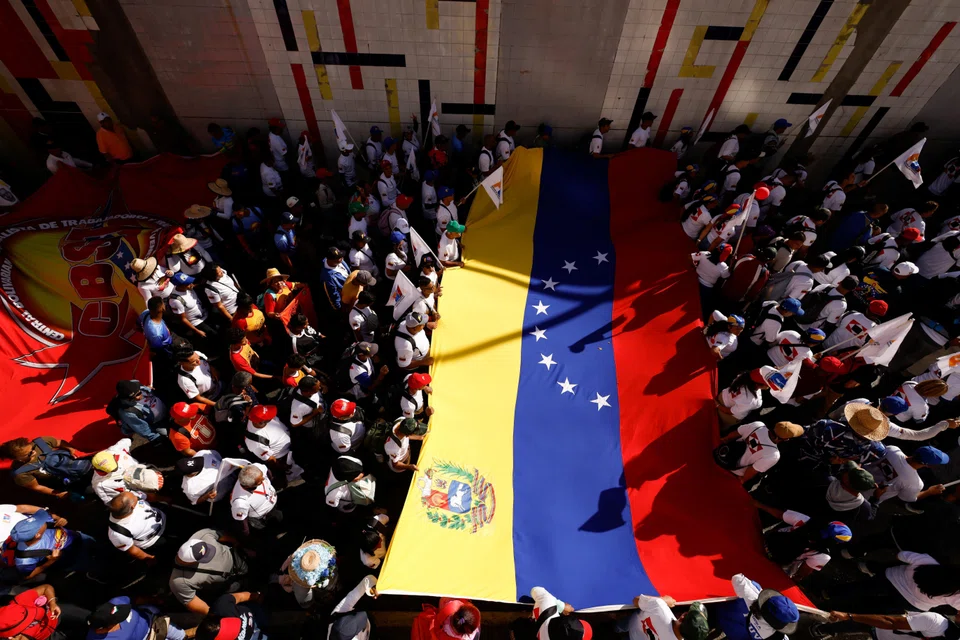
IN A span of weeks over January 2026, Washington captured a head of state in Caracas; US President Donald Trump was presented a “second” peace medal (the first awarded by Fifa, and the second given to him by Nobel Peace Prize winner Maria Corina Machado), and he has threatened to take Greenland. It is tempting to treat all this as a farce. It is not. It is a severe blow to the rules-based global order.
Russia tore a hole in that bargain when it invaded Ukraine in February 2022, a move widely understood as a textbook violation of territorial integrity. But the US was seen, at least by its allies, as the guardian of that order. If Washington now signals that sovereignty is negotiable, allies and partners will ask the only rational question: Is ours negotiable, too?
The rules-based order rests on one core idea: sovereignty. After World War II, countries explicitly put state sovereignty and territorial integrity at the heart of post-war bargains to protect weaker states from stronger ones and to avoid the convulsions and bloodshed of the world wars.
The memory of those horrors has faded, and the lessons memory-holed. The new message from Washington is simpler and cruder: Sovereignty is not a principle. It has a price and is negotiable.
The US operation in Venezuela creates cognitive dissonance. Even if Nicolas Maduro was an authoritarian who, along with Hugo Chavez, presided over the collapse of the Venezuelan economy, abducting a sitting head of state is not a marginal adjustment in foreign policy. It is a declaration that rules are optional, that power comes first, while legal arguments are assembled later.
The “Donroe Doctrine”
In January 2025, the New York Post published a front cover titled The Donroe Doctrine: Trump’s vision for hemisphere, accompanied by an image of the US president against a world map. A portmanteau of Donald Trump and the Monroe Doctrine, the Donroe Doctrine describes Trump’s assertive foreign policy in the Western Hemisphere. Observers say the recent Venezuela intervention exemplifies the strategy in action.
The original Monroe Doctrine was delivered almost in passing, a few sentences in President James Monroe’s 1823 State of the Union address. Its claim was blunt: foreign powers should keep out of the Western Hemisphere, and any new interference would invite an American response.
The US feared that continental European powers, specifically Russia, Prussia, Austria and France, would intervene in Latin America to restore these colonies to Spanish rule. The core bargain was “Two Spheres”: the US would not interfere in European affairs, and Europe would not interfere in the Americas.
The “Donroe Doctrine” is imperialism on the cheap. A big contradiction lies at its heart. The administration claims it will dominate a sphere of influence from Greenland to Argentina, but it rejects the burdens that historically came with such claims: boots on the ground, governance, and the unglamorous grind of rebuilding states. Instead, the doctrine is about spectacle and submission. It favours short, cinematic, attention-grabbing operations, a quick declaration of victory, and then attempts to coerce the remnants into submission.

The deeper signal is that great powers are increasingly comfortable acting first and litigating norms later. This is not a formal licence for everyone to carve the world into exclusive zones, but it lowers the political and legal price of trying.
The system tilts away from rules and toward fiefdoms: the US asserts primacy in the Western Hemisphere, Russia pushes harder in Europe, and China expects deference in East Asia. Even middle powers will be tempted to impose their own regional hierarchies.
In this world, everyone will draw the lesson that hard power, plus economic leverage, is the currency that matters.
Strategy for survival
Allies and partners of the US are taking note.
Countries such as Singapore and Vietnam have long relied on a “balanced” model of maintaining economic ties with China and security ties with the US. But if the US is unpredictable or transactional, that insurance policy starts to look worthless.
Why align with a distant power that might not show up, or where a random tweet can flip its entire foreign policy? Even the North Atlantic Treaty Organization (Nato) is starting to resemble a protection racket.
So, what can countries do?
First, get cracking. While there is no quick fix, nations should no longer see Trump or the Maga (Make America Great Again) movement as a temporary anomaly. The world cannot be organised around the preferences of 40,000 voters in Wisconsin every four years. Mark Carney’s recent speech at Davos made this point more eloquently, referencing the Melian Dialogue – “The strong do what they can and the weak suffer what they must” – while explicitly rejecting this logic.
Second, invest in hard power: technology, defence, trade, and manufacturing. That is the only currency that matters. Singapore’s strategy is to make itself indispensable to the semiconductor supply chain and too costly to swallow – a “poisonous shrimp” approach, as Lee Kuan Yew described in a 1966 speech. Poland’s 2025 defence budget is set to hit 5 per cent in 2026, the highest in Nato. Meanwhile, Europeans are buying arms from Asian defence companies, with South Korean firms taking the lead.
Third, make new friends quickly and establish stronger economic connections, especially with predictable powers facing similar constraints, and with middle powers such as India, Japan, Brazil and Turkey. Seek predictable powers.
We see a stream of Western leaders visiting China (for instance, Canada, the UK, France and Finland), regional powers linking up with Middle Powers (the EU-India trade pact) or inter-regional alliances (the EU with the Mercosur bloc). Asean, the Gulf Cooperation Council, and China held a formal summit in May 2025.
Fourth, prepare populations for pain and sacrifice. Leaders have to translate what this evolving order means in daily terms and build urgency, not just awareness. In practical terms, that means stronger fiscal positions, higher taxes, and budget shifts to shore up economic and military vulnerabilities.
It can also mean compulsory national service and other visible commitments that signal resolve. The Netherlands, for example, is proposing a “freedom tax” to fund higher defence spending, making the trade-off explicit to voters, as is Japan, with its Special Defence Corporate Tax.
Dominance not the same thing as control
Finally, keep history in mind and do not despair. With the notable exception of the US in the 20th century, regional hegemons – from Imperial Japan to Napoleonic Europe to the Soviet sphere – have tended to overreach. Eventually, the costs of coercing the periphery exceed the economic value extracted. Hubris rises. Resistance adapts. Coercion becomes expensive. And the hegemon discovers that dominance is not the same thing as control.
The Melian Dialogue is not about brutal realism – that power is all that matters. Instead, it crystallised Athens’ imperial hubris, foreshadowing the disastrous Sicilian Expedition and, ultimately, its defeat. A more fitting aphorism is “when the strong dominate the weak, the weak try to become strong”.
The writer is professor of economics and political science at Insead. This is an adaptation of an article first published on Insead Knowledge
Decoding Asia newsletter: your guide to navigating Asia in a new global order. Sign up here to get Decoding Asia newsletter. Delivered to your inbox. Free.
Share with us your feedback on BT's products and services