

Higher rates manageable for Reits, but mind rich fees and alignment of manager-investor interests
When such trusts underperform, sponsors’ pain is eased by earning substantial management fees

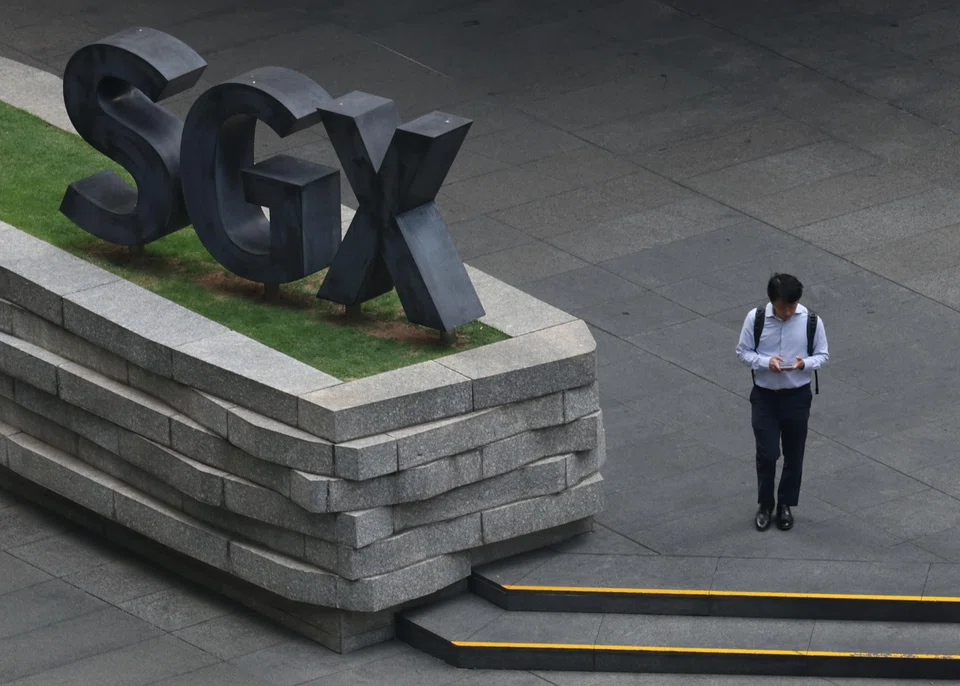
[SINGAPORE] The real estate investment trust (Reit) sector in Singapore had a rocky start, with the first attempted Reit listing in 2001 failing due to insufficient demand.
Nonetheless, the sector has grown strongly since the first Reit successfully debuted on the local bourse in 2002. Eight members of the 30-strong benchmark Straits Times Index (STI) are Reits. Helped by successful capital raisings, various trusts have become much bigger over time.
However, as the sector turns 25 next year, could higher interest rates roil Singapore Reits?
Recently, the US Federal Reserve raised its benchmark overnight interest rate by a quarter of a percentage point, its first hike since 2023. And the Fed could hike rates further in the coming months.
The increase in interest rates comes as the oil shock due to the US-Iran war, trade tariffs and artificial intelligence boom drive inflation.
As rates rise, Reits will feel the heat from higher borrowing costs eating into distributions and higher yield of risk-free instruments diminishing the appeal of Reits. Already, prices of Reits are under pressure.
Nonetheless, are concerns over the adverse impact of rising interest rates on Reits overblown?
The trusts follow strict borrowing guidelines. And many Reit managers are careful in managing their borrowings.
Market leader CapitaLand Integrated Commercial Trust (CICT) has diverse funding sources and staggered debt maturities with no single-year concentration.
Earlier this month, CICT issued S$400 million of five-year fixed-rate green notes at an interest rate of 2.646 per cent per annum.
This rate compares favourably with the trust’s average cost of debt of 2.9 per cent per annum as at end-June. Around 78 per cent of CICT’s borrowings were at fixed interest rates as at end-June.
Peer CapitaLand Ascendas Reit’s fixed-rate debt as a proportion of total debt was 70.1 per cent as at end-June. The weighted average tenure of the fixed-rate debt was 3.3 years.
Singapore premium
Crucially, Reits that own high-quality Singapore properties can ride on positive structural drivers.
For one, rental rates may rise faster in a higher inflation environment.
Moreover, if investors attach a growing safe-haven premium to Singapore physical property, capital values of property portfolios held by Reits could rise. Might well-supported net asset values of some trusts that trade below book value make them tempting privatisation targets?
Going forward, yield-focused investors could switch from government bonds in countries where debt is spiralling out of control, into high-quality physical real estate, whether by directly investing in said properties or indirectly by investing in strong Reits.
Even as higher interest rates loom, property groups may ramp up asset divestments to Reits or private funds to improve return on equity and grow fund management income.
Take a group which owns a S$1 billion investment property. Putting the said property into a fund where the group holds a 25 per cent stake could free up the equity which is tied up in the property to help finance a fund that owns a S$4 billion portfolio of properties. The group can then earn recurrent fee income from managing S$4 billion of assets.
However, as property groups press ahead to create shareholder value from recycling capital and managing third-party capital, whether by launching Reits or private funds, they should avoid being overly greedy on fees and ensure strong alignment of interests between fund managers and investors.
Ultimately, the critical risk facing the Singapore Reit sector could be that investors potentially lose faith that trust managers always act in the interest of unitholders and not higher interest rates.
Management fees
Fees paid to external managers of Reits can amount to princely sums. For 2025, CICT paid management fees of S$105.6 million, comprising a base component of S$53.4 million and a performance component of S$52.2 million.
CapitaLand Investment (CLI) owns CICT’s manager. For H1, CLI’s fee-related revenue grew 20 per cent year on year to S$687 million.
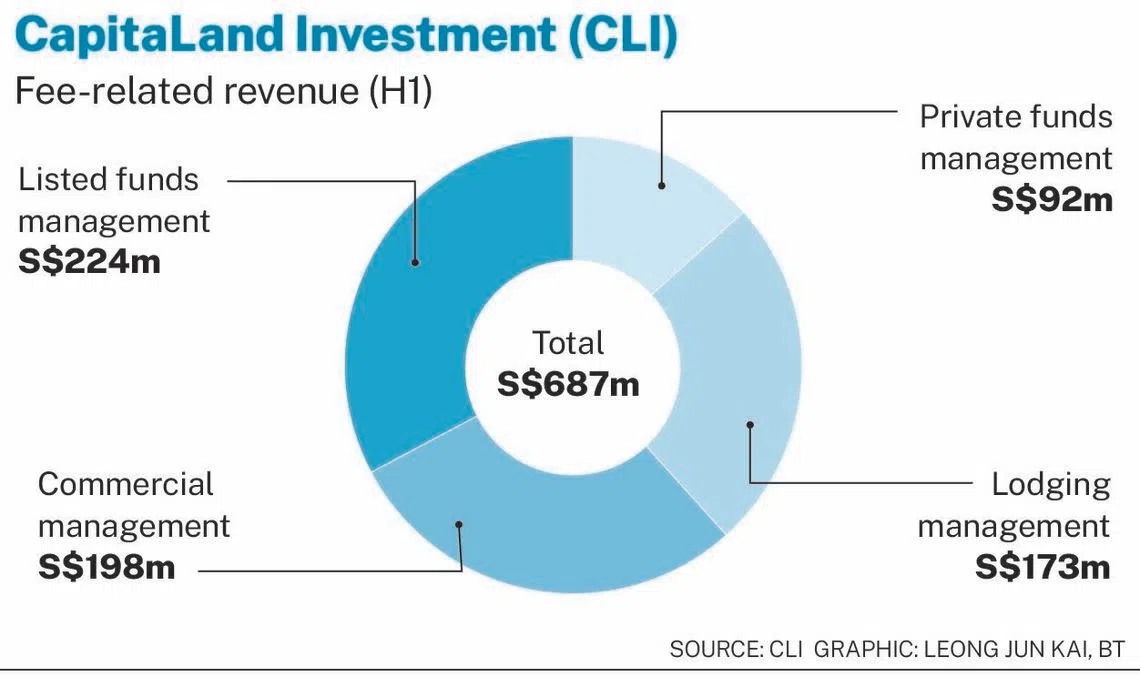
Fee-related revenue from listed funds management and private funds management amounted to S$224 million and S$92 million, respectively. Operating profit after tax and minority interests from the fee-related business for H1 was S$201 million.
A Reit manager might receive a base fee, which is tied to the size of deposited property as well as a performance fee, which may be based on growth in net property income or distribution per unit (DPU). Also, the manager might earn acquisition, divestment and development management fees.
Could Reit managers be driven by higher fees to be overly acquisitive? And is there a disconnect when the managers do not share adequately in the pain of unitholders?
For its financial year ended Mar 31, 2026, Mapletree Logistics Trust’s ( MLT ) DPU fell 10 per cent year on year. Between Mar 28, 2025 and Mar 31, 2026, the unit price of MLT, which is a member of the STI, dropped over 12 per cent.
Meanwhile, MLT paid management fees of S$89 million for FY2026 – a dip of under 2 per cent from the previous financial year. MLT’s sponsor Mapletree Investments owns its manager.
Certainly, a Reit’s sponsor suffers when a trust’s DPU and unit price decline as a sponsor typically is a major unitholder in the trust.
Still, when a trust underperforms, the sponsor’s pain, unlike that of other unitholders, can be mitigated by earning healthy management fees from the said trust, especially as profitability on fee revenue could be high.
Ultra-low interest rates prevailed post the global financial crisis of 2008 and more recently during the Covid-19 pandemic.
The days of yield-hungry investors piling into Reits and trusts bingeing on acquisitions helped by cheap debt because of low interest rates will likely not return any time soon.
Still, Reits can be relevant for Singapore’s fast-ageing population. As people live longer, investing in instruments that give growing distributions helps. And Reits, with strong managers and portfolios, can potentially deliver growing DPU.
While the Republic’s Reit framework is strong, there are risks of external Reit managers gorging on fees and having interests that do not fully align with unitholders.
Trust is a key ingredient behind Singapore’s success. Likewise, the Singapore Reit sector’s continued growth may hinge on whether investors can trust that trust managers will always act in their best interests.
TRENDING NOW

Once staunchly pro-China, Malaysian Chinese businesses are now distancing themselves from Beijing

Looking beyond looming CEO succession, should UOB potentially pursue a transformative merger?

Could stablecoins be the future of money?

Grab CEO’s wife Chloe Tong on life with Anthony Tan and finding her purpose

