

Indo-Pacific middle powers are building strategic space, offering Europe a lesson
States like Singapore are building cooperation networks grouped around specific interests and capabilities
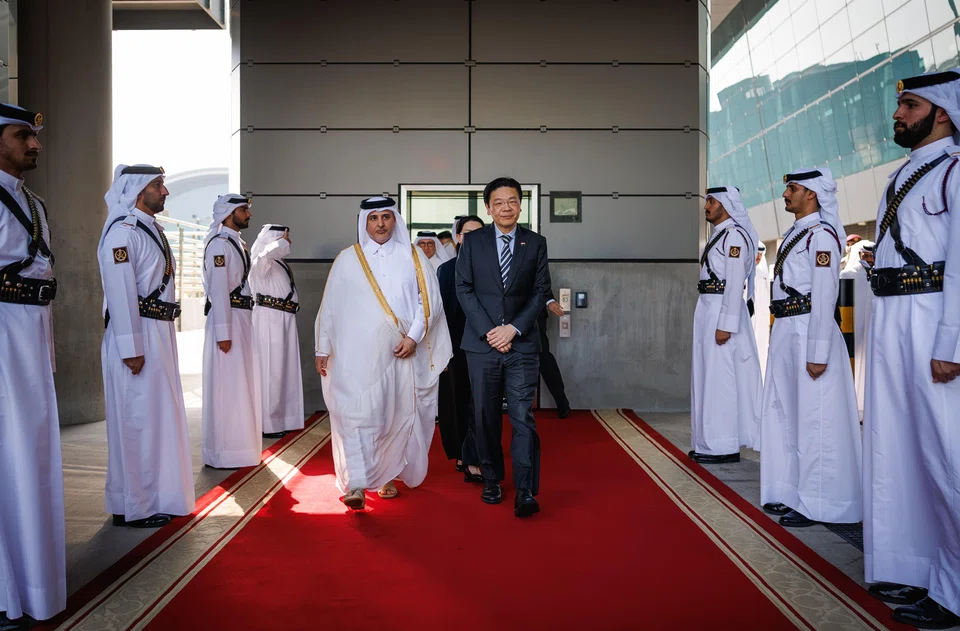
IN RECENT years, hedging has been a key strategy of middle powers in the Indo-Pacific, amid the Sino-US rivalry and geopolitical flux.
But these powers have also built a new element into their repertoire: They are actively building strategic space by diversifying partnerships, strengthening resilience and creating networks that allow them to pursue different interests with different partners.
This is pertinent for European powers, which have been seeking to build strategic partnerships with key countries in the region.
Building strategic space using networks matters because the emerging international order is unlikely to be organised around a simple division of competing blocs.
The reality is more complex. Countries may cooperate with one partner on defence, another on technology, a third on critical minerals and several others on trade, connectivity or climate.
The result is an increasingly dense web of overlapping partnerships and interdependencies. For middle powers, this is not simply a way of managing uncertainty. It is becoming a source of influence.
Hedging as a strategy to increase freedom
Hedging suggests that countries are primarily reacting to the choices of larger powers, keeping their options open while waiting to see how strategic competition develops. But this older and more traditional concept of “hedging” captures only part of the current reality.
Many middle powers are now doing something more ambitious. They are deliberately constructing portfolios of relationships that increase their freedom of action.
Singapore provides a particularly clear illustration. Its security partnership with the US exists alongside extensive economic engagement with China. The island-state has deep relationships across South-east Asia, Europe, India, Japan, Australia and beyond.
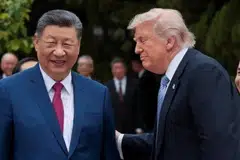

Its approach is neither based on neutrality nor comprehensive alignment with any one power. Instead, cooperation is organised around specific interests and capabilities.
The same logic can be seen in the region. Vietnam has expanded its strategic partnerships while maintaining extensive economic relations with China.
India takes part in the Quadrilateral Security Dialogue (Quad), which includes the US and its two formal allies Australia and Japan. At the same time, New Delhi seeks to preserve strategic autonomy and developing relationships with Russia, Europe and the wider Global South.
Japan is broadening its security, technology and economic partnerships in the region and with the EU. Australia is strengthening its alliance with the US while deepening ties with Japan, India, South-east Asia and the EU.
Malaysia offers another example. Its extensive trade with China coexists with deep economic relationships with the US, Singapore, Japan, India and the EU. Its role in the semiconductor supply chains demonstrates the value of remaining connected to multiple markets and technological ecosystems rather than becoming excessively dependent on one.
What connects these countries is therefore not a common foreign policy. It is a common logic: diversification creates strategic space.
This logic is increasingly visible in mini-lateral and functional cooperation. The Quad and Aukus, a trilateral security partnership among Australia, the UK and the US, bring countries together around specific strategic objectives without requiring agreement on every aspect of international politics.
Singapore’s interest in the Global Combat Air Programme, an initiative led by Italy, Japan and the UK to develop a new stealth fighter, offers another illustration. It shows that smaller states can seek access to advanced capabilities through a targeted partnership rather than an exclusive strategic alignment.
Similar forms of cooperation are emerging around advanced technology, critical minerals, maritime security, energy and supply chain resilience. Countries increasingly choose partners according to function rather than seek a comprehensive alignment.
Such overlapping networks may become a defining characteristic of the emerging Indo-Pacific order. States can cooperate where interests converge while preserving autonomy elsewhere.
What Europe can learn
The experience of Indo-Pacific middle powers offers an increasingly relevant lesson for Europe, which is seeking to deepen its network of partnerships in the region.
The EU faces a similar challenge: how to remain economically open while reducing excessive strategic dependencies. Its response should not be decoupling.
Europe’s economic strength depends on international connections, while its security depends on alliances and partnerships. The objective should instead be diversification: more partners, more resilient supply chains and greater capacity to act.
The EU has considerable assets with which to pursue this approach. Its single market, common trade policy, regulatory framework, technological capabilities and extensive network of partnerships give it the potential to become a more active participant in the networks emerging in the Indo-Pacific.
The task is therefore not to replicate Asian arrangements, but to connect more effectively with them. The EU already has substantial relationships with Japan, South Korea, India, Australia, New Zealand, Indonesia, Singapore and Asean.
The next step is to give these relationships greater strategic coherence by linking them to practical areas of mutual interest: economic security, digital technologies, semiconductors, maritime security, critical underwater infrastructure, connectivity, clean energy and critical supply chains.
Finland illustrates one European approach. Its recently approved Indo-Pacific Policy Guidelines emphasise economic security, technology, connectivity and strategic partnerships with the region.
The objective is not to choose between competing geopolitical camps, but to strengthen Finland’s capacity to operate in a more contested international environment while maintaining broad international connections.
The broader lesson is that middle-power influence does not come from matching the resources of great powers. It comes from the ability to connect networks, build specialised partnerships and preserve room for manoeuvre.
In a fragmenting world, strategic flexibility goes beyond the traditional strategy of hedging and becomes an asset in its own right.
The most successful middle powers are those which have built enough relationships, capabilities and resilience to retain meaningful choices when circumstances change. For middle powers, the ability to preserve choices may itself become a source of power.
The views expressed in this article are those of the authors, and do not necessarily reflect the official position of the Ministry for Foreign Affairs of Finland or the government of Finland.
Jari Vilén is Finland’s ambassador for the Indo-Pacific at the Ministry for Foreign Affairs of Finland. Ari Heikkinen is a senior adviser at the Ministry for Foreign Affairs of Finland. He served as Finland’s Ambassador to Singapore from 2011 to 2015.
This is an edited version of an article that first appeared on Fulcrum, ISEAS – Yusof Ishak Institute’s blog site.
Decoding Asia newsletter: your guide to navigating Asia in a new global order. Sign up here to get Decoding Asia newsletter. Delivered to your inbox. Free.
Share with us your feedback on BT's products and services






