Is nuclear power back on the table for Singapore?
Small modular reactors provide reliable and net-zero energy, but their suitability must be assessed
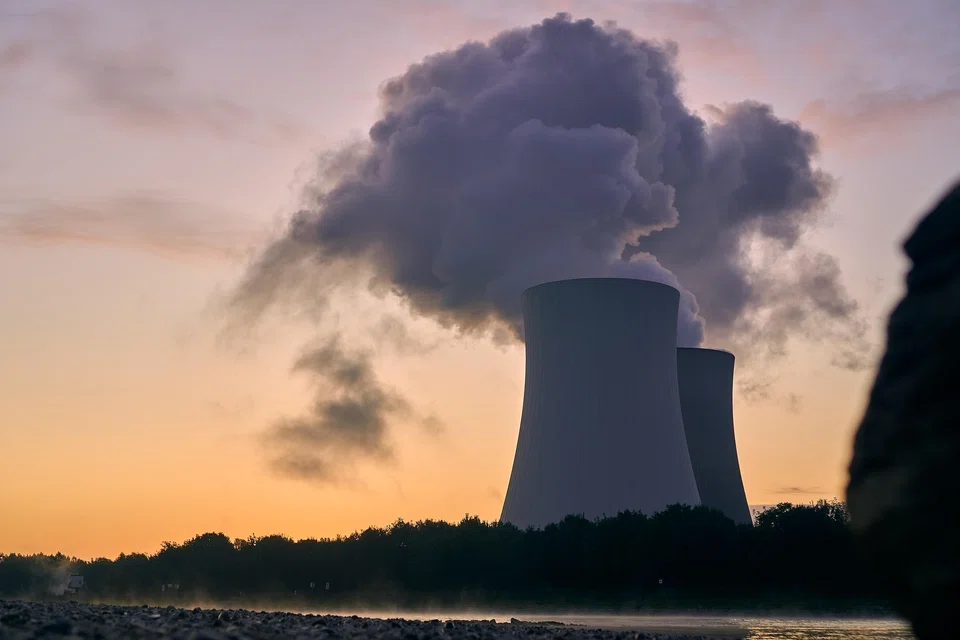
DEMAND for reliable power is rising as artificial intelligence, advanced manufacturing and electrification expand, while governments and companies face supply chain disruptions and mounting pressure to cut emissions. Against this backdrop, nuclear energy is returning to the policy agenda.
These considerations and energy options will be in focus at the Singapore International Energy Week, which begins on Monday (Oct 26).
Singapore began exploring nuclear power more than a decade ago. Although net-zero considerations were less prominent then, a 2012 pre-feasibility study concluded that the technologies available at the time were unsuitable for a small, densely populated city-state.
Singapore nevertheless kept the option open, building technical expertise and tracking advances in reactor technology and safety.
Three developments now warrant a fresh assessment.
First, geopolitical tensions and disruptions to global fuel markets have made energy security a more immediate economic concern, with impacts felt by businesses and households. For a country that imports almost all its energy, diversifying supply has clear economic value.
Second, Singapore’s commitment to reach net-zero emissions by 2050 makes firm, low-carbon energy increasingly important. With limited land for solar and little scope for large-scale wind, nuclear power is one potential source of substantial, reliable electricity without operational carbon emissions.
Third, nuclear technology is advancing: Some concepts once largely on paper are nearing deployment, while small modular reactors (SMRs) could offer more flexible siting and scaling, and new safety features.
In May 2026, Prime Minister Lawrence Wong announced that Singapore would undertake an International Atomic Energy Agency (IAEA) Integrated Nuclear Infrastructure Review (INIR) from 2027.
The review will assess whether Singapore has the capabilities to make an informed decision about nuclear power; no deployment decision has been made.
What SMRs could offer
SMRs can produce up to 300 megawatts of electricity, around one-third the capacity of a conventional reactor. Their smaller size could allow projects to be built in stages, matching investment more closely to demand.
Factory production and repeatable designs could also shorten construction schedules and reduce the capital tied up before a plant begins operating.
These benefits are not guaranteed: SMR economics remain unproven, and first projects may face construction and supply-chain risks.
The design of SMRs could offer advantages too. Designs range from familiar light-water reactors to more advanced concepts, termed “Gen IV designs”, using gas, molten salt or liquid metal as coolants.
Some Gen IV designs use Triso fuel, in which each tiny fuel particle is enclosed in layers of ceramic and carbon designed to lock in radioactive fission products at high temperatures, and limits the release of radionuclides during an accident.
High-temperature gas-cooled reactors (HTGRs), one of the Gen IV designs, could also supply heat to industries such as chemicals, refining and hydrogen production.
However, more advanced designs bring greater regulatory and manufacturing challenges, including limited operating experience and less established equipment and fuel supply chains.
SMR technologies are at different stages of commercial maturity. China’s HTR-PM, a high HTGR, entered commercial operation in 2023, while companies including Dow and X-energy are planning projects in the US.
These developments are worth watching, but a few operating projects cannot yet establish the economics or safety record comparable to mature conventional nuclear reactor technology.
Why governments and companies are interested
For countries considering nuclear power for the first time, SMRs could allow them to begin with a smaller project and add capacity over time, limiting the initial financial commitment and making planning more manageable.
Public perception and acceptance are also major considerations for countries new to nuclear power.
SMRs, with their modular design and stronger safety promise, may offer a more gradual path that can build experience and confidence instead of a country committing to a large nuclear programme from the outset. Thailand and Estonia have identified SMRs as a possible entry point. The IAEA’s 2026 outlook on a high-growth nuclear scenario forecasts that SMRs could account for 28 per cent of new nuclear capacity globally by 2060, with strong uptake in South-east Asia.
Private companies are also exploring nuclear power. Since 2024, technology companies including Google and Amazon have announced agreements related to SMRs and nuclear-powered data centres, reflecting demand for reliable, low-carbon electricity around the clock alongside renewables and energy storage.
Industrial companies may also value reactors that can provide heat directly, reducing reliance on fossil fuels in processes that are difficult to electrify.
Private-sector participation could broaden the financing base and connect projects with customers that have long-term energy needs.
A commitment to buy power or heat could support project planning and help distribute commercial risk among developers, investors, utilities and customers; staging capacity could also limit upfront capital.
However, private interest does not prove commercial viability. Projects still depend on credible costs, licensing, construction performance, fuel availability and clear risk allocation.
Governments would need to limit open-ended financial exposure while ensuring safety and waste responsibilities remain properly funded.
What this means for Singapore
Singapore’s land scarcity is precisely why the discussion involving SMRs have returned to the table: Their smaller size and the potential for design-specific, smaller emergency planning zones are what make siting more feasible. But whether any specific design can meet Singapore’s requirements remains to be assessed.
Public confidence is another part of the question. For any country assessing a nuclear power programme, public awareness towards nuclear technology tends to be low. Consequently, attitudes are likely more conservative.
Finland’s long-running surveys show how attitudes can change: In 1983, about one in four respondents viewed nuclear power positively and nearly 40 per cent negatively; by 2026, 66 per cent viewed it positively and 8 per cent negatively.
Concerns can be heightened by major incidents, but confidence can still build gradually.
The studies and discussions undertaken during Singapore’s IAEA INIR Phase 1 can help the public better understand the potential benefits and risks of nuclear energy.
Open and transparent sharing of these assessments can also help address public concerns and build trust in how the country is evaluating nuclear energy.
Singapore’s ability to assess, regulate and, if it decides to proceed, safely operate a plant will also depend on developing the right expertise.
The Republic needs the technical depth to examine vendors’ claims independently, including the models, experiments and assumptions used to predict reactor behaviour under severe, low-probability conditions.
The challenge is especially significant for advanced designs such as HTGRs. Their fuels and safety features hold promise, but commercial experience is limited, and overseas assessments may not fully reflect Singapore’s land constraints and population density.
The IAEA’s review will help assess our readiness and identify gaps. Singapore has also been building its nuclear research and talent base. Since 2014, the Singapore Nuclear Research and Safety Institute (SNRSI) has been developing a growing pool of expertise in areas such as reactor safety and nuclear science.
At SNRSI, we are studying advanced fuels and materials, developing computer models of reactor behaviour during accidents, and assessing whether these technologies could be deployed safely in configurations relevant to Singapore.
This work requires experimental facilities, data and fuel samples to test and validate models; calculations and vendor assurances alone are not enough.
This strengthens Singapore’s ability to assess technologies and train specialists, although a plant operations workforce would take time to be nurtured. Long-term operation would also require capabilities in maintenance, fuel supply and industrial integration.
None of this prejudges whether Singapore should build a nuclear plant. SMR projects still have significant economic and commercial questions to answer, but building the capability to assess them now preserves Singapore’s options.
If the case for nuclear energy strengthens, we can decide with greater confidence; if it does not, we will be better placed to understand why.
The writer is the CEO of the Singapore Nuclear Research and Safety Institute at the National University of Singapore. He was previously assistant chief executive (energy technologies) at the Energy Market Authority.