
Singapore needs a safe, stable and green source of energy. Can nuclear provide it?
Small modular reactors could require less land and a smaller safety zone than traditional ones
ENERGY competitiveness – a country’s ability to provide reliable access to affordable electricity with stable and predictable long-term pricing, increasingly sourced from low-carbon generation – is an important economic advantage.
For Singapore, this is especially relevant as it seeks to remain attractive to electricity-intensive industries, including semiconductors, advanced manufacturing, artificial intelligence and data centres.
However, providing and maintaining energy competitiveness is challenging for Singapore.
Land scarcity limits the deployment of utility-scale solar; wind resources are insufficient to support large-scale generation; and Singapore’s flat geography rules out hydropower. Meanwhile, the potential for domestic geothermal energy remains uncertain.
And so long as Singapore remains heavily reliant on imported energy, and particularly upon natural gas for power generation, its power system will remain concerningly exposed to a single and often volatile fuel supply chain.
As the country seeks to meet growing electricity demand while advancing its decarbonisation goals, modern nuclear technologies could offer a reliable, secure and low-carbon source of power that complements other energy solutions.
Against this backdrop, nuclear energy warrants serious consideration as part of Singapore’s long-term energy competitiveness strategy – a process the government has reiterated in May this year.
The next-generation of nuclear plants
The nuclear power industry has advanced considerably in recent years.
Much of this progress is embedded in an emerging generation of small modular reactor (SMR) designs, which focus on delivering enhanced safety systems and streamlined engineering processes with smaller physical footprints than conventional nuclear plants.
Some developers argue that future SMR technologies could significantly reduce the size of emergency planning zones compared with traditional nuclear facilities, potentially making them more suitable for land-constrained jurisdictions such as Singapore.
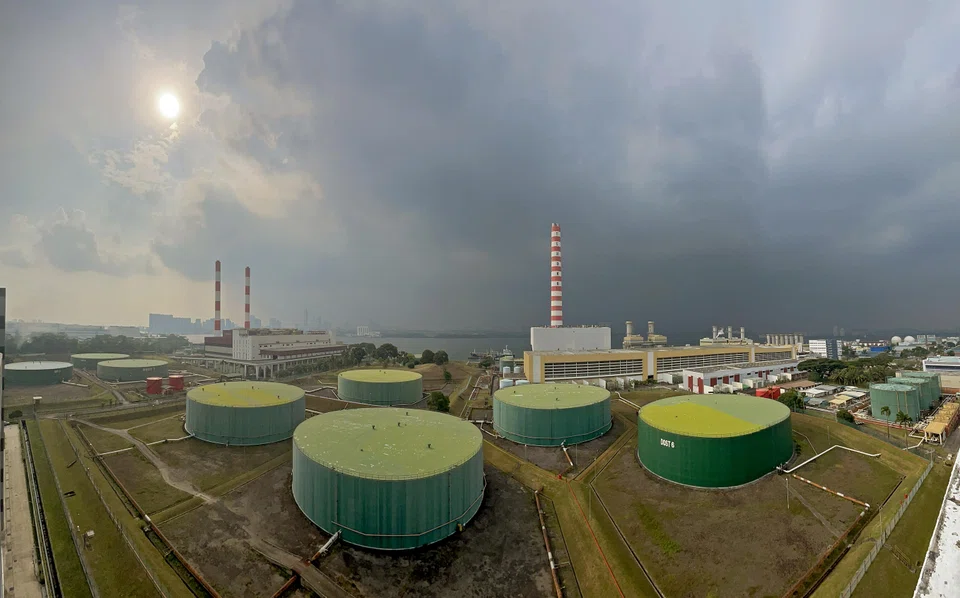
Their compact size – compared to larger conventional nuclear power plants – offers greater siting flexibility, including the possibility of locating nuclear generation on sites used today for thermal (natural gas-based) power generation.
Recognising these developments, and to ensure a comprehensive and grounded view on all plausible decarbonisation pathways, Singapore will undertake the International Atomic Energy Agency’s Integrated Nuclear Infrastructure Review Phase 1 Mission, commencing in 2027.
The review will assess Singapore’s nuclear development capability readiness across 19 areas, identifying strengths, gaps and future requirements to support evidence-based decision-making.
This by no means signals a decision to adopt nuclear power, but reflects an important effort to preserve Singapore’s strategic flexibility and keep future energy options open.
Evaluating and catering for domestic institutional readiness on nuclear energy is prudent in many respects, since, whether or not nuclear has a future in Singapore, it is still likely to expand and be adopted across the region.
Investing early in these capabilities reduces the costs and risks associated with delayed preparation and improves the quality of future decision-making.
Encouragingly, Singapore has already seen growing activity in nuclear-related research and talent development across several government agencies, universities and research institutions, such as Singapore Nuclear Research and Safety Institute at the National University of Singapore.
Beyond decarbonisation, nuclear power’s principal attraction lies in its ability to provide reliable baseload generation – a continuous and predictable flow of electricity independent of weather conditions.
Additional stable baseload could complement Singapore’s broader energy transition strategy, which currently includes significant imports of low-carbon electricity whose availability or price might be sensitive to weather conditions.
Moreover, while imports will be important for Singapore’s energy future, uncertainties remain. Not every proposed project will progress to completion, delivery timelines may change and exporting countries could eventually choose to prioritise domestic energy needs over exports.
Maintaining a diversity of energy options therefore remains judicious.
Nuclear comes with its own downsides
All energy options come with trade-offs, and advanced nuclear power is no exception.
From Singapore’s economic perspective, nuclear energy offers several potentially attractive advantages: a long operating lifespan, relatively stable fuel costs, very low operational carbon emissions and the potential for greater electricity price stability over time.
However, several challenges would remain particularly salient for Singapore. They include a continued reliance on imported fuel and the need for robust radioactive waste management arrangements, which may possibly require dedicated land to be allocated.
Yet, compared with natural gas, nuclear fuel supply chains are generally more diversified and less exposed to the types of market volatility that have characterised recent years.
Adding nuclear power to Singapore’s future energy mix would not eliminate all energy security concerns. However, it could materially strengthen the country’s energy competitiveness by diversifying supply, reducing exposure to fuel price volatility and providing firm low-carbon generation.
Singapore’s economic success has long depended on its ability to anticipate future challenges and invest ahead of emerging needs. It remains too early to know what the optimal energy mix for 2050 will look like, but maintaining optionality has value.
Assessing nuclear energy, while investing in the regulatory, scientific and institutional capabilities needed to evaluate it properly, represents a prudent step towards safeguarding Singapore’s future competitiveness.
Even if Singapore ultimately decides against domestic deployment, the expertise developed through this process will retain strategic value.
Nuclear programmes are expanding across Asia, reshaping the region’s energy landscape and placing greater emphasis on the relevance of regulatory, engineering, financial and technical capabilities.
Building capability today therefore strengthens not only Singapore’s future energy options, but also its position in an evolving regional economy. In an increasingly uncertain world, readiness itself can be a source of competitive advantage.
The writer is partner at The Lantau Group
TRENDING NOW
He built the Vingroup empire. Now South-east Asia’s richest man is handing some key roles to his sons
Fed hike throws Singapore banks a margin lifeline; UOB likely to benefit more
Luxury properties seized in S$3 billion money laundering case fail to sell at auction
US stocks: Tech leads Wall Street to higher close as oil eases, Treasury yields dip



