Is Scott Bessent winning the wrong battle in markets?
Despite the Treasury secretary’s intervention in the yen, US bond yields are climbing higher and higher
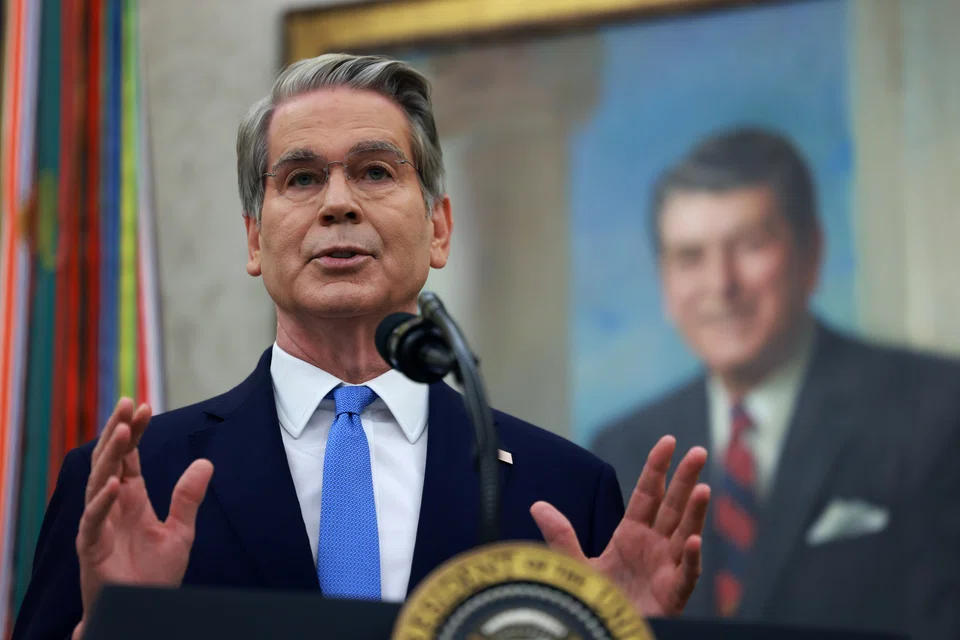
THE good news for Scott Bessent, the prickly US Treasury secretary, is that he has established control over one of the world’s most challenging financial markets, seemingly imposing his will against the odds where many before him have failed.
The bad news is that this is not at home, but in Japan.
Currency-market specialists are still reeling from the news at the very end of July that the US had, under the direction of Bessent, stepped into Japan’s long-running battle with a worryingly weak yen.
Bilateral currency-market interventions are vanishingly rare, especially in chunky currencies such as this – the third most actively traded in the world.
But Bessent threw his weight behind the Japanese authorities, which had been buying yen to try to fluff up its value, with the Treasury selling euros, somewhat bizarrely, to buy some yen of its own.
The amounts involved were quite small, somewhere in the order of US$500 million – a large sum of money in real life, but pocket change in the vast global currency markets. Still, what the intervention lacked in size, it delivered in shock factor.
He has taken some heat over this highly unusual move including, perhaps predictably, from US Senator Elizabeth Warren. The Treasury secretary gave her “sciolistic” letter short shrift.
I had to look it up too. It means superficial, or amateurish.
He offered to give her a tutorial in “foreign exchange for dummies”. But even analysts steeped in the inner workings of the market questioned how this joint effort to support the yen would work without a meaningful shift towards much higher Japanese interest rates.
Nonetheless, just to judge the US intervention on its own terms, it has worked. The yen now stands about 6 per cent stronger than it was at the end of July.
Every nudge higher in the currency causes a flutter of excitement about whether the Treasury is stepping back in, with or without the Japanese authorities by its side.
Other forces are at play here, such as a jolt higher in Japanese interest-rate expectations and possibly also a pickup in domestic purchases of home-grown government bonds. But Bessent can also take credit for helping to turn the currency around.
Indeed, he did just that on Tuesday (Sep 8), reiterating at an event that he has superior information to the masses in markets around what the Bank of Japan will do next, an unusual form of forward guidance.
“I am the house now,” he said. “You can bet against me if you want.”
I am willing to bet this line will stick to him for the rest of his days, like former president of the European Central Bank Mario Draghi’s “whatever it takes”, but with the added gloss of slick American bravado.
The problem, though, is that as the Treasury secretary has articulated, he is fighting a battle on two fronts.
As he explained to Warren, one driving force behind his yen intervention was the risk Japan could reach for “forced unwinds” of its US government bond holdings to prop up the yen, “which could destabilise global markets and ultimately raise borrowing costs for American families and businesses”.
Treasury yields remain high
If keeping borrowing costs for ordinary Americans is the aim here, then the performance is more patchy, particularly with the benchmark 10-year US government bond.
It slid in price pretty hard this week, pushing up its yield by almost 0.2 percentage point, taking the benchmark borrowing cost above 4.95 per cent for the first time in three years.
If it cracks meaningfully above 5 per cent, still an “if”, then that would be the first time since before the global financial crisis in 2007. Thirty-year yields are also at a lofty level above 5.3 per cent, again the highest since before the crisis.
As usual, a range of factors is behind this latest painful ascent in borrowing costs, some beyond the Treasury secretary’s control.
They include a fresh burst higher in oil prices, driven by the latest intensification in the US war with Iran.
US oil prices are back above US$100 a barrel, and diesel at the pump is retailing for about US$1.59 a litre, all bolstering already persistent inflation in a way that is likely to demand higher interest rates.
The real cure for America’s battle with high yields lies in a large pullback in government spending, higher taxes or both.
But again, the administration appears in no immediate mood for austerity. US President Donald Trump on Wednesday pledged to give every American a “dividend” of US$5,000 if the Republicans prevail in November’s midterm elections.
It is a move that the Committee for a Responsible Federal Budget said would cost US$1.2 trillion, or more than 3.5 per cent of gross domestic product.
Even if the proposal goes nowhere, it is not exactly a signal of a commitment to fiscal rectitude.
But an additional nudge came from the underwhelming scale of upsized bond buybacks that the Treasury announced in August. The US$6 billion of buybacks was below the US$10 billion expected.
The intervention in the yen has, as Bessent said he intended, helped an ally in need. But Trump’s foreign and domestic policy is pulling the other way on US bonds.
In inviting adversaries to take him on, and declaring himself to be the “house”, Bessent might want to remember the Trump casinos that have gone bankrupt. FINANCIAL TIMES
TRENDING NOW
Grab CEO’s wife Chloe Tong on life with Anthony Tan and finding her purpose
Hwa Seng Builder, two China companies win S$1.2 billion Tuas Road Viaduct phase two contracts
Deal between tycoon friends sparks scrutiny of Philippine power sector
Canada is upping oil flows to Asia, but South-east Asia’s refineries aren’t ready to handle them yet