

Singapore’s AI boom is lifting GDP. Who gets carried along?
Closing the productivity gap between sectors will require more than fiscal transfers
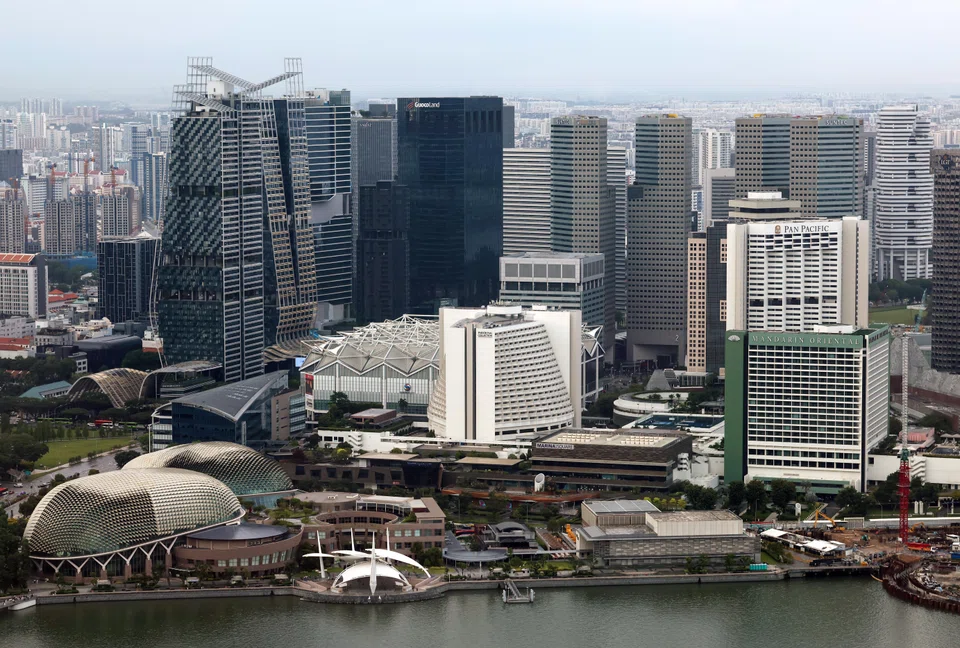
SINGAPORE is doing what a small, open economy is supposed to do when the world enters an artificial intelligence investment boom: It is selling the picks and shovels.
The first half-year numbers are impressive. The economy grew by 6.1 per cent year on year, with second-quarter growth reaching 5.9 per cent.
The government has raised its full-year growth forecast to between 4.5 and 5.5 per cent, citing stronger-than-expected global AI capital expenditure.
The Ministry of Trade and Industry’s July 2026 gross domestic product survey confirmed that Singapore is benefiting from a powerful global technology cycle.
Yet another pattern is becoming harder to ignore.
Singapore has begun to show clear signs of K-shaped economic divergence. More specifically, we are seeing the emergence of an AI-driven, fiscally cushioned, two-speed economy.
The upper arm of the K is already visible: AI, electronics, precision engineering, wholesale trade, finance, large companies and higher-paid professionals are climbing.
The lower arm has not collapsed across the board. It is expanding more slowly, facing tighter margins and absorbing higher costs. Some sectors are contracting, while government support is preventing further deterioration.
That distinction matters. K-shaped growth is not merely a story of some industries doing well while others do badly. It describes a widening difference in the trajectory of industries, companies, workers and households after the same economic shock.
The first warning sign lies in the concentration of growth, particularly within trade numbers.
Non-oil domestic exports rose by 27.4 per cent in Q2.
Meanwhile, electronic exports surged by 88.1 per cent and non-electronic exports grew by only 8 per cent.
Enterprise Singapore expects non-oil domestic exports to expand by between 14 and 16 per cent this year, largely because of sustained AI-related demand.
The most revealing divide, however, is not between sectors. It is between productivity trajectories.
In Q2, labour productivity in outward-oriented sectors rose by 6.9 per cent, while in domestically oriented sectors, it fell by 0.1 per cent.
Wholesale trade productivity increased by 15.4 per cent, while F&B services declined by 0.5 per cent. Information and communications and manufacturing also recorded strong productivity gains.
GDP tells us where demand is landing. Productivity tells us who is becoming better equipped to compete, invest and pay higher wages. If the productivity gap persists, the K-shaped pattern will become more difficult to reverse.
The Singapore Chinese Chamber of Commerce and Industry’s (SCCCI) 2026 annual business survey found that 40 per cent of respondents were pessimistic about the outlook.
Some 80 per cent expected business costs to rise. The survey captures a mood that headline GDP figures fail to capture: Businesses are operating, but with less room to absorb shocks.
At the same time, the softness in consumption is concentrated in particular pockets.
F&B services contracted by 1.5 per cent, with food courts and other eating places recording a sharp fall in sales volumes.
Accommodation posted only modest growth: The economy hotel segment contracted, even as luxury properties continued to perform strongly.
There is also a distinctly Singaporean dimension to this divergence. Consumers may be taking advantage of lower prices in Johor Bahru or shopping through cross-border e-commerce platforms, diverting spending away from local retailers, restaurants and service providers.
The government has announced about S$2 billion in support packages – including cash grants for small and medium-sized enterprises, rent support for hawkers, utility rebates and Community Development Council vouchers – with the Ministry of Finance explicitly acknowledging that SMEs are more exposed to energy prices and supply disruptions.
Government assistance is therefore both a response to immediate pressure and an attempt to keep the lower arm from slipping further.
Distance between GDP and lived experience
The deeper challenge is the distance between GDP and lived economic experience.
Singapore’s AI boom can generate large amounts of value in factories, trading companies and financial institutions without yielding an equivalent increase in median wages, local procurement or small-business profitability.
In an economy deeply connected to multinational capital, growth inside Singapore is not automatically the same as income retained by Singaporean households.
This is precisely what the gap between GDP and gross national income (GNI) is designed to capture. GDP counts output produced within Singapore’s borders regardless of who owns the capital; GNI nets out profits repatriated by multinational investors.
A widening GDP-GNI gap, driven by heavy foreign ownership of the AI-linked manufacturing and finance sectors now leading growth, would be direct evidence that the boom is generating income for shareholders abroad faster than it is generating income for residents at home.
For Singapore, the central challenge is whether external technology demand can be converted into wider domestic capability.
That risk also has a financial dimension.
The Monetary Authority of Singapore has warned that if the returns from AI investment disappoint, a pullback by major technology companies could trigger a broader reassessment of the AI ecosystem.
Because manufacturing, trade, finance and investment are linked to the same cycle, a reversal could travel through several sectors at once.
Closing the gap will require more than fiscal transfers.
It means directing a share of AI-linked productivity gains towards the domestically oriented sectors that are not capturing them directly.
This can be done through targeted digitalisation grants for F&B and retail SMEs, wage credits tied to productivity rather than headcount and procurement rules that let smaller local vendors plug into the AI supply chains that multinational corporations are already building here.
Fiscal support buys time; only a deliberate transmission mechanism converts the upper arm’s gains into lower-arm capability.
The decisive question is what happens when AI capital expenditure normalises and temporary assistance expires.
If productivity gains spread to smaller companies, younger workers and local services, Singapore’s two-speed growth can become broad-based growth.
If they do not, the country may continue to report impressive GDP numbers while an increasing number of businesses and households experience the economy from a very different vantage point.
Tan Chong Huat is chairman of RHTLaw Asia and the Asia Academy of Digital Economics (AADE); Tan Poh Hwee is president of AADE
TRENDING NOW

Government to bring forward raising of retirement age, give employers more financial support to create flexi-load jobs
Former minister Maliki Osman, Revolut chairman join Asia Gulf Holdings advisory board

Is Manila Asia’s new dining hot spot?
Simba at risk of losing operating licence over spectrum misuse

