

Vers for old HDB flats: Could the consent threshold be 65%?
Insufficient new property developments and redevelopments can hurt Singapore’s economy and society in general

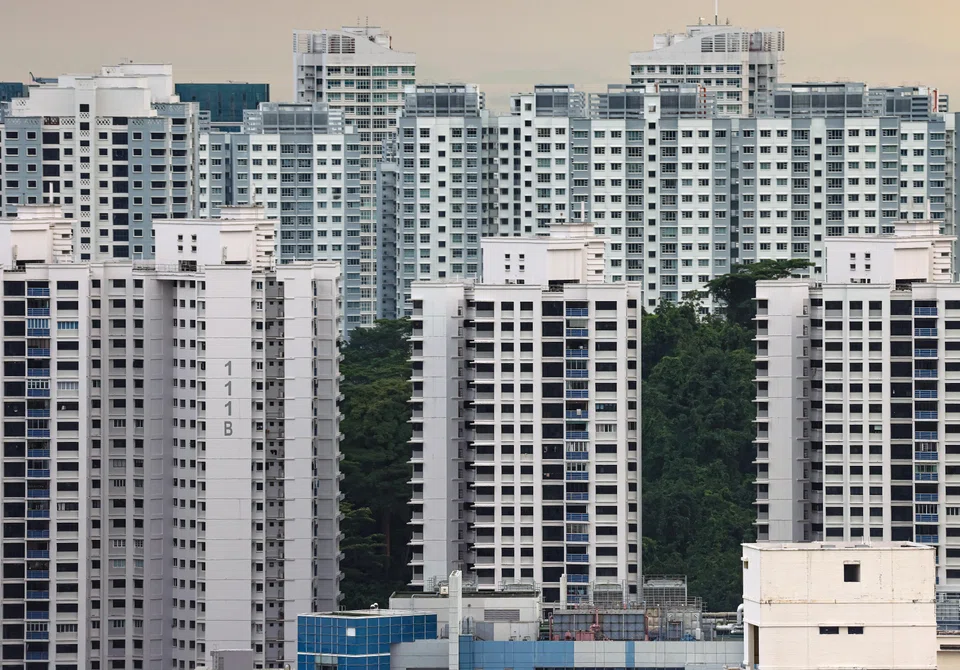
[SINGAPORE] The government’s recent proposed changes to lower the consent thresholds for older developments to secure an en bloc sale are much welcomed.
The proposed changes could enable more ageing private commercial, mixed-use and non-landed residential developments to be sold en bloc and redeveloped.
New developments that subsequently emerge will better serve today’s business, housing and leisure needs.
For one, an old condominium might be redeveloped into a new development yielding, say, three times the number of homes.
In short, more en bloc redevelopment of ageing developments could contribute substantially to optimising land use in the Republic.
Under the Land Titles (Strata) (Amendment) Bill, the consent threshold would be lowered from 80 per cent to 70 per cent for developments aged 40 to 59 years, and from 80 per cent to 65 per cent for those aged 60 years and above.
However, while many homeowners in old condos may cheer when their development is sold en bloc, spare a thought for the minority owners who oppose the collective sale.
Sure, living in an ageing condo development, which is suffering from inadequate maintenance and in dire need of building-improvement works, may sound unappealing.
Still, some owners could be happy living in their units for the rest of their lives. For example, an elderly homeowner might dread the stress of moving homes and adjusting to new surroundings.
As a home is close to the heart of many people, taking a beloved old place of residence away from an owner, against his will, can be deeply painful.
Unfortunately, the possibility of being forcibly parted from one’s home may play out widely across various old private condos and apartments, as well as ageing Housing & Development Board (HDB) flats in the years ahead.
Vers
Then prime minister Lee Hsien Loong introduced the Voluntary Early Redevelopment Scheme (Vers) for old HDB flats at the National Day Rally 2018.
Vers, which has yet to be rolled out, will allow owners of flats aged about 70 years and older in selected precincts to vote on whether the government should buy back their homes before their leases run out. It can help address lease decay – the erosion of a flat’s value as the end of its 99-year lease approaches.
Based on a widely used table showing leasehold values as a percentage of freehold value, the average annual rate of depreciation of a 20-year lease works out to about twice that of a 70-year lease.
Might Prime Minister Lawrence Wong provide more details on Vers at the upcoming National Day Rally 2026?
In the early years of independent Singapore, because of the housing shortage, HDB often built in a rush.
Several older estates were built within short periods, especially in the 1970s and 1980s, such as Marine Parade between 1974 and 1976. Ang Mo Kio and Bedok were built shortly after that over several years.
All the leases in such old HDB towns will expire at around the same time, and new homes will need to be found for many people over a short period.
With Vers, the government can take back old HDB flats progressively over several decades and redevelop the estate in stages.
Old HDB towns won’t suddenly hollow out and become huge construction sites. They can be redeveloped in an orderly manner over 20 to 30 years, rather than within four to five years.
Approval threshold
Key to the take-up of Vers is the approval threshold of owners who are offered the scheme.
The voting threshold for a Vers project to go ahead is currently not known.
Could the consent threshold for Vers be 65 per cent – the level proposed for an en bloc sale of a private non-landed housing development that is 60 years or older?
Arguably, a 65 per cent consent threshold is reasonable as this reflects the wishes of a clear majority.
Nonetheless, should just over 65 per cent of owners of old HDB flats give the go-ahead to Vers, there may be many disgruntled dissenting owners.
Sure, Vers-affected flat owners might receive help at finding suitable new homes nearby in a timely manner, with prices and lease options that meet possibly diverse needs.
Still, situations could turn emotional and ugly when an 80-year-old owner, who is in poor health, is “forced” to move home. And, unfortunately, many old HDB flats may have elderly owners who are living on their own.
Singapore has done many things right when it comes to housing and urban planning.
With land in Singapore largely held on a leasehold basis, good long-term planning and a strong public housing system help to make this little red dot a great place to live, work and play in.
In turn, Singapore’s economy benefits as businesses and human talent are attracted to come to the Republic.
In addition, being able to meet housing needs helps in building social cohesion.
Nevertheless, carrying out development and redevelopment works to meet growing, as well as changing, housing, business and other needs is challenging.
Think of people objecting passionately when well-loved green spaces are taken away from them to build new homes. Or the emotional trauma that owners of old HDB or private apartments go through when ageing blocks of flats get redeveloped.
Still, having way too few new property developments and redevelopments can produce far poorer outcomes for the economy and society in general.
If insufficient new homes are built, many young people cannot become homeowners. Inadequate space for businesses to expand can lead to businesses moving operations out of Singapore and making new investments elsewhere – huge negatives for job creation here.
Kudos to the government for aiming to work out the details of Vers for public housing – such as how to identify potential sites, ensure enough homes are ready in time and offer fair packages for affected residents – in the current term of government, which means before September 2030.
There should be ample lead time for education and fine-tuning before Vers starts being rolled out with a few sites in the first half of the next decade. The programme will then be scaled up from the late 2030s.
Meeting housing needs is critical to nation building. It requires resources, technical know-how, operational skills and political nous.
Singapore’s early political leaders rose to the challenge of building homes quickly for a young nation.
As the nation ages, the current and subsequent generations of political leaders will hopefully navigate redeveloping old HDB towns to give them new life successfully, even if invariably some people may be left unhappy.






