

MNCs and Singapore’s local firms tie up for win-win outcomes as they scale across Asia
Providing global companies with an ecosystem of capable partners is key to the Republic’s competitiveness

IN THE first half of 2026, global enterprises from Viatris, Maersk and Mindray, to Revolut, Nvidia and Quantinuum expanded existing or established new business activities in Singapore as part of their growth strategy in the Asia-Pacific.
For these companies, Singapore’s stability, competitive and trusted business ecosystem, connectivity to growth markets, access to skilled talent and government funding for R&D are factors that shaped their investment decisions.
While a vibrant business ecosystem of suppliers helps shorten the time needed to set up operations in Singapore, the Republic’s diversified economy and world-class innovation ecosystem also offer opportunities for collaboration across industry value chains.
With close to 370,000 small and medium-sized enterprises (SMEs), about 4,500 tech startups, and a network of R&D players including 78 public research institutes and various open innovation platforms, multinational corporations (MNCs) have been able to choose from a diverse range of capable partners to help them solve business challenges.
As a result, they have boosted their supply chain resilience, accelerated their adoption of artificial intelligence, achieved cost savings and improved the speed at which their offerings can be brought to market.
Local players have also seen spillover benefits from the presence of and partnerships with MNCs.
A study by the Ministry of Trade and Industry in November 2025 found that exposure to Economic Development Board (EDB) firms – global enterprises in the manufacturing and tradable services sectors – improved the quality of the workforce in Singapore, which in turn benefited non-EDB firms.

A 10 per cent increase in exposure to EDB firms improved the value added (VA) – or economic value contributed to the economy – by 8.3 per cent on average. It also boosted VA per worker – or productivity – by 6.2 per cent, local employment by 1.5 per cent and local wages of non-EDB firms by 1.6 per cent.
In terms of the direct impact of MNC partnerships, local enterprises have reported enhancements to their operations and capabilities to meet the stringent sourcing requirements of MNCs.
SEE ALSO








They have been able to refine their technologies in response to requests from bigger players that produce at scale, and have also successfully parlayed their experience in servicing MNCs into growing their customer base.
Given the win-win benefits of these business partnerships, “matchmaking” efforts are a mainstay of the work by EDB and Enterprise Singapore (EnterpriseSG).
Such efforts address challenges arising from MNCs being unfamiliar with the local enterprise’s operations and its ability to meet global compliance or quality benchmarks.
At the same time, local enterprises may not always be aware of new partnership opportunities from MNCs, especially if the business activity or technology required is considered sensitive.
That’s where EDB and EnterpriseSG can be most effective: as a bridge between both sides.
Through regular engagement of companies under our purview, both government agencies can identify needs, make connections (including with industry partners and trade associations), foster understanding and catalyse discussion.
We encourage companies to start small, through pilot projects that allow them to test compatibility and build trust before committing to deeper, longer-term partnerships.
To further support these collaborations, we offer funding through the Partnerships for Capability Transformation (Pact) scheme to defray part of the partnership costs involved. We have progressively enhanced Pact to ensure it stays relevant and responsive to industry developments and evolving business needs.
Then there is the Corporate Venture Launchpad initiative, which connects corporates with startups to explore new growth opportunities.
The Singapore Manufacturing Federation (SMF) also has the MNC-Local Enterprise Alliance, supported by EDB and EnterpriseSG, which brings together MNCs and local enterprises to co-create solutions, promote the adoption of advanced manufacturing technologies, and explore new business opportunities.
For example, at a roundtable in May, global companies HP and Coherent presented their problem statements to SMF members who could provide potential solutions.
Here are examples of win-win partnerships we want to encourage:
Bringing critical capabilities closer to home
Global aerospace player Pratt & Whitney Component Solutions (PWCS) collaborated with home-grown enterprise Applied Total Control Treatments (ATCT) to develop high-performance electroplating capabilities for aerospace maintenance and repairs.
High-performance electroplating is a process in which a thin layer of metal is applied to aircraft components to enhance functionality and durability against corrosion and wear and tear.
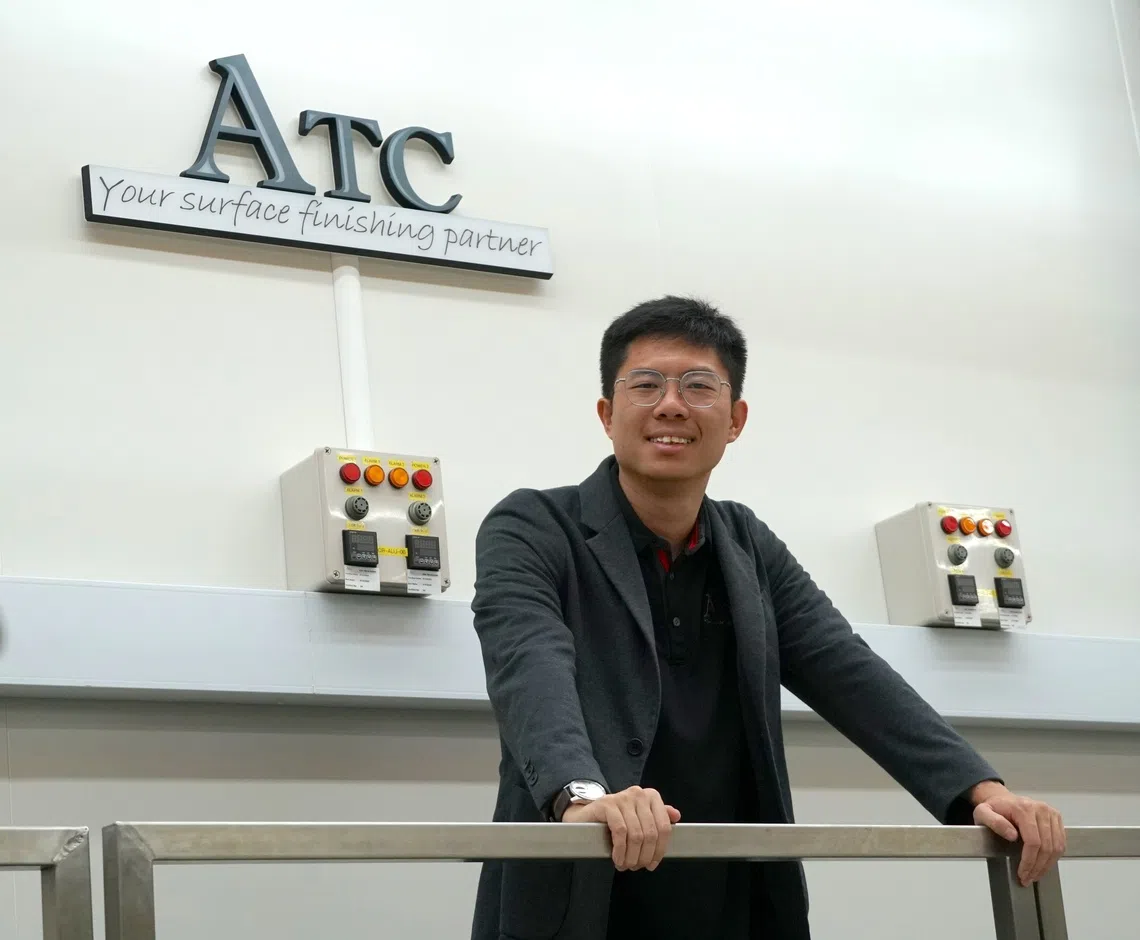
By localising a critical process, PWCS was able to reduce turnaround times and decrease reliance on overseas suppliers.
For ATCT, it was “a turning point”, said chief technology officer Cabal Lo. “It allowed us to meet the expectations of global standards in aerospace through consistency, quality commitment and compliance with international requirements.”
By localising critical capabilities, partnerships such as these strengthen supply chain resilience while helping local enterprises build capabilities that meet global industry standards.
From proving ground to new markets
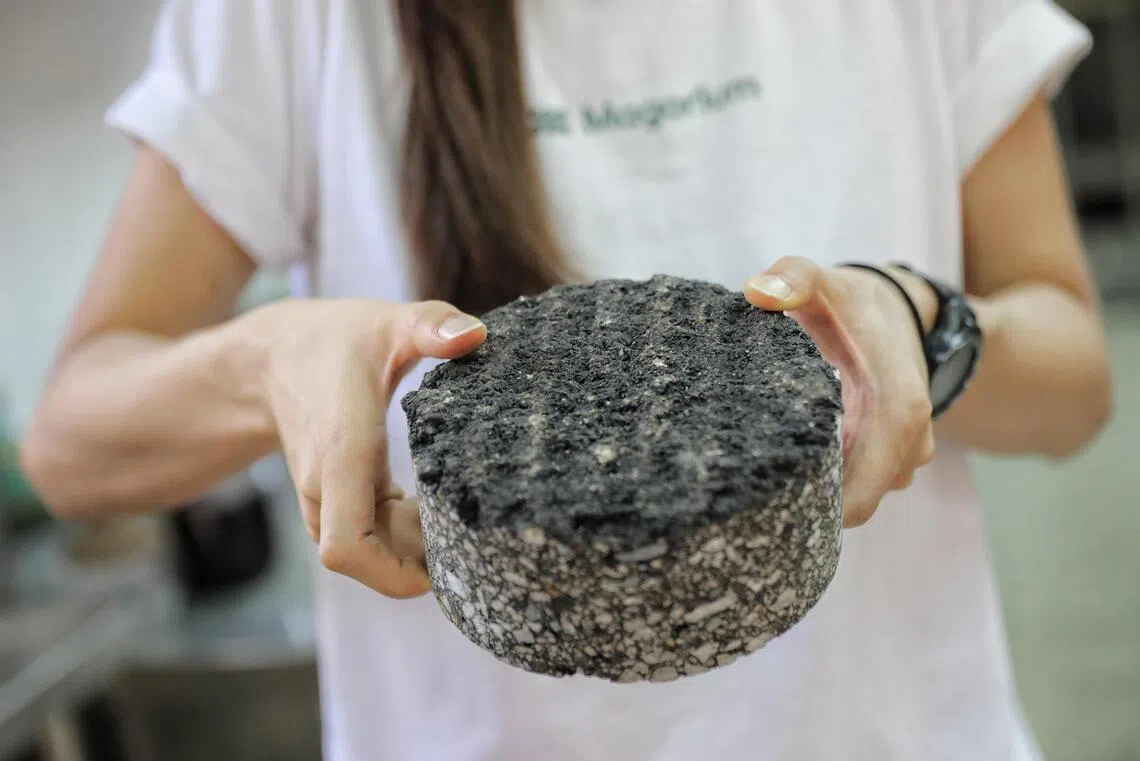
Global biopharmaceutical company Sanofi partnered home-grown deep-tech enterprise Magorium to recycle used insulin pens, to pave 1.5 km of roads at Sanofi’s S$800 million Modulus manufacturing facility in Singapore.
Magorium’s proprietary technology transforms plastic waste into NEWBitumen, a sustainable substitute for crude-derived bitumen. Sanofi is able to reduce its environmental footprint at this low-carbon facility, while Magorium is leveraging this project to showcase its technology and expand into Asean with new pilot projects.
Another example is Singapore-based AI robotics software company Augmentus, a portfolio company of Applied Materials’ corporate venture arm, Applied Ventures.
Augmentus’ physical AI software is aimed at advancing the development of AI-powered robotics for manufacturers by augmenting industrial robots with 3D vision and intelligence so that they can function in more dynamic settings rather than run on a fixed program.
Today, besides Applied Materials, Augmentus’ solution is used by ST Engineering and the Mantrac Group.
Good ideas need good partners
Singapore biotech startup Singzyme, the winner of the 2025 Amgen x NSG BioLabs Golden Ticket, was recognised for its pioneering work in next-generation bioconjugation solutions, including a proprietary platform to produce targeted therapies.
The Golden Ticket, which helps promising biotech startups to advance their innovations, provided Singzyme with access to NSG BioLabs’ coworking laboratories and offices, and mentorship, resources and networking opportunities through Amgen’s community of scientific and business leaders.
Now in its fifth year, the programme has named Netri as its 2026 winner, joining previous recipients Singzyme, PairX Bio, VerImmune and Albatroz Therapeutics.
For Amgen, the programme supports promising science and innovation while strengthening connections with Singapore’s biotechnology ecosystem.
On the AI front, Singapore startup Addlly AI, which builds enterprise-grade AI marketing agents that help businesses simplify content creation across digital channels, has benefited from a partnership between Microsoft and the National University of Singapore Enterprise’s Block71 startup hub.
Through a 10-week incubator programme, Addlly AI gained access to Microsoft’s cloud computing platform Microsoft Azure, technical know-how, and Block71’s network of mentors and investors, helping it refine and scale its solutions for clients.
The partnership shows how connecting startups with the technology, expertise and networks of larger companies can help promising solutions move beyond development towards wider commercial adoption.
From supplier to specialist
Home-grown enterprise Fong’s Engineering and Manufacturing, which started in 1982 as a precision engineering company, was producing a variety of precision components for different industries.
It had yet to specialise in medical devices – a path taken only after forging a partnership with leading medtech company Stryker.
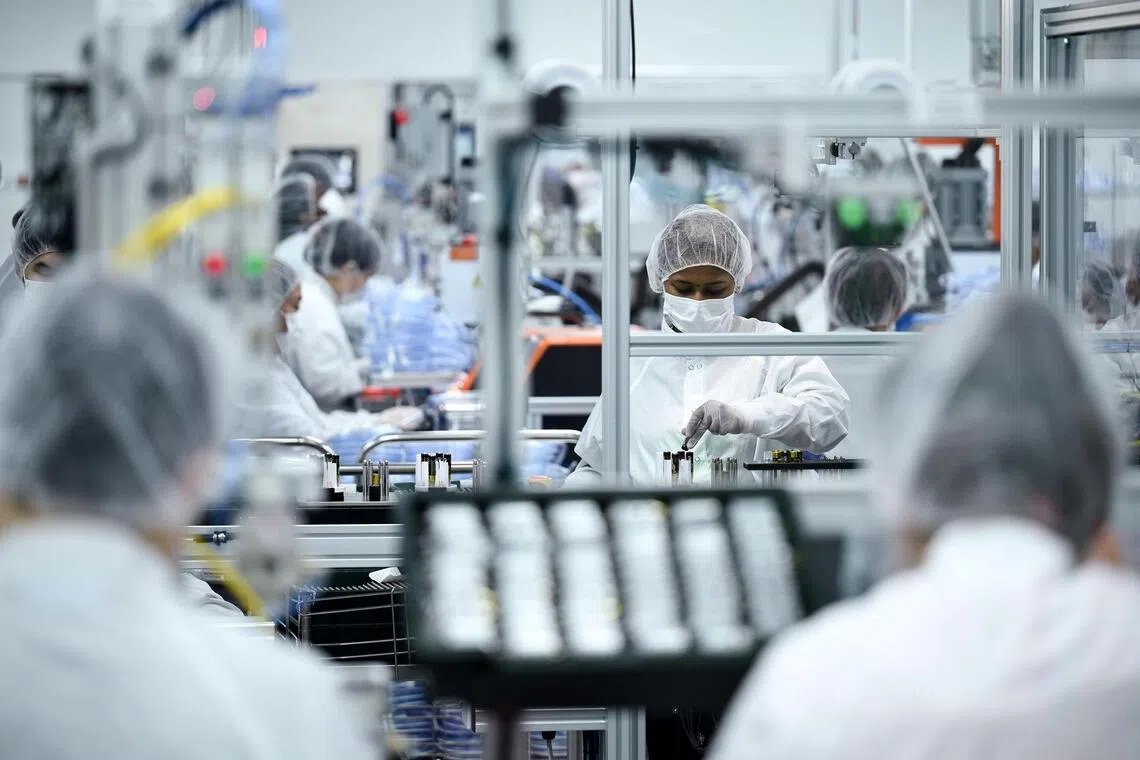
Clement Fong, executive chairman of Fong’s, recalled that the company was led by his elder brother at the time. “EDB linked us up with Stryker and said they needed a supplier with experience in precision manufacturing and high-quality control standards to help them produce components in Singapore.”
The company has transformed its operations over the years by working with leading medtech MNCs in Singapore. Today, it is a specialised manufacturer of high-end medical devices, offering global MNCs end-to-end solutions from design and prototyping to tooling, automation and full-scale production.
In 2025, Fong’s tied up with Singapore-headquartered medical device manufacturer Forefront Medical Technology to localise the production and supply of a key tubing assembly that was previously manufactured in the US.
Forefront Medical now manufactures the component at its Singapore facility, enabling Fong’s to adopt a just-in-time supply model, shorten lead times, reduce freight and inventory-holding costs, and strengthen supply chain resilience.
In turn, Forefront is able to utilise its local manufacturing expertise and capacity to expand its business opportunities from Singapore.
Partnerships as part of Singapore’s edge
These partnerships point to a broader opportunity for Singapore.
In a more fragmented world, the Republic’s ability to offer global companies not just a trusted and connected place to operate, but an ecosystem of capable partners they can innovate and grow with, will become an increasingly important part of our competitiveness.
At the same time, these partnerships will give local enterprises opportunities to build capabilities, take on new business and expand into new markets.
This is why EDB and EnterpriseSG will continue to connect companies where there is a strong business case for collaboration, and support them in getting these partnerships off the ground. Over time, a deeper pool of capable local partners will strengthen Singapore’s proposition to global investors, while creating more opportunities for home-grown companies to grow beyond our shores.
The writer is executive vice-president of the Singapore Economic Development Board
Decoding Asia newsletter: your guide to navigating Asia in a new global order. Sign up here to get Decoding Asia newsletter. Delivered to your inbox. Free.
Share with us your feedback on BT's products and services






