

Transforming for the future of global trade
Singapore’s Tuas Port is being positioned as a key node in resilient, connected supply chains
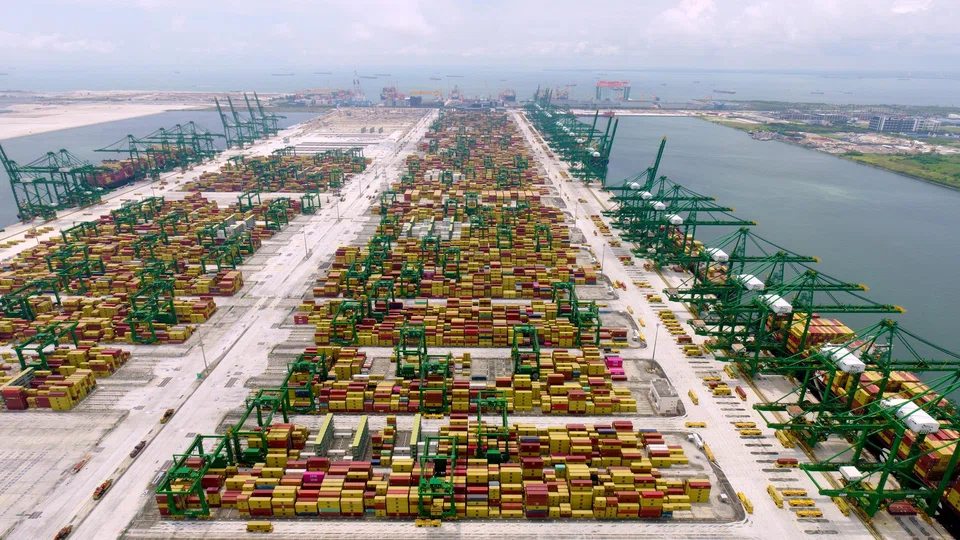
AS GLOBAL trade flows evolve and supply chains become increasingly complex, ports are taking on a broader role in enabling the reliable and resilient movement of goods.
For PSA Singapore, this transformation is taking shape at Tuas Port, where operational excellence, automation, digitalisation and closer integration with the wider supply chain ecosystem are coming together to strengthen Singapore’s position as a leading global transhipment hub.
Tuas Port represents the next chapter of PSA Singapore’s development. Currently the world’s largest automated container terminal, it reached a significant milestone in August, having handled 25 million twenty-foot equivalent units (TEUs) since operations commenced in September 2022.
Today, 14 berths are operational, with this number on track to increase to 18 by 2027. Phase 1 of Tuas Port, when completed, will provide an annual handling capacity of 20 million TEUs, while work on Phase 2 is expected to begin in 2026.
When fully developed in the 2040s, the port is planned to have a total handling capacity of 65 million TEUs.
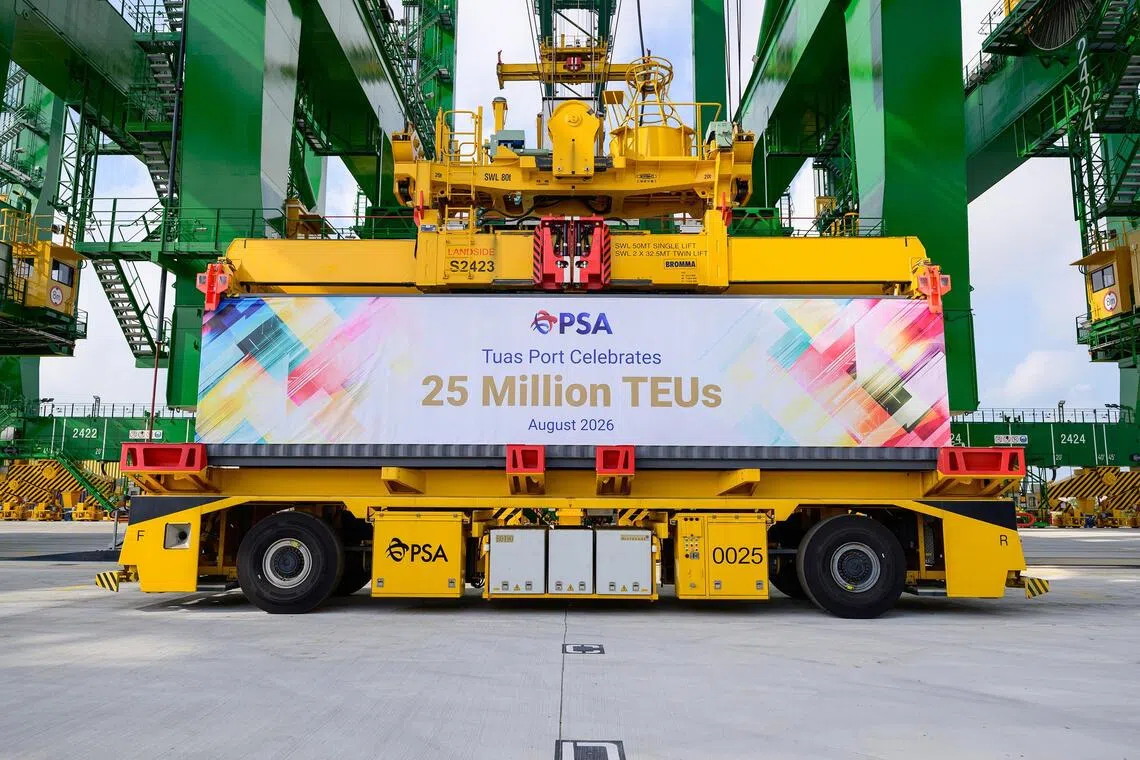
Beyond scale, it is being developed as an integrated port ecosystem designed to future-proof supply chains.
Automation and digital technologies are enabling safer, more efficient and increasingly data-driven operations, while supporting better planning and coordination across terminal activities.
As automation becomes increasingly integrated across port operations, PSA Singapore is working closely with unions and management to equip its workforce with new skills and capabilities to take on higher-order roles.
Together, these efforts help PSA respond with greater agility to changing trade patterns and customer needs, while strengthening the reliability and resilience of cargo flows through Singapore.
SEE ALSO





Going longer, wider
Sustainability is also integral to the development and operations of Tuas Port.
As a fully electrified facility, the port is expected to achieve a 50 per cent reduction in operational carbon emissions.
Its berths and yard are also constructed using environmentally friendly concrete, reducing the associated construction carbon footprint by 72 per cent, while solar panels installed across rooftops throughout the port further support the use of renewable energy in its operations.
The transformation extends beyond the port gates.
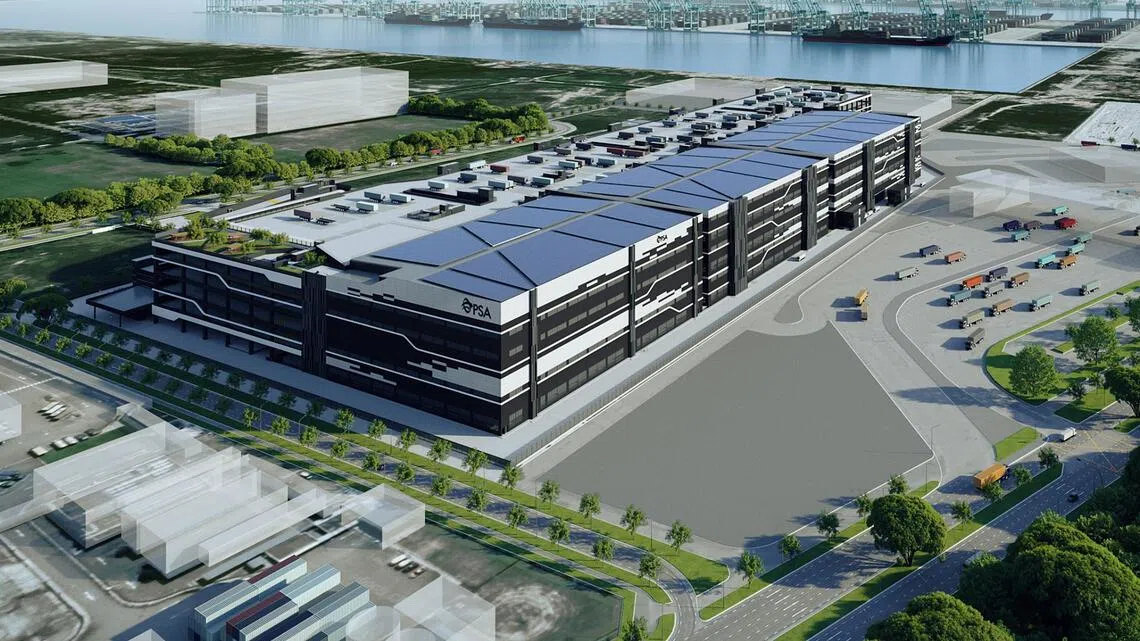
Strategically located next to Tuas Port within the Tuas Free Trade Zone, the PSA Supply Chain Hub @ Tuas will integrate port and logistics activities more closely with Singapore’s wider supply chain ecosystem.
Designed to serve as both a regional distribution centre and container freight station, the hub will offer a suite of value-added services and create new synergies between terminal and logistics operations, enabling customers to move cargo more seamlessly and respond more effectively to changing supply chain needs.
It is scheduled to be ready by 2027.
Supporting the next chapter
“Our vision for Tuas Port is to be the anchor of an integrated port ecosystem that goes beyond container transhipment to enable the seamless flow of trade,” said Nelson Quek, PSA International’s regional CEO for South-east Asia.
“By bringing together advanced automation, digitalisation, supply chain capabilities and strong ecosystem partnerships, we are building an adaptable platform that can respond with agility to changing trade patterns and customer needs,” he added.
“This will further strengthen Singapore’s connectivity to global supply chains and position Tuas Port to support the next chapter of global trade.”
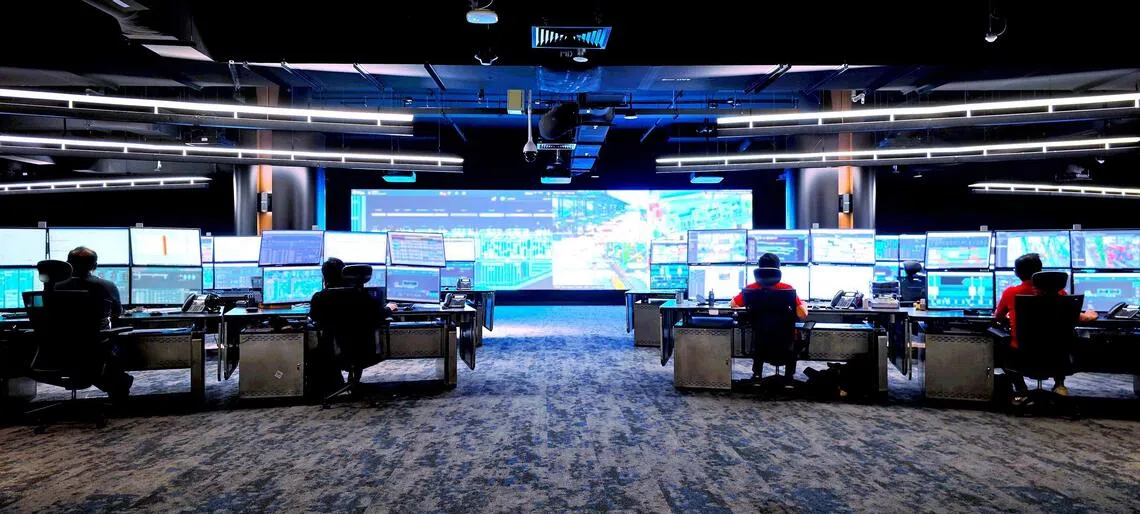
Together, these developments reflect PSA’s “node to network” strategy: strengthening the performance of individual nodes while connecting ports and supply chain assets into coordinated networks of port ecosystems.
Through innovation, digitalisation and ecosystem partnerships, PSA Singapore is building on its position as a critical node in global trade while enabling cargo to move across supply chains with greater connectivity, resilience and confidence.
Guided by responsible stewardship, PSA Singapore will continue to invest in smarter and more sustainable technologies, strengthen collaboration across the port and supply chain ecosystem, and support Singapore’s long-term competitiveness as global trade continues to evolve.
Contributed by PSA International
Decoding Asia newsletter: your guide to navigating Asia in a new global order. Sign up here to get Decoding Asia newsletter. Delivered to your inbox. Free.
Share with us your feedback on BT's products and services






