

Central banks need ‘heightened vigilance’ over risks amid Middle East conflict: MAS chief economist
Risks are greater for small open economies, with energy prices affecting costs and wages more quickly, he says

[SINGAPORE] Amid shocks arising from the Middle East conflict, central banks need to have “heightened vigilance” over financial and fiscal stability risks, said Monetary Authority of Singapore chief economist Edward Robinson on Friday (May 22).
The question is whether indirect effects from the energy shock are taking hold, he said in his opening remarks at the 13th Asian Monetary Policy Forum, held at Conrad Singapore Orchard.
This risk is amplified in small open economies, where energy costs pass through to wages and other prices more quickly, he warned.
The Middle East conflict has caused a “persistent supply shock to the global economy”, generating a complex mix of inflation, financial and growth impulses, he noted.
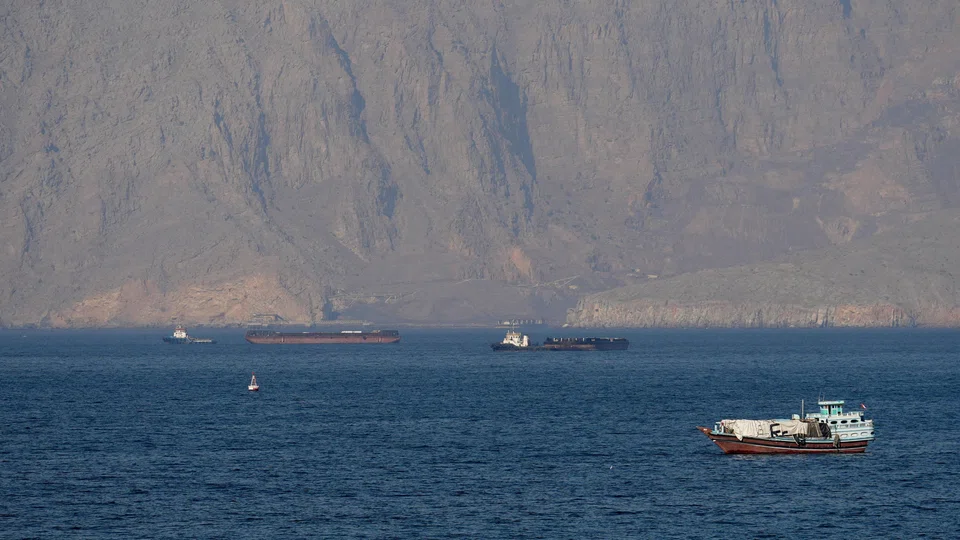
The closure of the Strait of Hormuz has restricted global flows of oil and gas, and disrupted supply chains of various derived materials.
Robinson noted that many Asian countries are generally large energy importers, and face disproportionately heavy burdens of adjustment.
Furthermore, macroeconomic demand management policies are not particularly well-suited to handling oil shocks. Rather, supply-side policies have an important role to play, he added, observing that several governments have sought to secure crucial energy supplies in advance.
He also warned policymakers against taking moves that worsen rather than soothe the underlying strains.
Energy exporters facing immediate shortfalls may be tempted to impose export curbs. But this would only worsen global supply conditions and amplify the current “harmful wave of protectionism”.
One positive lesson, he explained, is “that we can no longer be distracted from the long-term need to build up resilience in renewable sources of energy”.
Tariffs shocks not “muzzled”
In his remarks, Robinson said: “The global economy has been hit by a disconcerting sequence of geopolitical, trade, technology, and energy shocks, stress-testing the policy responses of governments and central banks.”
While US tariffs have not caused a collapse in global trade, that does not mean that trade shocks have been “muzzled”, he felt.
Granted, the tariffs have had both “trade-diverting” and even “trade-creating” effects. By pushing sourcing to alternative partners, the tariffs have not brought about a uniform decline of trade, but rather a rerouting of goods.
It has even deepened regional production networks, he noted. Recent data suggests that Asean trade with every major region has increased.
However, it cannot be assumed that the current resilience in production and exports will continue, he warned. “The broader orthodox economic view of the damaging effects of tariffs remains relevant.”
For instance, tariffs have raised US inflation, with further inflation pressures ahead. Beyond immediate price effects, tariffs cause systemic efficiency losses, as sourcing moves to less efficient suppliers and resources are redirected to uncompetitive sectors.
Supply chain disruptions make things worse by raising logistics costs and reducing economy-wide productivity, he added. Tariffs pose long-run costs too, as they impede cross-border collaboration and innovation.
Separately, touching briefly on artificial intelligence, Robinson noted that the full productivity gains from such technology “will not materialise for some time”.
Indeed, so far, economic growth has been supported more by capital spending on AI than by “broad-based labour-augmenting gains”.
Tariff uncertainty to stay
Tariff uncertainty is expected to spike back up and might last through the rest of US President Donald Trump’s term, said Dartmouth College’s John French Professor of Economics Douglas Irwin.
With earlier rounds of his tariffs having faced legal challenges, Trump is now looking to reintroduce tariffs under Section 301 of the Trade Act. These new tariffs will be “much less open to legal challenges”, said Prof Irwin, in a discussion later that afternoon.
Beyond Trump, US tariffs may endure under the next administration, he warned, noting that former president Joe Biden did not roll back the tariffs that Trump introduced in his first term.
The US administration that follows Trump’s current term may remove some unpredictability and excesses, but is unlikely to remove tariffs altogether, said Prof Irwin. “Don’t expect anything big, and don’t expect it to happen fast,” he summed up.
Decoding Asia newsletter: your guide to navigating Asia in a new global order. Sign up here to get Decoding Asia newsletter. Delivered to your inbox. Free.
Copyright SPH Media. All rights reserved.
TRENDING NOW
Why US$100 oil, 5% US yields affect Singdollar, ringgit differently vs other Asean currencies
Singapore fintechs struggle to find finance and tech talent
Despite the de-dollarisation debate, demand for dollar liquidity in Asia is growing

Why Tan Aik Keong of digital solutions specialist Agmo wants to make himself less indispensable

