

‘Not just a venue manager’: The Kallang goes all out to court the world’s top concerts and sports events
More are willing to spend on unique, memorable experiences than on physical goods, says chairman Keith Magnus

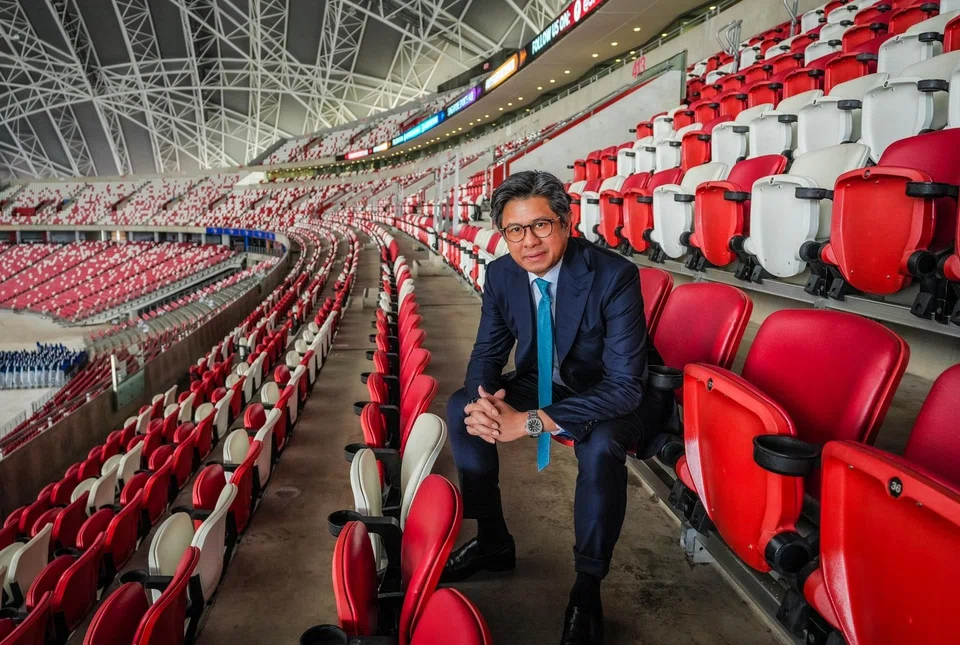
[SINGAPORE] By many estimates, the global experience economy – a booming commercial sector centred on ticketed, time-bound experiences – is valued at more than US$1 trillion today.
The World Economic Forum has projected that the international live events and sports sector will grow by about 16 per cent annually to reach US$2 trillion by 2030, driven largely by millennials and Gen Z.
The Kallang Group is going all out to claim a large slice of this growing pie, armed with the belief that more consumers here and around the region and beyond are increasingly coveting experiences over material possessions.
“In my view, the live sports and entertainment industry is on a multi-year, multi-decade bull run,” said The Kallang Group’s chairman Keith Magnus in a recent interview with The Business Times.
“People are no longer spending or aspiring to spend on goods. They have shifted from placing importance on what they own, to spending on what they feel,” the veteran investment banker and corporate adviser added. “This is where memories, meaning, community and commerce come together.”
The Kallang Group is the Singapore government entity that manages The Kallang, the complex formerly known as the Singapore Sports Hub and whose largest venues are the National Stadium and the Indoor Stadium.
Magnus made the point that as many cities around the world compete for attention, emotion and global relevance, one of Singapore’s strengths is its “soft power” of being able to give both locals and visitors a positive experience in whatever they see or do.
“Soft power is when somebody thinks well of Singapore, wants to partner with us, do business and build friendships – and this is the Singapore brand,” he noted.
“If we do this well ourselves, The Kallang can be a part of Singapore’s soft power too.”


A calling card to the world
This hour-long interview took place at Evercore Singapore’s office at the Marina Bay Financial Centre. Magnus is chairman of Evercore’s Asia business and a member of the independent investment banking firm’s global management committee.
The 53-year-old was appointed as chairman of The Kallang Group following the government’s 2022 acquisition of the precinct from the Sports Hub Pte Ltd private consortium, which had been operating the complex since it opened in 2014. He was Singapore’s chief negotiator for the process.
Magnus, who is also deputy chairman of national sports agency Sport Singapore and chairman of the statutory board’s finance committee, said that his vision for The Kallang is for the precinct to be seen as “one of Singapore’s great calling cards to the world”.
He added that the aim is to build a brand that is synonymous with what Singapore is known for, and one that is identified as being Asia’s premier destination for sports, lifestyle and entertainment.
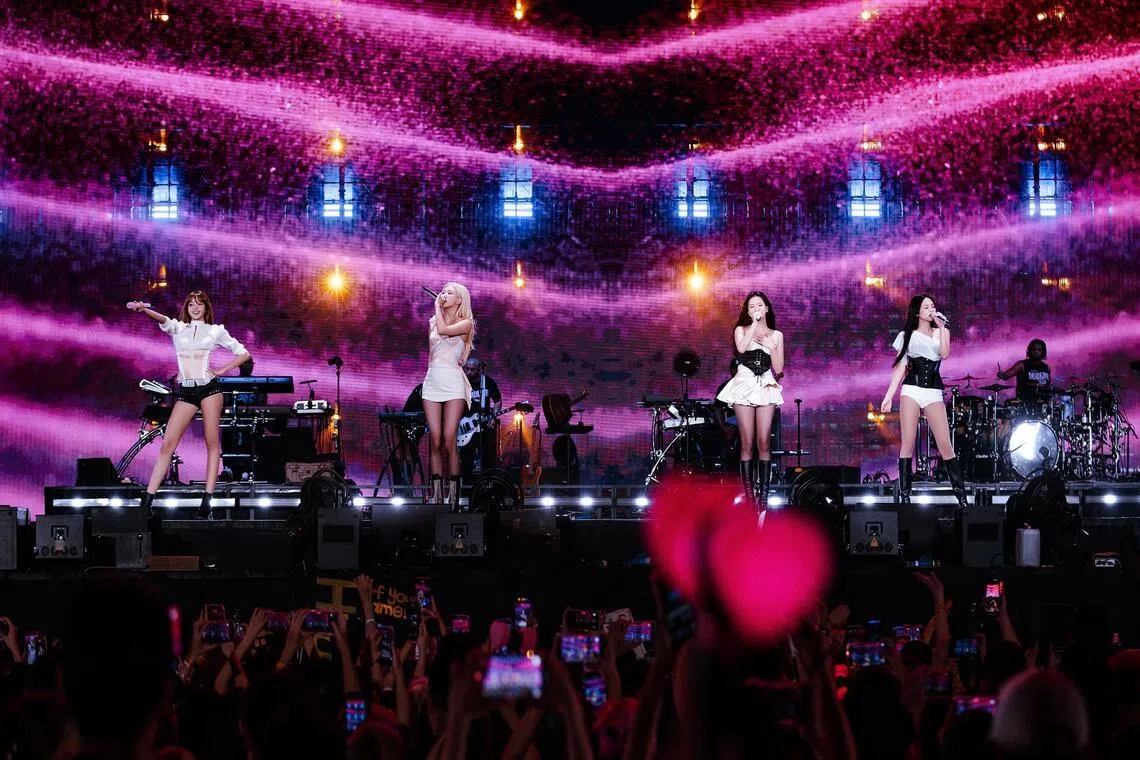
Since the government takeover, The Kallang has hosted dozens of major shows and events, including Taylor Swift’s run of six sold-out concerts in 2024, Coldplay’s six concerts that same year and Blackpink’s three shows in 2025.
In August, the National Stadium will stage the annual National Day Parade for the first time since 2016. The 55,000-seater venue will also be where South Korean boy band BTS will perform over four nights in December, with every single ticket already snapped up.
“Over time, I would love for artistes to feel that they haven’t really performed in Asia unless they came to The Kallang in Singapore. That would give us a very different feel,” said Magnus.
He stressed that The Kallang does not see itself as competing with other cities to bring in the best content, but rather as being a venue that is serving the rest of the region too.
“If an artiste is coming to Asia and asks if Singapore can host them, we would be more than happy to do so. Sometimes it will be under an exclusive arrangement (like Swift), and other times it will be part of their world tour,” he said.
“But whatever the format, we will make sure the artiste can deliver on their objectives and we will give them and their fans a great experience.”
Cultivating relationships
It is not possible to assume that the top acts and sports events will always include Singapore as a stop on their calendar, said Magnus. That is why he and his team are constantly on the hunt for the best programming and cultivating these relationships.
Even before he became chairman of The Kallang Group, he was already busy on the phone with senior executives in the global sports and entertainment industry, leveraging his contacts in the investing banking sector and letting them know about the priorities and direction of The Kallang.
“We manage venues well, but we could no longer see ourselves as just a venue manager. From the start, our DNA was to be a curator of live events and to be a curator that is sensible,” he noted.
“We are building relationships continually and we have to be out there constantly. There are many big events out there, and we can’t be sitting back and waiting for the phone to ring. We have to show people why Singapore and The Kallang is the right place for them to stage their shows.”
Magnus reiterated the thinking behind the decision last November to rebrand the Sports Hub, as there was a sense that the name had been outgrown after more than a decade.
He recalled how the group’s media agency had conducted a study of the coverage and social media posts of Swift’s concerts in Singapore two years ago, which found that the “Singapore Sports Hub” was mentioned in very few of these.
“The brand may have travelled to a certain distance (in Singapore), but it certainly wasn’t travelling globally,” added Magnus.
“We spoke to people in the industry, to promoters, to people who know us well and were working with us. We tossed up a few names and we really liked ‘The Kallang’ because it’s got so much history and national pride. The name denotes that this is a destination.”
Decoding Asia newsletter: your guide to navigating Asia in a new global order. Sign up here to get Decoding Asia newsletter. Delivered to your inbox. Free.
Copyright SPH Media. All rights reserved.
TRENDING NOW

Grab CEO’s wife Chloe Tong on life with Anthony Tan and finding her purpose

Hwa Seng Builder, two China companies win S$1.2 billion Tuas Road Viaduct phase two contracts

Deal between tycoon friends sparks scrutiny of Philippine power sector

Canada is upping oil flows to Asia, but South-east Asia’s refineries aren’t ready to handle them yet

