

Singapore stands ready to assist Indonesia amid worsening haze, Grace Fu in touch with counterpart
The 24-hour Pollutant Standards Index hit 192 in central Singapore on Oct 9, the highest in 2026
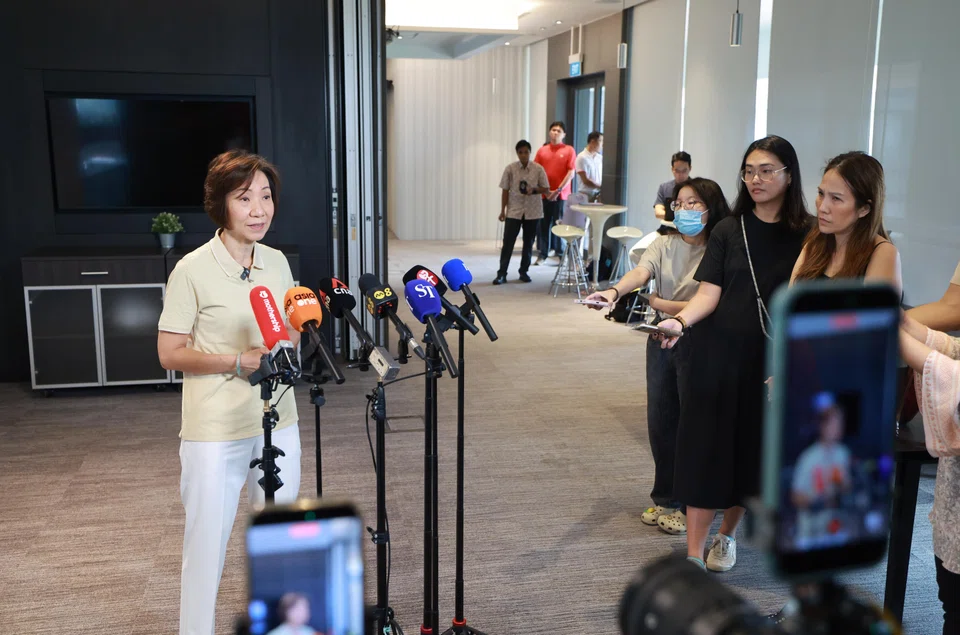
[SINGAPORE] Singapore stands ready to assist Indonesia amid the worsening haze conditions and forest fires, said Minister for Sustainability and the Environment (MSE) Grace Fu, who is in touch with her Indonesian counterpart.
“We are in touch with our neighbours. As you know, this is an area where, because of El Nino, we are facing very dry weather in the region, and therefore it has made forest fires a lot harder to put out,” Fu told the media at Our Tampines Hub on Saturday (Oct 10).
“We are aware that efforts are going on. We stand ready to assist where we can,” said Fu, adding that she has been in touch with Indonesia’s Minister of Environment Jumhur Hidayat to offer her support and express appreciation for his efforts to contain the forest fires.
Fu also said she supports any regional efforts to have discussions on regional cooperation on haze issues.
The 24-hour Pollutant Standards Index (PSI) – a measure of air quality in Singapore – hit 192 in central Singapore at 6pm on Oct 9, the highest so far in 2026. It was inching towards very unhealthy levels of 201.
The air quality in Singapore improved marginally overnight but still remained within the unhealthy band in the morning of Saturday. At 9 am, the PSI readings were: north (124), south (135), east (156), west (160), and central (174).
The one-hour PM2.5 levels – which point to the current air quality and are used as a gauge for immediate activities – were also elevated in all five regions, ranging from values of 80 to 119.
While Singapore has been experiencing several haze episodes since Sep 4, the current period is the longest with unhealthy air and haze particles lingering in the air since Oct 5.
The haze is coming from forest and land fires in Sumatra and Kalimantan, largely due to the use of fire to clear land for agriculture.

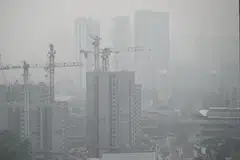
Thick, toxic smoke from burning peat is a major source of the haze. Fuelled by the ongoing El Nino, dried-out peatlands can burn for weeks once they catch fire and are notoriously difficult to put out.
Fu noted that the haze conditions has worsened over the past week due to increased hotspots in Sumatra and Kalimantan, and also because “the wind conditions has been unfavorable to us”.
“Although we expect some rain over the weekend, we could expect the haze level to exceed 200, going into the very unhealthy range,” she added.
“So we have to be prepared. We are very concerned for our population, particularly those that are more vulnerable.”
In June 2026, Singapore and Indonesia inked an agreement on environmental cooperation, which includes cooperation on transboundary pollution.
“We have been discussing possible long-term initiatives to mitigate transboundary haze, including the exchange of more early warning information as well as how Singapore could support the Asean Coordinating Centre for Transboundary Haze Pollution Control that would be hosted in Indonesia,” MSE told The Straits Times.
The interim coordinating centre, hosted in Jakarta, is a hub where Asean nations share information, prepare for fires and organise assistance.
During the last severe haze in 2015, when the PSI reached hazardous levels of above 300 and forced schools to shut for a day, Singapore helped Indonesia with firefighting operations.
The authorities said on Friday that N95 masks will be distributed to individuals who may be more vulnerable to the effects of haze or who may have limited means of obtaining them when air quality hits “very unhealthy” levels.
Such levels are denoted by a PSI reading between 201 and 300.
Mask vending machines will also be made available at selected public transport hubs and social services offices.
Those eligible to collect N95 masks include the Pioneer Generation, Merdeka Generation, CHAS orange and blue card holders, and children aged between seven and 16.
When air quality breaches the “very unhealthy” threshold, air-conditioned rooms in community clubs, and selected Residents’ Committee and Residents’ Network Centres, will also be set up as haze shelters for the public to seek respite in.
All preschools will also be required to cease all outdoor activities and strenuous indoor activities.
Children with chronic heart and lung conditions will be exempted from all indoor physical activities.
When air quality is in the “very unhealthy” range, outdoor work for employees with chronic heart and lung conditions should be avoided.
Fu added that there are sectoral guidance in place according to the PSI levels for schools, preschools, workplaces and healthcare institutions.
“You can find guidance from the sector leads, such as MOE coming up with an advisory on the different approaches with different levels of PSI,” she added. THE STRAITS TIMES
Decoding Asia newsletter: your guide to navigating Asia in a new global order. Sign up here to get Decoding Asia newsletter. Delivered to your inbox. Free.
Share with us your feedback on BT's products and services
TRENDING NOW

Once staunchly pro-China, Malaysian Chinese businesses are now distancing themselves from Beijing

Cliff Tan has 7 million followers and a 4-month waitlist. Why won’t he expand his business?

Could stablecoins be the future of money?

Grab CEO’s wife Chloe Tong on life with Anthony Tan and finding her purpose

