

What happens when the digital option is the only one available?
Digital exclusion can happen to any of us, and often when we most need help
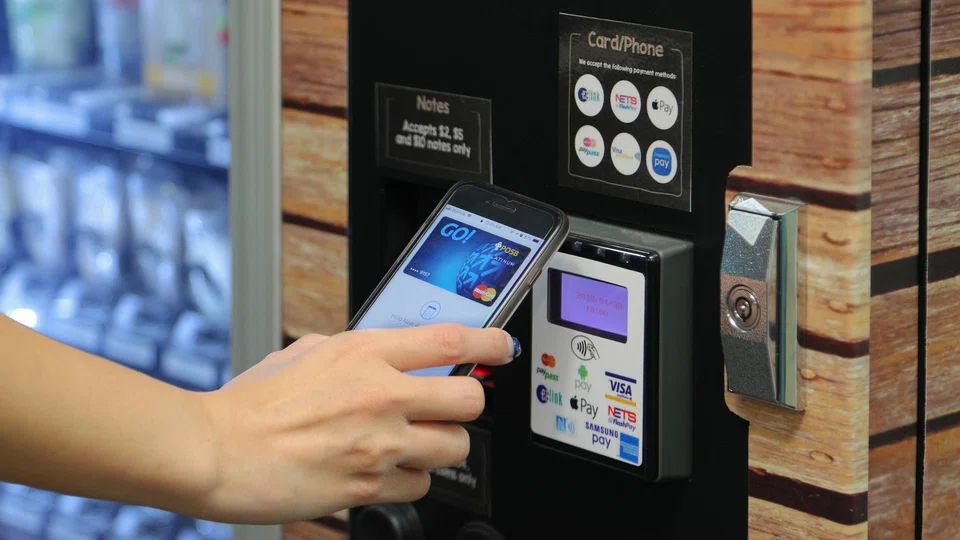
THESE days, it is next to impossible to get through an entire day without one’s mobile phone. We use it to make payments, prove our identities, retrieve tickets, enter buildings and access our bank accounts, among many other uses.
Digital services began many years ago as the convenient option we could pick. A person could either queue at a counter in person to complete a task, or finish that same task online in about five minutes.
Most of us, quite sensibly, chose this “five-minute” option. As we moved online, many counters closed and paper forms gradually disappeared.
When a company’s website failed, the telephone helpline that once offered another route for assistance from an actual person has now become a chatbot that sends us back to the same website. This is when convenience becomes a compulsion. Singapore feels this more sharply because our digital systems generally work well. Figures from the Infocomm Media Development Authority show that almost all resident households have Internet access, while local smartphone ownership is very high.
Singapore’s national digital identity is now a trusted route into government and commercial services. Each success makes the next service easier to move online, while the remaining non-digital route starts to look expensive and unnecessary. This reasoning assumes we know who gets excluded. We tend to picture an elderly person who never learnt to use a smartphone. That picture, however, is out of date.
A confident user, no matter how old he or she is, can be shut out when their phone is stolen, a login code goes to an old mobile number, or an automated fraud system freezes the wrong account.
Digital exclusion can happen to any of us, and often when we most need help.
The SimplyGo lesson
The SimplyGo episode two years ago showed how easily high adoption can be confused with readiness.
It was revealed in Parliament in February 2024 that 64 per cent of adult commuters were using the newer account-based system as at December 2023.
SEE ALSO



The Land Transport Authority planned to retire the older card-based system for adults. Most commuters had moved to the newer system, the equipment was reaching the end of its life, and keeping it running would cost money. On paper, the decision to make the change made sense. The older cards showed the fare charged and the remaining balance at the gate. SimplyGo calculated fares at the back end, so it could not show this information at once without slowing commuters down. Users had to use an app or a ticketing machine to check their card balances.
This might sound like a small loss compared with the wider benefits of the newer system, but in the end, it did not feel small to the people who relied on it. After a public reaction, the government reversed the decision and committed an estimated S$40 million to keep the older system running until at least 2030.
Some saw the reaction as resistance to change. I think it showed something else. Many people were happy to use SimplyGo while they still had another choice. Removing that choice changed the deal. Transformation programmes often miss this point. If 90 per cent of transactions move online, a dashboard suggests that the old route serves only the remaining 10 per cent.
But transactions are not people. The same customer may use an app for 99 routine tasks and need a person for the 100th, when a parent dies, a payment vanishes or an account stops behaving as expected. The least-used channel may be the one that preserves trust in all the others. An optional service can focus on the typical user. An unavoidable service must also work for people whose circumstances do not fit the standard process.
They may have poor eyesight, shaky hands or limited English. They may simply have a problem the designers did not expect.
On a product dashboard, they form a small percentage. At a bank, hospital or government agency, each one is a person unable to do something necessary.
A different duty
This does not mean keeping paper forms and staffed counters forever. Parallel systems are expensive, as the S$40 million SimplyGo bill shows.
Digital services are often faster, safer and easier to audit. For many people with mobility or accessibility needs, going online removes barriers. A fallback also need not copy the entire old system. It could be assisted digital service at a shared location, an emergency telephone line answered by someone with authority, an offline credential, or a recovery process that does not require access to the account being recovered.
The right fallback depends on what happens when someone is excluded. That consequence changes the duty owed. When a retailer offers an app, ease of use is a competitive advantage.
When a bank, transport operator or government makes its app the only practical entrance, access and recovery become basic conditions of service.
Uptime is no longer enough. The servers can be perfectly healthy while a customer remains completely locked out. Technology teams measure whether systems are available and how quickly ordinary transactions finish. Both measures are useful. Neither tells you whether a stranded customer can regain access, challenge a wrong decision or complete an urgent task another way.
A compulsory service is reliable only if people can recover when it fails them. The Government Technology Agency (GovTech) of Singapore’s Digital Service Standards already require the Republic’s government services to be usable, accessible and reliable.
We should apply the same care to the failure path. Can someone recover without the device? Can an unusual case reach a human? Does the fallback work under pressure, or does it mainly decorate a policy document? Businesses should ask the same questions. Moving customers online saves money partly because the work and equipment move to them.
Customers provide the phone, connectivity, electricity and a surprising amount of unpaid technical support. That may be a fair bargain when the service is cheaper and better.
It looks less fair when the company removes every other route and still calls the result convenience. The writer is the chief technology officer and deputy chief executive at GovTech Singapore
Decoding Asia newsletter: your guide to navigating Asia in a new global order. Sign up here to get Decoding Asia newsletter. Delivered to your inbox. Free.
Share with us your feedback on BT's products and services
TRENDING NOW

DBS, OCBC, UOB rout lops billions off STI as inflation, rate concerns spook investors

Grab CEO’s wife Chloe Tong on life with Anthony Tan and finding her purpose

OCBC sheds S$8 billion in value as shares close nearly 6% down; analysts cautious on banks

Deal between tycoon friends sparks scrutiny of Philippine power sector

