Turning scarcity into an investment edge
The current market landscape necessitates a resilient portfolio that can also benefit from bouts of market stress
THE Modern Portfolio Theory (MPT) – comprising a diversified portfolio, built with a mathematically optimal mix of assets of varying risks – has been challenged, given that various asset classes could stay correlated for a considerable duration of time.
Elevated correlations test diversification as a free lunch for investment, even as the MPT has been a core tenet of investing for decades. Risk, meanwhile, is insufficiently measured by variance since this underprices any sharp market drawdown on black-swan events.
The current disjointed market landscape – where a world fraught with geopolitical concerns exists at the same time as a new industrial revolution – necessitates a portfolio that is not only resilient, but can also benefit from periods of market stress. Such a portfolio has been termed “antifragile”.
To this end, scarce assets that are in demand offer a compelling way forward. Such assets, including gold and real estate, stay resilient in volatile times.
Beyond structural reasons, there is also a major tailwind for scarce assets: sticky, higher-drifting inflation, thanks to a combination of factors including fiscal expansion, deglobalisation and geopolitical fragmentation.
According to the IFO Institute, global inflation expectations for 2026 average at 4 per cent, comparable to 2025 levels, and are projected to remain elevated at around 4 per cent until the end of 2028.
As natural inflation hedges, scarce assets such as real estate stand to gain. With rental prices closely linked to price increases, plus rising capital flows to safe havens such as Singapore, real assets are well positioned.
Real estate’s scarcity premium
Mark Twain’s famous quip, “Buy land, they’re not making it anymore”, might be advice over a century old. But it still rings true, and especially so for prime locations.
Just as not all real estate is created equal, investment expressions also differ. Public securities such as real estate investment trusts might have a place in one’s portfolio for their potential to provide income and liquidity, but they are also subject to market sentiment and fees that erode yields.

The path to capturing real estate’s scarcity premium is through private markets, where direct deals, co-investments and closed-end funds provide a closer reflection of fundamental value, often providing access at the ground floor.
In this regard, consider retail spaces on the back of attractive prices and robust consumption; logistics real estate that can weather geopolitical shocks and are close to key infrastructure; and high-quality office spaces in central business districts of gateway cities and international financial centres.
“Buy land” also expresses itself in infrastructure, whose scarcity stems from the significant administrative hurdles involved, including regulatory approvals, land acquisition and environmental clearances. As an essential service, infrastructure demand is highly inelastic and persists through cycles, yet offers revenue that is commensurate with inflation.
As with real estate, public markets offer liquidity but are subject to sentiment, while private markets grant an illiquidity premium and higher yields, but are subject to multi-year lock-ups.
Regardless, both stand to benefit from artificial intelligence build-up capital expenditure and broad capital rotation into the “Global South”.
As above, so below
While opportunities abound in usable land, what’s underneath our feet might be just as, if not more, sought after.
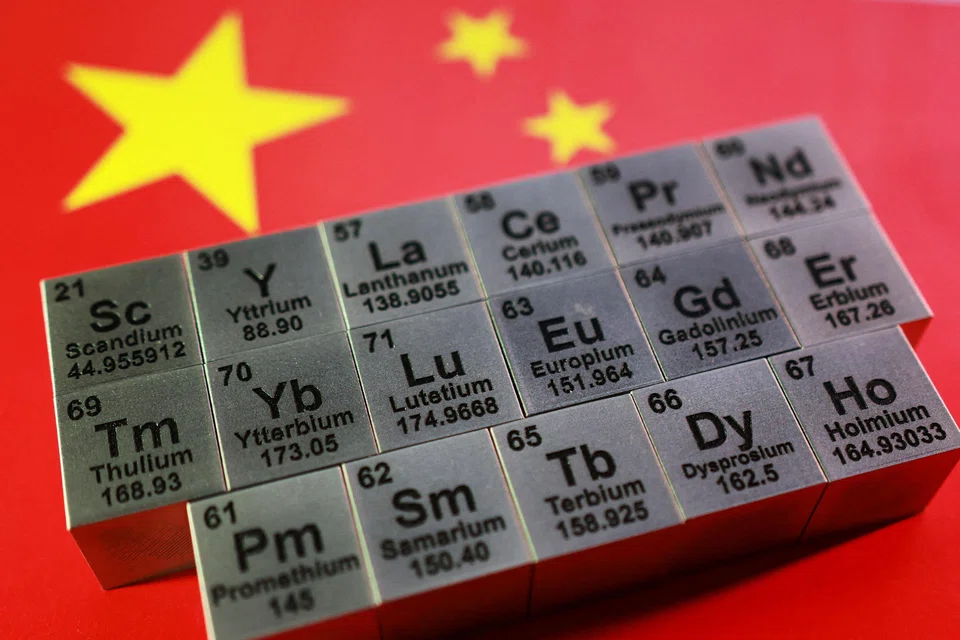
Rare earth minerals or elements – a group of 17 elements on the periodic table that possess chemical, magnetic and luminescent properties – are expected to be an area of focus, thanks to their essential applications in modern technology.
Used in everything from electric vehicles to renewable energy infrastructure and data centres, these raw materials have become a strategic imperative in today’s multipolar world. Given China’s current dominance in rare earths production, investments elsewhere are expected to accelerate amid rising worldwide demand.
Then there is gold, the textbook example of scarcity. All the gold ever mined in human history – about 216,265 tonnes – will fit into a cube with 22-metre sides. For perspective, that’s the volume of around four Olympic-sized swimming pools.
We’ve been bullish on gold for quite a few years, and we continue to be so as the structural drivers that we have long seen are still firmly in place. These are monetary debasement risk, geopolitical uncertainty and continued central bank gold buying.
What’s new is the increasing attention on physical gold. Heightened macroeconomic and geopolitical uncertainty have shaken investor confidence, creating greater demand for hard assets with no counterparty risk.
Comex gold delivery notices, which are official notifications from sellers in a gold futures contract on the New York Commodities Exchange indicating that they are ready for physical delivery (as opposed to cash settlement), significantly rose year on year in 2025.
In other words, investors now want to feel the weight of their gold in their hands.
At around US$9.2 trillion, physical gold’s global market size is dwarfed by equities’ US$126.7 trillion and bonds’ US$145.1 trillion. A reallocation of even a small percentage of equities and bonds into gold would result in a considerable price increase.
All these suggest significant headroom for further adoption of physical gold in investor portfolios, especially as premiums continue to widen versus paper gold.
Consequently, gold miners are a compelling growth play as producers of physical gold. For the first time in history, production margins for many miners exceed their all-in sustaining cost.
Many senior gold miners have strengthened their fundamentals by actively deleveraging, abstaining from non-earnings-accretive mergers and acquisitions, reducing risk exposure to geopolitically unstable regions, and increasing free cash flow.
As long as gold prices remain sustainably above the US$3,000-per-ounce mark, the profitability of most gold miners would be well-supported.
Beyond the numbers, I also believe that investing is as much an art as it is a science. Physical gold’s allure is so ingrained in human history that its role as a store of value is probably hammered into the human psyche.
Blurring the lines between investing and passion
In art, collectibles are another expression of scarcity. Stories of sensational returns abound – that half-a-billion-dollar painting, million-dollar timepiece, or six-figure bottle of wine.
However, the reality of collectibles is much more complex than buying and holding, requiring deep understanding of cultural relevance, provenance, costs of ownership and much more.
Whisky, for example, organoleptically (pertaining to flavour and aroma) stops maturing once it leaves the barrel, while wine continues to do so in the bottle. Fine art, with its non-fungible nature and arbitrary values, requires thorough knowledge of the art world and auction systems.
And if owning that Monet puts one in a rarefied position, the next step up is owning a sports team. These might be seen as trophy assets, but the scarcity of major-league sports teams makes them an interesting proposition.
In North America, only 154 sports franchises exist across five leagues, including the National Basketball Association and National Football League. The English Premier League, meanwhile, hosts only 20 of the top teams.
Valuations have reflected this scarcity, with mostly double-digit growth across franchises and teams in the past 20 years. Access to these teams has also become easier in recent years, with the increasing involvement of private equity.
For all the progress that we have made over millennia, central authorities still hold gold, and data centres still sit on land. In a finite, fragmented world, scarce assets serve as strong complements to traditional holdings, cushioning portfolios and enhancing long-term performance.
The writer is chief investment officer of consumer banking and wealth management, DBS
Decoding Asia newsletter: your guide to navigating Asia in a new global order. Sign up here to get Decoding Asia newsletter. Delivered to your inbox. Free.
Share with us your feedback on BT's products and services