

EHT's proposed manager to prioritise possession and resuming operations of all portfolio properties

Uma Devi
Singapore
IN A bid to revive the beleaguered Eagle Hospitality Trust (EHT), the proposed new manager of EH-Reit says its immediate priorities would be to gain legal and physical possession of all 18 properties in the real estate investment trust's (Reit) portfolio, and bring them back up to operating standards.
Only three out of the 18 properties in EH-Reit's portfolio are currently operating.
EHT, a stapled trust comprising EH-Reit and the currently dormant Eagle Hospitality Business Trust (EH-BT), has been suspended from trading since March. The previous manager of EH-Reit, EH Reit Management, is to be removed following a directive from the regulator.
On Dec 1, the trustee of EHT said it has identified SCCPRE Hospitality Reit Management as a potential new manager for EH-Reit.
Should SCCPRE be voted in by unitholders, EHT's name will be changed to SCCP Hospitality Reit.
SCCPRE is part of SC Group. The latter is controlled and owned by Suchad Chiaranussati, a former banker and advisor to the Bank of Thailand.
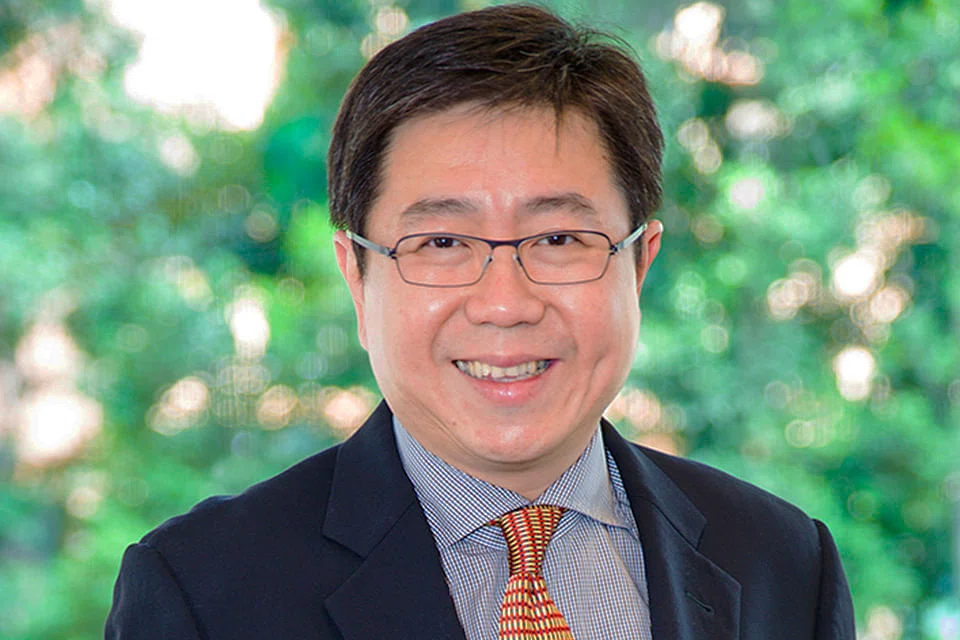
Loh Hwee Long, who will be chief executive of the new manager, said the US market typically takes between three and four years to recover from the negative effects of a "major shock". He is nevertheless committed to putting in "maximum efforts to beat the general market performance".
SCCPRE will consider asset enhancement opportunities to improve the value of the portfolio and will also attempt to bring EHT's cost of capital down, he said. He added that SCCPRE will, at the right time, raise money from the market to fund working capital requirements and accretive acquisitions.
Mr Loh brings with him more than 19 years of global real estate experience - accumulated across investment, asset and fund management functions, as well as across multiple asset classes.
He began his career at Keppel Land in 2001, and also served stints at GIC Real Estate, Mapletree Investments and Keppel Capital Holdings thereafter.
Other members of the SCCPRE team are chief financial officer Johnnie Tng, who has held roles such as the chief financial officer of EC World Reit and Keppel Reit Management; as well as chief operating officer Michael Liu, who will be based in the US to spearhead the ongoing asset management functions of the portfolio.
EHT had debuted at an offer price of 78 US cents in May last year, but its units began to trend downwards not long after. They last traded at 13.7 US cents.
Following the trading suspension, EH-Reit has been on the receiving end of regulatory scrutiny - with the Monetary Authority of Singapore (MAS) and Singapore Exchange Regulation (SGX RegCo) issuing multiple queries and directives.
SCCPRE was selected following a request for proposal (RFP) process by Moelis & Company, which is acting as financial advisor to DBS Trustee.
Bert Grisel, managing director at Moelis, said the "fairly broad" request for proposal (RFP) yielded a total of 15 interested parties that made bids for either a part of or the entire portfolio.
SC Group was the preferred candidate by a stretch due to its demonstrated ability to turn Reits around, said Mr Grisel.
Mr Chiaranussati said Reit management is one part of SC Group's businesses, and saw the RFP as an opportunity to expand in the area. SCCPRE currently manages two listed Reits: Japan Hotel Reit (JHR) in Tokyo and Thailand Prime Property Freehold and Leasehold Reit in Bangkok.
At JHR, which SCCPRE began managing in 2010, total asset values have trebled to 399 billion yen (S$5.1 billion) as at June 2020. Units of JHR have more than doubled in value over the same period.
SCCPRE's appointment is conditional upon the approval of EHT's unitholders at an EGM on Dec 30. At the EGM, unitholders will vote on four resolutions: the appointment of SCCPRE as the new Reit manager of EH-Reit, the appointment of SCCPRE as trustee manager of EH-BT, the proposed issuance of up to 140 million new stapled securities, and a proposed base fee supplement in order to pay the new Reit manager the higher of a minimum fee of US$4.5 million or 10 per cent of annual distributable income per year.
The new securities would be issued to SCCPRE in lieu of fees for FY 2021 and FY 2022. According to the circular, SC Group is expected to end up with somewhere between 5 per cent and 14.9 per cent of EHT's securities in the near to medium term.
Responding to a question on the dilutive impact of the issue, Mr Grisel said: "Cash is a scarce resource in a company that doesn't have any revenue that needs to get to the other side of Covid-19 and reopen hotels ... We're saving cash, and stopping value dilution (through this) in a different form."
He argued that if the fees were to be paid in cash, EHT would have to go into an equity raising exercise "relatively soon" and the current market conditions would make it difficult to identify the true value of the Reit's portfolio.
"An alternative would be to throw the towel into the ring and say let's just sell (the assets). But from our perspective, selling in a deeply distressed market only attracts very opportunistic buyers, and I don't think that's a good investment thesis for the Reit."
If any of the four resolutions tabled are not passed, then unitholders will vote on a fifth resolution: to delist EHT.
Even if all four resolutions are passed, unitholders will have to be prepared for a long road to recovery.
EH-Reit is exploring entering into a US$125 million bridge facility loan from a consortium of lender banks led by Bank of America (BOA).
Mr Chiaranussati said that the award of the new loan was "not a walk in the park" especially after the Reit had previously defaulted on a US$341 million loan facility administered by BOA.
EHT unitholders will not receive distributions for at least 18 months, as the Reit pays off the bridge facility.
The facility comes with an extension of up to 18 months, which means unitholders may not even receive distributions for three years.
SCCPRE said the funds will be deployed "very judiciously" on immediate requirements, but will not provide the necessary capital expenditure needed for the entire portfolio.
The benefit from this facility would be to transform some current liabilities into long term ones, addressing auditors' "going concern" and liquidity worries.
TRENDING NOW

Analysts cut DBS target price on lower 2027 earnings, but see buying opportunity after share price slide

Waymo founder predicts ‘landslide’ robotaxi adoption in Singapore, driven by high car costs

The limits of China’s trade concessions to Europe
Nvidia CEO Jensen Huang drops from world’s top 10 richest after chips sell-off

