

Special dividend for SIA’s 80th anniversary? CEO says extra payout will need board’s nod
It is giving an interim ordinary dividend of S$0.02 a share, special dividend of S$0.05 a share for H1 FY2027

[SINGAPORE] Singapore Airlines (SIA) has not ruled out a special dividend to celebrate its 80th anniversary next year, said its CEO Goh Choon Phong when he was asked about the possibility of rewarding shareholders to mark the occasion.
At the post-earnings briefing on Thursday (Nov 12), the helmsman replied with a smile: “On the special dividend for SQ80... we don’t talk about what dividends we are giving until that point in time.
“So any further dividend payout, you would have to... wait for any announcements that we (will) have. We obviously need to clear through the board and also the shareholders.”
SQ is the carrier code for SIA.
SIA is giving an interim ordinary dividend of S$0.02 a share and an interim special dividend of S$0.05 a share for the first half of FY2027 to September, the company announced at its Wednesday release of its financial results.
Tan JoAnn, chief financial officer, said at the briefing that SIA is prepared to be compliant with the Singapore Exchange Regulation’s (SGX RegCo) new rule that requires listed companies to maintain a dividend policy.

The carrier currently does not have one. She did not elaborate on the upcoming dividend policy.
The SGX RegCo rule applies to annual reports for financial years commencing on or after Jan 1, 2027. SGX RegCo said the intent is not to mandate that companies pay dividends, but to ensure they are transparent about their approach.
The new rule and others introduced aim to complement SGX’s “Value Unlock” programme by ensuring that capability-building results in long-term improvements to corporate practices.
SEE ALSO
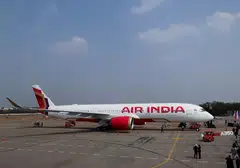

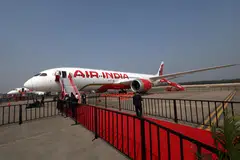


When queried whether he and Peter Seah would remain as CEO and chairman of the board, respectively, when SIA turns 80, Goh’s response drew chuckles from the audience: “Beyond my pay grade.”
Seah was redesignated as a non-independent director at the conclusion of SIA’s annual general meeting in 2025 as his board tenure has stretched more than nine years.
Goh, who has been at the helm since 2011, is 63 this year – narrowly missing the statutory retirement age, which was raised to 64 in July.
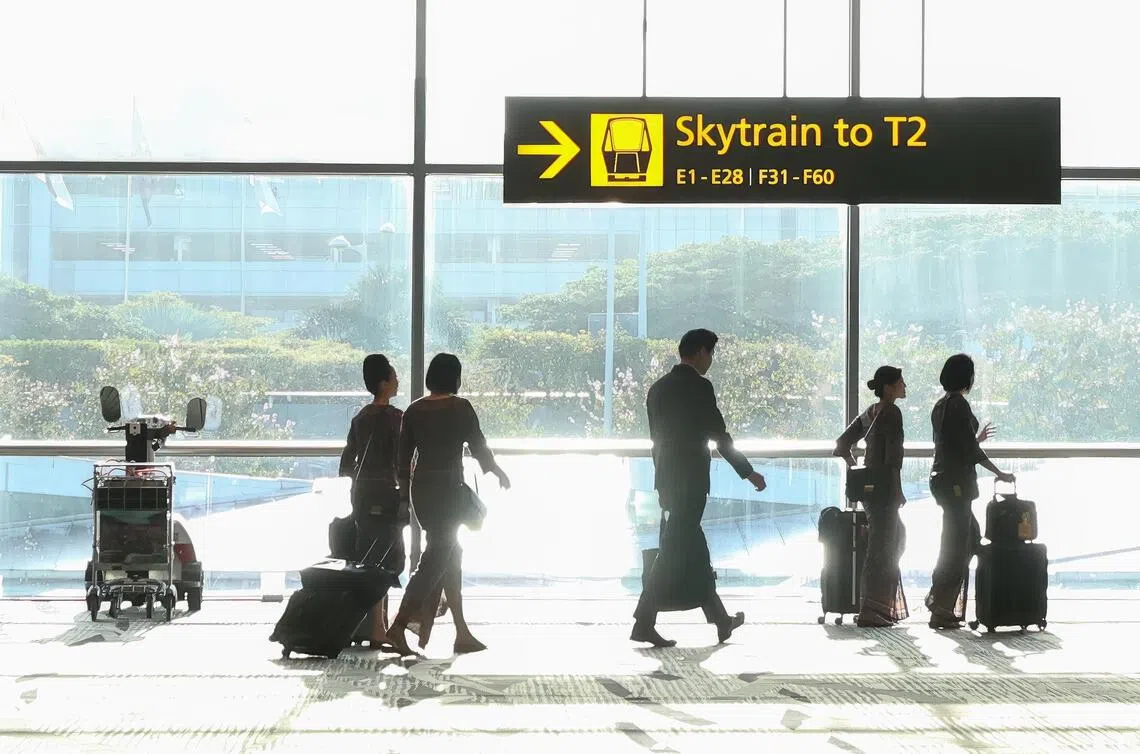
Financial results
Meanwhile, SIA’s cargo demand should continue to be “robust” in the coming months, driven by semiconductor and cloud computing-related flows, said chief commercial officer Lee Lik Hsin. “We have no reason to expect it will slow down.”
While he declined to disclose the percentage of the cargo business contributed by this segment, he described it as “significant”.
Cargo revenue climbed 26.9 per cent in Q2 to S$686 million, with yields 22.3 per cent higher and loads increasing 3.9 per cent.
SIA’s operating performance was also supported by higher passenger flown revenue, which increased 15 per cent to S$4.5 billion as a result of a 12.2 per cent rise in yield and a 2.3 per cent improvement in passenger carriage.
The better performance and a lower share of losses from associate Air India after reversing some past provisions quadrupled its net profit to S$209.7 million for its second quarter, from S$52.4 million in the previous corresponding period.
Revenue rose 14.3 per cent to a record S$5.6 billion, from S$4.9 billion previously. Operating profit rose 16.3 per cent to S$463.7 million, from S$398.4 million a year earlier.
Basic earnings per share stood at S$0.067 for Q2, up from S$0.017 a year earlier.
For the first half of FY2027, SIA’s net profit dropped 43.9 per cent to S$133.9 million, from S$238.5 million a year earlier. A weaker Q1 was the main drag, with operating performance hit by jet fuel price spikes amid the conflict in the Middle East.
Revenue for the half year rose 16.8 per cent to a record S$11.3 billion, from S$9.7 billion a year earlier. This was driven by record passenger carriage of 21.8 million and stronger yields.
Although the group has adjusted air fares and cargo rates, these measures did not fully offset the impact of sustained high fuel prices. Fuel cost after hedging constituted 37 per cent of the group’s expenditure, up from 29 per cent.
Net asset value per share dipped from S$5.48 as at end-March to S$5.22 as at end-September.
The counter closed 1.1 per cent or S$0.08 up at S$7.25 on Thursday.
Decoding Asia newsletter: your guide to navigating Asia in a new global order. Sign up here to get Decoding Asia newsletter. Delivered to your inbox. Free.
Copyright SPH Media. All rights reserved.
TRENDING NOW

Nvidia prepares to oust Jensen Huang after news of second affair, with executive: reports

Higher rates, weaker spending: Is the Philippines entering stagflation?

When did entry-level jobs stop being for beginners?
Swiftdata, owner of Nvidia-linked Megaspeed, lists address occupied by interior design firm

