

Budget 2024: Embracing climate action for sustainable growth
This Budget sets the tone for the nation’s trajectory in dealing with the challenge of climate change.
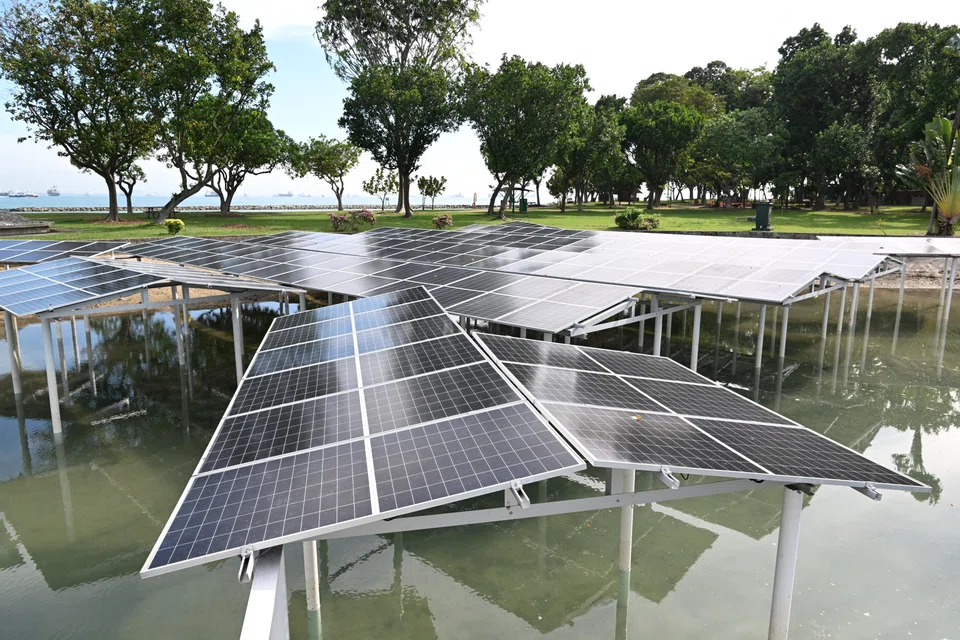

WITH Singapore facing a worst-case scenario of a 5 deg C rise in temperature by the end of the century, urgent action is imperative to curb the escalation of greenhouse gas emissions and mitigate the potential impacts of global warming.
Singapore’s Budget 2024, announced on Friday (Feb 16), set a critical tone by addressing pressing issues such as catalysing Singapore’s clean energy pathways, resilience and sustainable development, highlighting the government’s commitment and determination to accelerate the nation’s transition to a net-zero carbon economy.
Incentivising the pathway to net-zero
Natural gas – lauded as the cleanest of all fossil fuels – currently makes up around 95 per cent of Singapore’s energy mix. In his Budget speech, Finance Minister Lawrence Wong acknowledged that moving from a system powered almost entirely by natural gas to one powered by clean energy would require enormous efforts, infrastructure shifts and costs.
Thus, the announcement of Singapore’s commitment to accelerate the nation’s shift to low-carbon energy through exploration of new energy pathways such as geothermal energy, hydrogen and even nuclear energy, is well aligned with one of the key outcomes of the recently concluded COP28 – that a trebling of the supply of renewable energy sources by 2030 is critical as a start.
Enhancements to the Energy Efficiency Grant and the formation of a S$5 billion Future Energy Fund are also welcome steps in the right direction, affirming the government’s commitment to its net-zero ambitions with catalytic government funding.
Supporting Singapore’s SMEs in the green transition
Small and medium-sized Enterprises (SMEs) account for more than 90 per cent of enterprises in Singapore and can contribute more than 50 per cent of business emissions. Only around 10 per cent of them have measured their corporate carbon footprint. Greening of this business segment will be crucial in ensuring significant reductions in the nation’s carbon footprint.
However, the green transition is daunting to SMEs: they face hurdles such as limited budgets, limited knowledge, and limited bandwidth.
The Budget therefore marked a pivotal moment for Singapore’s SMEs through the announcement of enhancements to the Energy Efficiency Grant – which will be extended to more sectors including manufacturing, construction, maritime as well as data centres and their users.
As it is realised that this might not be sufficient stimulus to get the majority of SMEs started, partnerships with multinational enterprises have also been identified as a key enabler to help SMEs scale and meet higher sustainability standards required in the global supply chain. The current Partnerships for Capability Transformation scheme will be further enhanced to support supplier development and co-innovation going forward.
Singapore’s growing role as the region’s carbon hub
Since 2019, Singapore has positioned itself as a leading carbon markets hub for the region, leveraging its strategic location and prominence in aviation, shipping and key high-emission sectors.
Underscoring Singapore’s climate ambitions, this year saw the carbon tax rate raised to S$25 per tonne of emissions, and eventually to S$50 to S$80 per tonne by 2030.
With companies allowed to cover up to 5 per cent of their carbon tax liability using high-quality offsets, this underlined the urgency to establish a robust carbon services and trading hub to stimulate climate initiatives at both the local and regional levels. This is despite the lack of progress at COP28 on the operationalisation of Article 6 of the Paris Agreement.
The way we see it, carbon markets are a crucial tool in global decarbonisation efforts but are yet to meet their full potential. With the adjustments to Singapore’s tax regime, we urge the government to refine the International Carbon Credit framework and prioritise the development of transition credits to support decarbonisation efforts.
Building sustainable workforce capabilities in Singapore
The journey towards sustainability requires more than financial investments. It demands a skilled workforce equipped to navigate the complexities of environmental, social and governance (ESG) principles.
The government has correctly identified that Singapore would benefit from an enhanced talent development programme that incentivises the upskilling and reskilling of its workforce. The announcements that mid-career workers aged 40 and older and ITE graduates will get more support to refresh their skills and progress in their careers should contribute to a strong talent pipeline for the green economy, a sector identified by SkillsFuture as being one with a skills shortfall.
Going one step further, we hope to see enhanced tax deductions or subsidies for employers who offer accredited sustainability-focused training programs.
A step in the right direction, but hope for more to be done
Climate change poses a significant challenge for Singapore, and this Budget sets the tone for the nation’s trajectory going forward. Its ability to confront emerging challenges, leverage opportunities, and steer through complexities will determine the Republic’s journey towards a sustainable, inclusive, and prosperous future.
While the team at UN Global Compact Network Singapore is encouraged by the Singapore government’s focus and directives on climate action, we believe more can be done to push Singapore’s carbon-neutral ambitions further.
In the coming Committee of Supply debates, and in future updates of the Forward Singapore plan, we look forward to hearing more concrete road maps to address Singapore’s mitigation and adaption plans for climate change, including carbon credits and tax deductions for green investments and solutions investments to support decarbonisation efforts.
The writer is director, carbon management, at the UN Global Compact Network Singapore.
TRENDING NOW
Singapore tech stocks plunge as Nasdaq bloodbath spills into region

S$3 billion money laundering case: Rare Pateks and Rolexes, diamond-covered Hermes and more head to auction
OCBC wealth clients turn defensive amid market volatility as Q3 profit rises 3%

From legacy to launch: Francis Yeoh and Yeoh Pei Xien on family unity and YTL’s next‑gen ventures

